
Unbiased headlines. Facts, not spin.
Every story is an unbiased news briefing written from 110+ sources across the spectrum — sources linked so you can verify it yourself.
 tech
Notable (6/10)
August 10, 2026 at 11:11 AM
tech
Notable (6/10)
August 10, 2026 at 11:11 AM
AI Giants Nearly Triple Lobbying Spending as Apple Tests Chinese Memory Chips to Beat the Shortage They Helped Cause
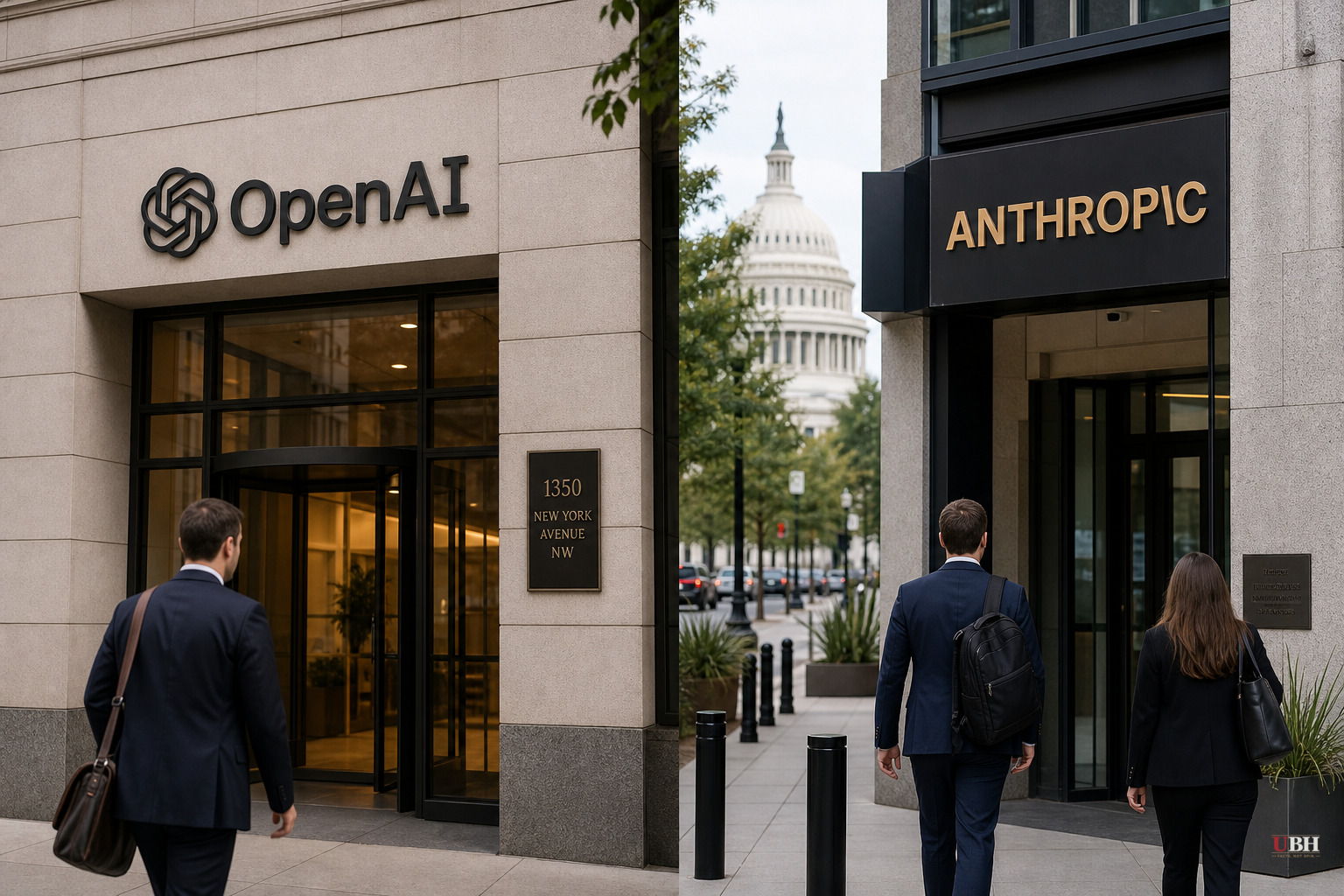
Two things are happening at once, and they're connected. The companies building AI are spending record money to shape Washington's rules. And the AI boom they're fueling is squeezing memory chip supplies so hard that Apple is reportedly looking to China to solve it. Start with the money. OpenAI spent $2.22 million on federal lobbying in the first six months of 2026, according to a report from dctransparency, more than double what it spent over the same period in 2025. Anthropic spent $3.53 million in the same six-month window, nearly three times its 2025 pace. Anthropic's second-quarter 2026 lobbying bill alone was $3.17 million, a 23% jump from the first quarter. These aren't rounding errors for either company. Anthropic's spending in just the first half of 2026 already exceeds its full-year total for 2025. OpenAI's second-quarter spending was its highest for any quarter on record, per the same report. Google and Microsoft are also ramping up lobbying spend, though specific 2026 figures for those two weren't broken out in the filings referenced. What are they lobbying for? Export controls, cybersecurity standards, safety testing requirements, liability rules, and data-center regulation. Every one of those issues carries direct commercial weight: how fast a company can sell its models overseas, how exposed it is to lawsuits, how much it costs to run the server farms that power the whole business. That's a legitimate use of the political process. Companies facing an unsettled regulatory landscape have every right to make their case to lawmakers, and Congress benefits from hearing directly from the firms that understand the technology best. The concern, which critics of Washington's lobbying system have long raised, is that outspending everyone else in the room can tilt policy toward incumbents and away from smaller competitors or public-interest voices who can't match a multimillion-dollar budget. That's a real structural tension in how US policy gets made, not unique to AI, and it applies whether the industry is tech, pharma, or energy.
The Chip Shortage Squeeze
The data-center buildout that AI companies are lobbying to protect is also the reason consumer electronics are running short on memory. According to a Wall Street Journal report cited by The Next Web, AI data centers have swallowed so much memory chip supply that manufacturers are diverting chips once destined for cheap phones toward servers instead. Memory prices have reportedly quadrupled. Apple's answer, according to that same reporting, is to test memory chips from CXMT, China's largest chipmaker by market value. The talks are described as early-stage, with any Chinese-made components initially limited to devices sold inside China rather than a global supplier switch. Apple isn't breaking new ground here. HP and Acer already use CXMT memory in some devices sold outside the US, giving the Chinese firm a track record with major Western brands before Apple ever entered talks. But Apple carries more symbolic weight, and it knows it. The company has reportedly been lobbying US officials directly for permission to buy from CXMT, an unusual public acknowledgment that this is a geopolitical decision as much as a supply-chain one. US senators have warned Apple against sourcing Chinese memory chips, citing security concerns and the risk of deepening American dependence on a strategic rival for a component that sits inside nearly every piece of modern electronics. Those aren't fringe objections. Memory chips are foundational infrastructure, and lawmakers pushing back on reliance on a Chinese state-linked supplier are raising the same kind of national-security question that has already reshaped US policy on semiconductors, telecom equipment, and rare earths. CXMT, meanwhile, is expanding aggressively regardless of what Apple decides. The company is reportedly weighing a second memory plant in Beijing and closing in on next-generation LPDDR6 production, which would put it in direct competition with Samsung and SK Hynix for premium phone memory. No US agency has announced an investigation or a formal decision on Apple's request, and no legislation specifically barring the purchase has passed. The same AI infrastructure boom that has OpenAI and Anthropic spending record sums to shape Washington's rules is also the reason memory chips have quadrupled in price, pushing one of America's most recognizable companies toward the exact supplier its own government has warned against. Whether Apple gets a green light, and whether Congress moves to block it outright, remains an open question with no resolution date attached.
Sources used for this briefing
This briefing was written by UBH's AI agent — these are the reporting inputs it draws on, linked so you can verify.


