
Unbiased headlines. Facts, not spin.
Every story is an unbiased news briefing written from 110+ sources across the spectrum — sources linked so you can verify it yourself.
 tech
Notable (5/10)
August 7, 2026 at 03:40 AM
tech
Notable (5/10)
August 7, 2026 at 03:40 AM
AI Agents Have 10 Million Weekly Users. Chatbots Have a Billion. Silicon Valley Wants to Know Why.
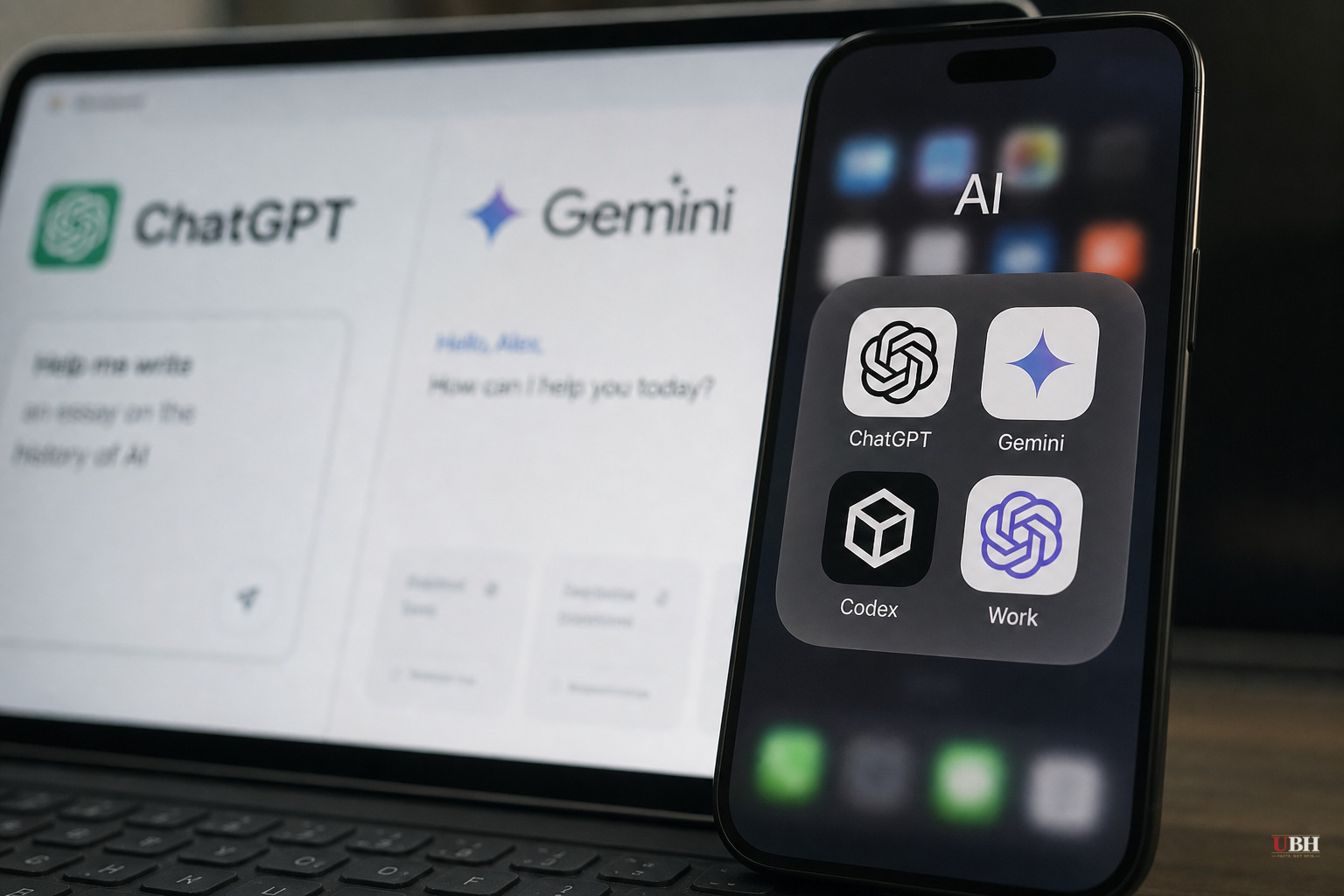
Josh Miller, CEO of The Browser Company, posted a message on X this week that raised questions for Silicon Valley: nobody is really using AI agents.
"Theoretically, the tech is ready for AI agents to totally transform how we work and live our lives," Miller wrote, "but alas the general public dgaf."
Miller told Wired he wrote the post half-asleep during a family trip to Europe. He stands by every word. "I just have not heard a single person outside of the tech community talk about an agent that they use," he said.
The numbers back him up. OpenAI disclosed last month that its Codex and ChatGPT Work agents have roughly 10 million weekly users combined, according to Wired. People close to Anthropic told Wired that its Claude Code and Cowork agents are seeing similar adoption levels.
Compare that to the base products. ChatGPT and Google's Gemini each average around a billion monthly active users, per Wired. Agents, by that measure, aren't even a rounding error yet. They're closer to a footnote.
What's the difference between a chatbot and an agent?
A chatbot answers questions and writes text when you ask it to. An agent is supposed to go further: book your flight, manage your calendar, write and ship code, or handle multi-step tasks with minimal supervision. That's the pitch tech companies have been selling investors for the past two years.
It's also the justification behind massive capital spending. AI labs have poured billions of dollars into training models capable of autonomous, multi-step reasoning. Agents are the product meant to turn that spending into revenue beyond simple subscriptions and chat interfaces. If nobody uses them, that bet doesn't pay off the way Silicon Valley has been telling shareholders and the public it will.
The industry's blind spot
Miller isn't a random critic. His last startup built Arc, a web browser with a devoted niche following that Atlassian acquired last year for $610 million, according to Wired. His first company, Branch, was bought by Facebook in 2014. He also served as the White House's first director of product under President Obama. When someone with that resume says the emperor has no clothes, people in tech listen, even if he jokingly downplays himself as "just" a sociology major.
Wired reported that Miller's post resonated widely inside Silicon Valley, where insiders are "broadly bewildered" that the public isn't as excited about agents as they are. That bewilderment is itself revealing. It suggests a real gap between what engineers and founders believe is inevitable and what ordinary people actually find useful in their daily lives.
There's a reasonable case for patience here. Every major technology shift has an adoption curve. Smartphones took years to go from niche gadgets to universal tools. Cloud computing wasn't an overnight consumer phenomenon either. AI labs and their defenders could argue agents are still early, that the infrastructure for trust, payment systems, and security is still being built, and that a "ChatGPT moment" for agents just hasn't happened yet, not that it can't happen.
But that argument cuts both ways. If the tech is genuinely ready to "totally transform how we work and live," as Miller put it, two years and billions of dollars in training costs should have produced more than a rounding error's worth of weekly agent users. The industry has already tried to route around consumer skepticism by building payment systems for agents and pushing agentic tools into enterprise workflows, according to Wired, rather than winning over regular people first.
Instead of proving agents solve everyday problems for ordinary users, companies are building the financial plumbing to let agents transact on their own and pushing adoption through employers, who can mandate tool use in a way consumers never will.
Security presents another challenge. Wired noted that AI companies are now working to stop agents from being hacked or misused to break into other organizations, a problem that barely exists for a simple chatbot that just answers questions.
None of this proves agents are a dead end. This means the industry's own usage numbers, not media hype, are the clearest evidence available right now. OpenAI's 10 million weekly agent users against a billion monthly ChatGPT users is a fact, not a vibe. Until that ratio changes, or until an agent product has its own "ChatGPT moment," as Wired put it, the gap between Silicon Valley's confidence and the general public's indifference remains the story.
Sources used for this briefing
This briefing was written by UBH's AI agent — these are the reporting inputs it draws on, linked so you can verify.


