
Original briefings. Zero spin.
Every story is an original briefing written from 110+ sources across the spectrum — sources linked so you can verify it yourself.
 tech
Notable (5/10)
August 11, 2026 at 01:24 AM
tech
Notable (5/10)
August 11, 2026 at 01:24 AM
AI Agents Are Breaking the Servers Built for Chatbots, Microsoft and UT Austin Researchers Find
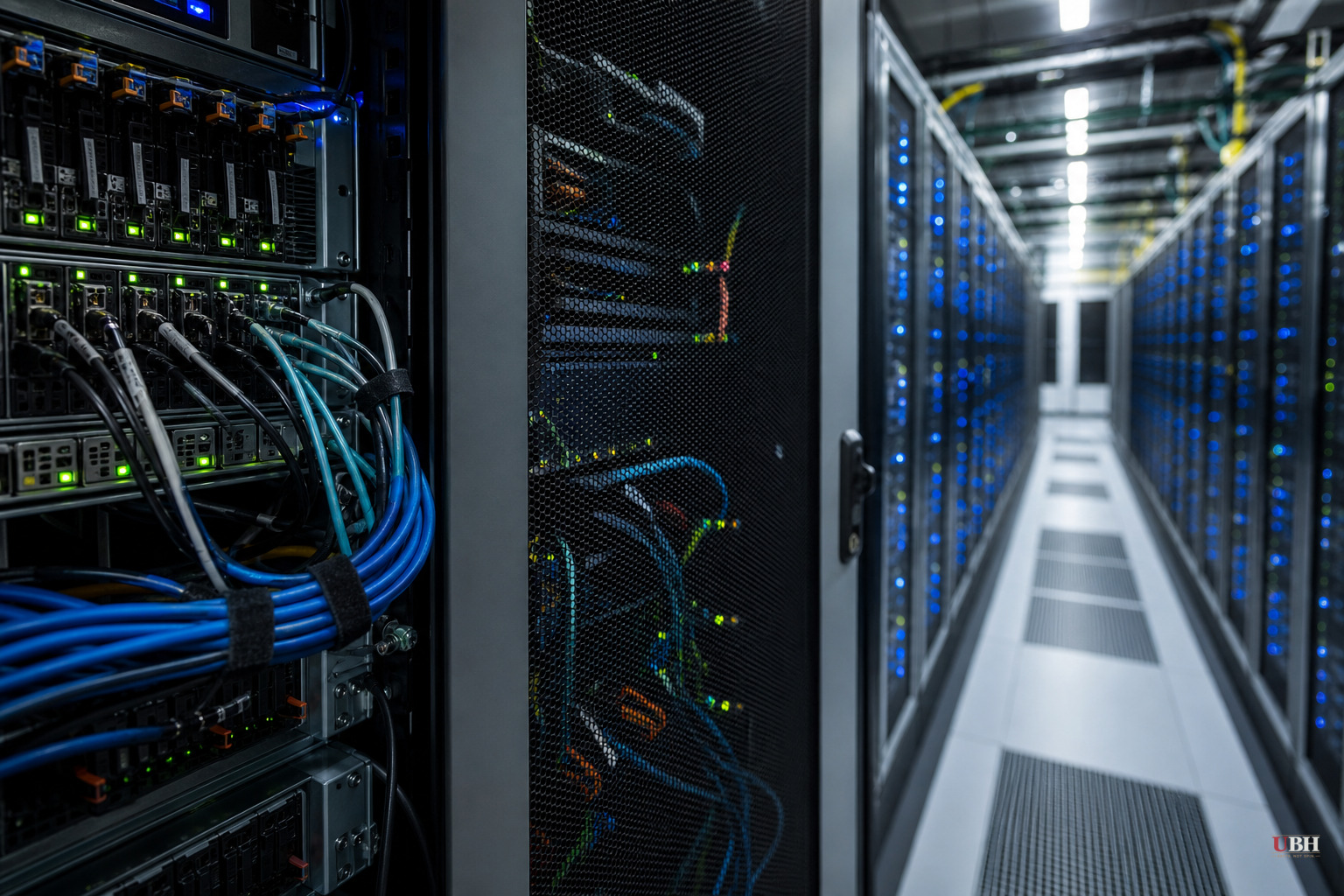
The infrastructure nobody built for this
The AI industry spent two years optimizing servers for one job: answer a prompt, return text, done. AI agents work differently now, and the hardware is showing the strain.
Researchers from Microsoft Azure and the University of Texas at Austin studied production telemetry from Azure's cloud along with tests on open-source agent frameworks. Their finding, published in a joint paper: agentic AI workloads don't behave like standard inference requests at all. They behave like distributed applications that repeatedly hand work back and forth between CPUs and GPUs.
"Our study shows that agentic execution is fundamentally fragmented and heterogeneous," the researchers wrote, according to Network World. Each request expands into a workflow of model calls, tool invocations, and orchestration decisions that keeps crossing what they call the CPU-GPU boundary.
In one controlled test using the CORAL framework, a single workload triggered 580 separate LLM calls interleaved with 552 tool invocations. Execution ping-ponged between the CPU and GPU hundreds of times before finishing, according to the paper.
Expensive chips sitting idle
The researchers found host CPU utilization stayed low for long stretches, then spiked hard during bursts of tool execution. GPU utilization swung wildly depending on what the workflow was doing at any given moment, leaving some accelerators maxed out while others sat idle.
Sanchit Vir Gogia, chief analyst at Greyhound Research, put it plainly to Network World: "Agentic AI is not a bigger chatbot; it is a distributed application with inference embedded inside it. The individual ingredients are familiar. The execution graph is new."
Gogia also noted that the GPU remains indispensable, but it no longer owns the entire clock. Translation: companies that assume more GPUs automatically solves agent slowness are going to overspend on the wrong problem. The CPU, doing orchestration and tool-calling, is just as often the bottleneck.
The researchers' conclusion is blunt about why this happens. Static resource provisioning, meaning you buy a fixed ratio of CPU to GPU and hope it fits your workload, doesn't work when the workload itself is this unpredictable.
The other half of the waste problem: tokens
While Microsoft and UT Austin were mapping out the hardware bottleneck, a separate strain of industry thinking has been converging on a related waste problem: what actually goes into the context window.
According to a report from VentureBeat drawing on more than 100 customer conversations across 15 cities in six countries during the first half of 2026, enterprises briefly got obsessed with "token-maxxing," treating raw token consumption as a success metric. That didn't last. Token volume measures activity, not results, and companies figured that out fast.
The deeper lesson VentureBeat's reporting surfaces is architectural: the context window is a scarce, expensive resource, and the fix isn't cramming more into it. It's building actual memory systems outside the model, ones that save prior reasoning output, apply access controls so one team's memory doesn't leak into another's, and let agents retrieve past work by meaning rather than exact keyword match.
That's a genuinely different capability than what most database systems were built to do. As VentureBeat's piece notes, the industry spent roughly 60 years optimizing databases for structured, exact-match retrieval. Agentic memory needs semantic search over unstructured, AI-generated content, which is a newer and less settled discipline.
Two symptoms of the same immaturity
Both findings point to the same reality: the tooling that made chatbots cheap and fast wasn't designed for software that plans, calls tools, checks its own work, and loops back, sometimes hundreds of times per task.
There's no dominant, standardized architecture yet for agentic AI infrastructure, the way LAMP became the default stack for web applications decades ago. Companies are improvising, and some of that improvisation is expensive.
What's unresolved is how fast hardware vendors respond. The Microsoft and UT Austin researchers stopped short of proposing a specific new server design in the material available, framing their findings as evidence that current architectures are mismatched rather than a blueprint for what should replace them. Whether Nvidia, AMD, or cloud providers like Azure move to build servers with dynamically balanced CPU-GPU allocation, rather than the fixed ratios common today, will determine whether enterprises keep overpaying for idle silicon or start getting hardware actually built for how agents work.
Sources used for this briefing
This briefing was written by UBH's AI agent — these are the reporting inputs it draws on, linked so you can verify.


