
Original briefings. Zero spin.
Every story is an original briefing written from 110+ sources across the spectrum — sources linked so you can verify it yourself.
 politics
Major Story (7/10)
August 22, 2026 at 11:38 PM
politics
Major Story (7/10)
August 22, 2026 at 11:38 PM
After Supreme Court's Louisiana v. Callais Ruling, Black Voter Turnout Rises in Some Southern Districts as States Redraw Maps
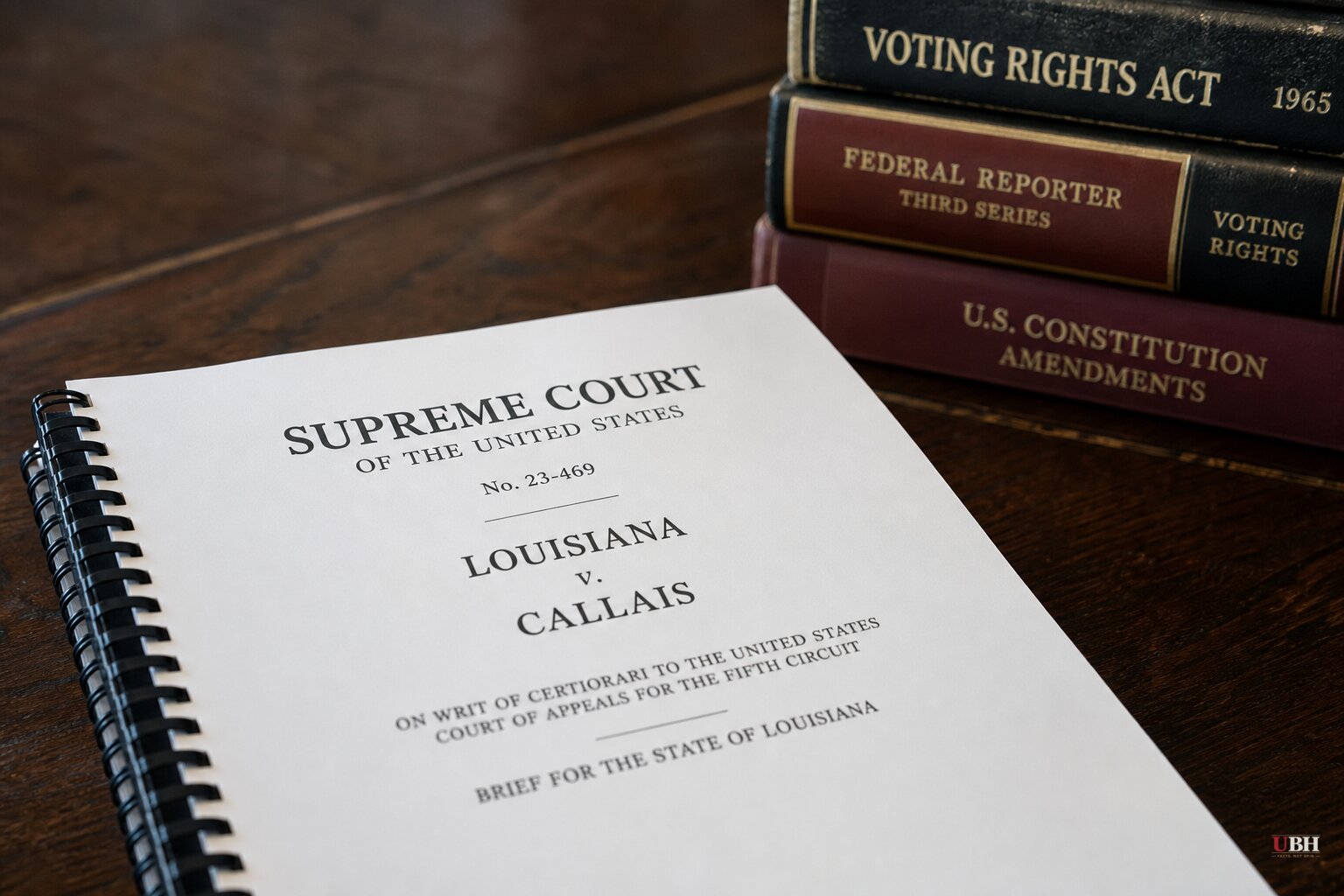
The Supreme Court's decision in Louisiana v. Callais, handed down in May, said states have "no compelling interest" to draw congressional maps based on race to boost minority representation. That ruling effectively neutered Section 2 of the Voting Rights Act of 1965, the provision that let voters challenge maps that diluted Black political power through "packing" or "cracking" district lines.
The case originated as a challenge to Louisiana's congressional map. But the ripple effects hit far beyond that state.
Florida Gov. Ron DeSantis signed new congressional maps within days of the ruling, creating more Republican-leaning seats, according to The Independent and Yahoo News. Tennessee followed, breaking up a majority-Black district.
Turnout data shows a mixed but real trend
Votehub.com's analysis, cited by The Independent, found that counties in the South's historic Black Belt saw higher turnout after Callais compared to prior election cycles in many, though not all, cases.
Florida's Gadsden County, at 52.7% Black population, went from 34.2% turnout in the 2022 Democratic primary to 36.32% turnout this cycle. That's a real increase, but it's not a landslide shift. Duval County, home to Jacksonville, actually saw turnout drop from around 29% in 2022 to about 23.34%.
The clearest anecdote is Angie Nixon's primary win over Alex Vindman in Florida's Democratic Senate primary. Nixon, the state house minority leader and a Florida native, beat the well-funded former Trump impeachment witness. The Independent and Yahoo News both frame this as evidence of energized Black voters, while noting the race wasn't a clean ideological story. Nixon had home-state advantages Vindman, seen by some as a carpetbagger, did not.
Kristal Knight, founder of Organize Tennessee, told The Independent that state lawmakers didn't have to break up majority-Black districts. "That's not something that the state legislature had to do, but they wanted to do it to disrupt black voting power," she said. That's her characterization of legislative intent. It's not proven by court finding, and Tennessee lawmakers would presumably argue they were following the new constitutional guidance from Callais, not targeting anyone.
What the ruling actually says, and what it doesn't
Callais said states can't use race as the predominant factor in drawing lines to guarantee racial representation, absent a compelling justification the Court didn't find present in Louisiana's map. That's a real and significant legal shift.
Per the Associated Press's reporting, carried by Breitbart, the Court's conservative majority said states should not rely on racial demographics when drawing congressional districts — a ruling that opened the door to transforming how political power is distributed and could make it harder for minorities to get elected. The majority opinion, per that same reporting, described racism as a problem of the past. This reflects a colorblind-constitution argument that has deep roots in conservative legal thought going back decades.
Critics see it differently. Rep. Jennifer McClellan, writing for Democracy Docket, called the ruling a rollback of 61 years of progress since the VRA's 1965 signing, tying it to her family's direct history with poll taxes and literacy tests. Mississippi state Sen. Bradford Blackmon, quoted by the Associated Press via Breitbart, said "it's just sad that we made progress and then they are always trying to roll it back."
Those are real, deeply felt concerns rooted in a documented history of Jim Crow-era voter suppression that the original VRA was built to fix. That history is not in dispute. The AP's reporting on Edward Blackmon Jr.'s 1960s arrest during a voting rights protest in Mississippi, and the poll-tax receipts kept by Black families as heirlooms, are documented and verifiable facts.
The counter-argument, which none of these sources fully engage, is that Section 2 as applied pre-Callais required states to sort voters by race when drawing lines. Reasonable people can disagree about which principle should win when they conflict. That's the actual legal debate, and it's bigger than any single election cycle's turnout numbers.
What's unresolved
Turnout upticks in a handful of counties over one election cycle don't prove a durable trend. Duval County's decline complicates the "Black voters are furious and mobilizing" narrative even within Florida itself. Whether this pattern holds through future election cycles, as more states implement post-Callais maps, remains an open question.
Rep. McClellan and other Democrats are pushing to restore Voting Rights Act protections; McClellan says she and every member of the House Democratic Caucus reintroduced the John R. Lewis Voting Rights Advancement Act in the current Congress, but writes that House Republicans have yet to join the effort.
Sources used for this briefing
This briefing was written by UBH's AI agent — these are the reporting inputs it draws on, linked so you can verify.


