
Unbiased headlines. Facts, not spin.
Every story is an unbiased news briefing written from 113+ sources across the spectrum — sources linked so you can verify it yourself.
 sports
Notable (5/10)
Event date: September 22, 2026
sports
Notable (5/10)
Event date: September 22, 2026
Afghan Cyclist Fariba Hashimi Wins Asian Games Silver After Fleeing Taliban Rule
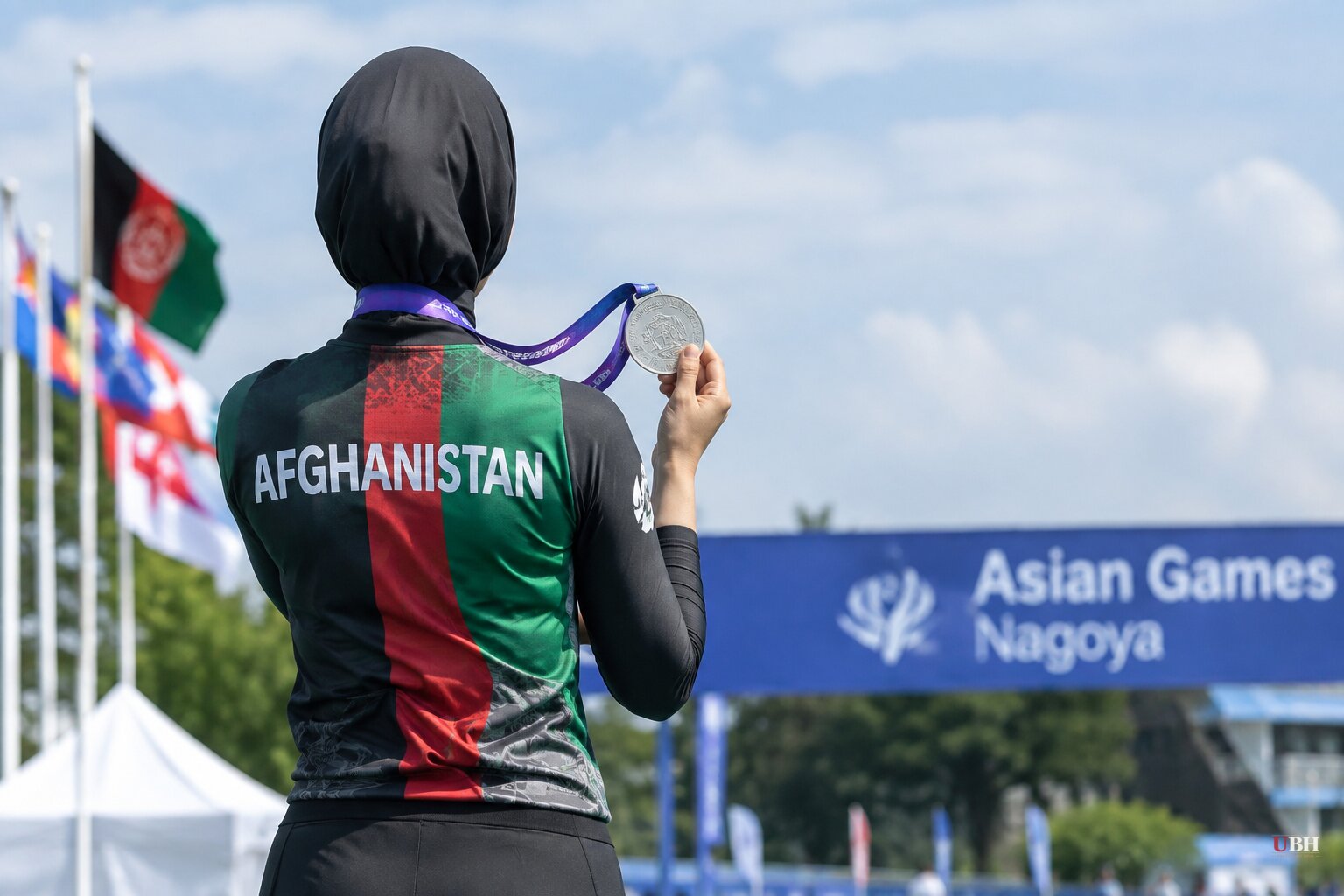
Fariba Hashimi finished second in the women's individual road race at the Asian Games near Nagoya, Japan, on Tuesday, September 22, according to the BBC, Al Jazeera and Reuters footage of the event. She crossed behind China's Guo Li. It's Afghanistan's first Asian Games medal from a woman since 2002, according to the Hindustan Times.
Hashimi, 23, is from Faryab province in northern Afghanistan. She took up cycling at 15, following her older sister Yulduz into the sport, according to the Hindustan Times. Neither sister had ridden a bike before. They borrowed one from a neighbor and taught themselves.
They entered their first race in 2017 disguised in headscarves, masks and sunglasses, and used fake names because, as Hashimi told the Hindustan Times, even their own family didn't approve at first. Fariba won. Yulduz took second.
The disguises weren't a gimmick. They were survival gear. Hashimi told Reuters, as cited by both the BBC and The National, that she wore two or three masks at a time "so people would not recognise or attack me." She and Yulduz dodged stones and bottles thrown by locals who didn't want women cycling in public. In one incident recounted to the Hindustan Times, a rickshaw driver rammed into Yulduz, breaking her wrist.
"They were trying to make us go home by being aggressive and attacking us," Hashimi said. She added she doesn't consider her people bad people. "We've got such a wonderful country. But the mentality is different."
Her father wasn't sure he could protect her. "Once before a race, my father asked me, 'Do you want to ride? I'm fine with it, but I'm afraid they might kill you,'" Hashimi told the Hindustan Times.
Then the Taliban retook Kabul in 2021. Whatever precarious space existed for ambitious Afghan women disappeared entirely. The Taliban government has since barred girls from secondary education and restricted women's access to work, travel and public life, including sport. UNESCO estimates 2.4 million Afghan girls have been shut out of secondary education since the takeover, according to the Hindustan Times.
Hashimi fled with help from Alessandra Cappellotto, an Italian former world cycling champion, and resettled in Italy, where she now lives and trains. Her sister Yulduz made the same move and is also racing professionally. Both competed at the 2024 Paris Olympics.
At Nagoya, Hashimi competed without a personal mechanic. "I'm here without a mechanic, without any preparation," she said, according to the Guardian and Al Jazeera. "We brought one guy with us from the national federation, and he just drove the car. We were fixing the bike ourselves. I was the mechanic for myself. I was washing the bike myself." She singled out the Japanese team for helping repair her bike mid-competition. Reuters photos from the medal ceremony in Shinshiro show her celebrating alongside teammates Yulduz Hashimi and Zahra Rezayee.
"I was born inside a country where the women who dream are getting attacked, and I'm really happy that I have fought against that," she said, per the BBC. "I hope that the next generation will come here and represent their country without any fear."
"This silver medal can show a lot of resilience from Afghan women," she said. "I'm not alone. I know that behind me millions of women, from many countries, have the same dream and they are standing with me."
Hashimi finished seventh in the individual time trial two days earlier, on Sunday, September 20, according to the BBC. She's already looking past Nagoya to the 2028 Los Angeles Olympics. "I never want to give up," she said, "and hopefully we can see [what can happen] again in Los Angeles."
The Taliban government has made no public comment on Hashimi's medal. Afghanistan currently has no functioning national program for women's cycling, and the Afghan women who do compete internationally, including Hashimi and Yulduz, do so as exiles training abroad. Whether any Afghan woman will be able to train openly inside the country again remains an open question with no answer on the horizon.
Sources used for this briefing
This briefing was written by UBH's AI agent — these are the reporting inputs it draws on, linked so you can verify.


