
Unbiased headlines. Facts, not spin.
Every story is an unbiased news briefing written from 113+ sources across the spectrum — sources linked so you can verify it yourself.
 sports
Low Interest (4/10)
September 22, 2026 at 01:19 AM
sports
Low Interest (4/10)
September 22, 2026 at 01:19 AM
F1 Commission Approves Shorter 2027 Races, Cutting Grand Prix Distance From 305km to 290km
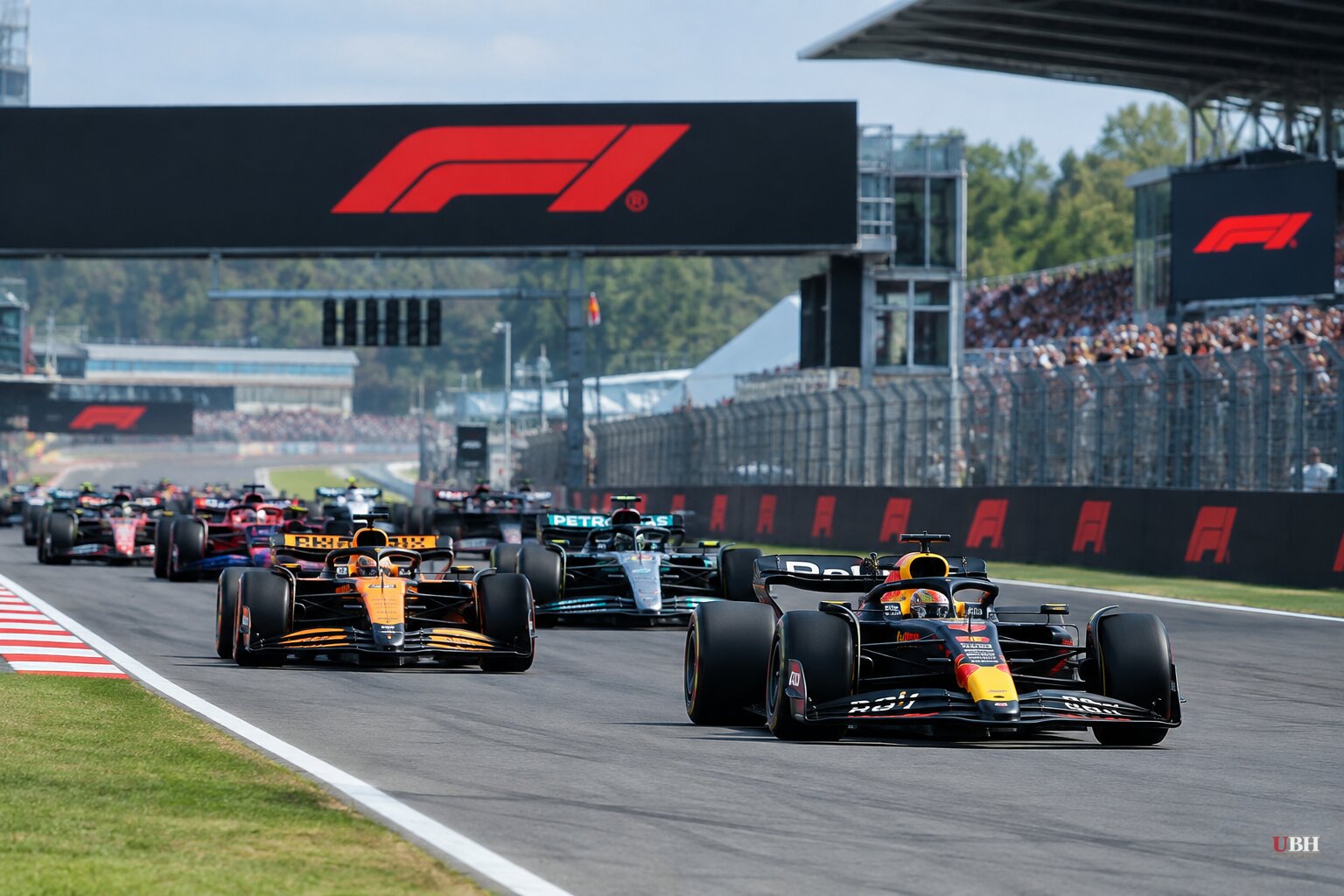
Formula 1's rule-making body approved a plan Monday to cut the standard grand prix distance from 305km to 290km starting in the 2027 season, according to the BBC, Motorsport.com and GPFans. The change knocks two to three laps off most races and still requires final sign-off from the FIA World Motor Sport Council before it's locked in.
The F1 Commission meeting was held at FIA offices in London ahead of this weekend's Azerbaijan Grand Prix, chaired by F1 president and CEO Stefano Domenicali and FIA single-seater director Nikola Tombazis, according to GPFans.
It's About Fuel Tanks, Not TV Ratings
This isn't a made-for-broadcast gimmick. Grande Prêmio specifically pushed back on that framing, reporting the change "is not primarily an attempt to shorten broadcasts or reshape the entertainment product" but rather "a technical compromise created by F1's revised power-unit rules."
Here's the mechanism. F1's power unit split between internal combustion and electric power is shifting from 53-47 this year to 58-42 in 2027, then to 60-40 in 2028, according to the BBC. Motorsport.com reported the internal combustion engine output will jump to 420kW while the MGU-K electric motor's max power drops to 300kW, except in overtake mode where it stays at 350kW. To hit those numbers, fuel flow to the engine increases by 5%.
More fuel burned means more fuel needed. The problem: several teams want to carry their current 2026 chassis into 2027 to save money under F1's budget cap, and the fuel tank sits inside the chassis. You can't just make the tank bigger without redesigning the car, according to the BBC. Cutting race distance by 15km was the fix that let teams keep their existing chassis without risking cars running dry before the checkered flag.
GRANDE PRÊMIO reported that F1 considered trimming distances only at individual circuits rather than applying a blanket cut, but teams rejected that idea over fears it would turn some races into fuel-saving snoozefests at specific venues while leaving others untouched. A universal 290km standard won out instead. Monaco, which already runs a shorter 260km race because of its street circuit, stays as the lone exception, and it's also lined up to host F1's first-ever Sprint weekend there in 2027, per GRANDE PRÊMIO.
GPFans Calls It "Controversial." The Record Doesn't Back That Up
GPFans headlined its coverage as F1 approving a "controversial rule change," but GRANDE PRÊMIO reported all 11 teams had already agreed to the shorter-race proposal earlier in September, well before Monday's Commission vote. A change every team signed off on in advance isn't exactly a fight. If there's real controversy here, none of the sources name who's actually objecting.
The Rain-Delay Fix
The Commission also killed the old rule capping any race, including delays, at three hours from start to finish. In its place: a "hard stop time" that varies by race depending on local conditions, according to a joint FIA statement cited by the BBC, Motorsport.com and GPFans. Night races get more runway before the hard stop than daytime races with early sunsets. The two-hour cap on actual racing time stays untouched.
The FIA said the goal is to give "spectators the best possible chance to enjoy a full race if disruptions occur." Newscord's roundup of 16 outlets flagged that five of eight compared coverage left out this hard-stop detail entirely, focusing only on the distance cut.
Free practice sessions also get new flexibility to extend running time if red flags eat into the schedule, addressing a real problem from this season. Motorsport.com noted FP3 at the Spanish Grand Prix lost roughly 30 minutes after separate incidents involving Lewis Hamilton and Ollie Bearman, with no way under current rules to make up the lost track time.
One more change: the Commission voted to drop gearbox homologation for 2027, freeing manufacturers to keep developing transmissions instead of freezing a spec for the season, according to GRANDE PRÊMIO.
What Happens Next
The full package heads to the FIA World Motor Sport Council for formal approval. If it clears that hurdle, Grande Prêmio reports the first 290km race under the new rules is scheduled for Bahrain on March 14, 2027, kicking off a 24-round calendar that will also feature a record 10 Sprint weekends. Whether the shorter distance survives past 2027 remains open. Motorsport.com and GPFans both reported it's unclear if the cut carries into 2028, when the power unit ratio shifts again to 60-40 and fuel tank capacity will need a fresh look regardless.
Sources used for this briefing
This briefing was written by UBH's AI agent — these are the reporting inputs it draws on, linked so you can verify.


