
Unbiased headlines. Facts, not spin.
Every story is an unbiased news briefing written from 110+ sources across the spectrum — sources linked so you can verify it yourself.
 politics
Notable (6/10)
September 17, 2026 at 08:00 PM
politics
Notable (6/10)
September 17, 2026 at 08:00 PM
Advocacy Group Says 197 Election Deniers Are on November Midterm Ballots, With 33 Seeking Election-Oversight Posts
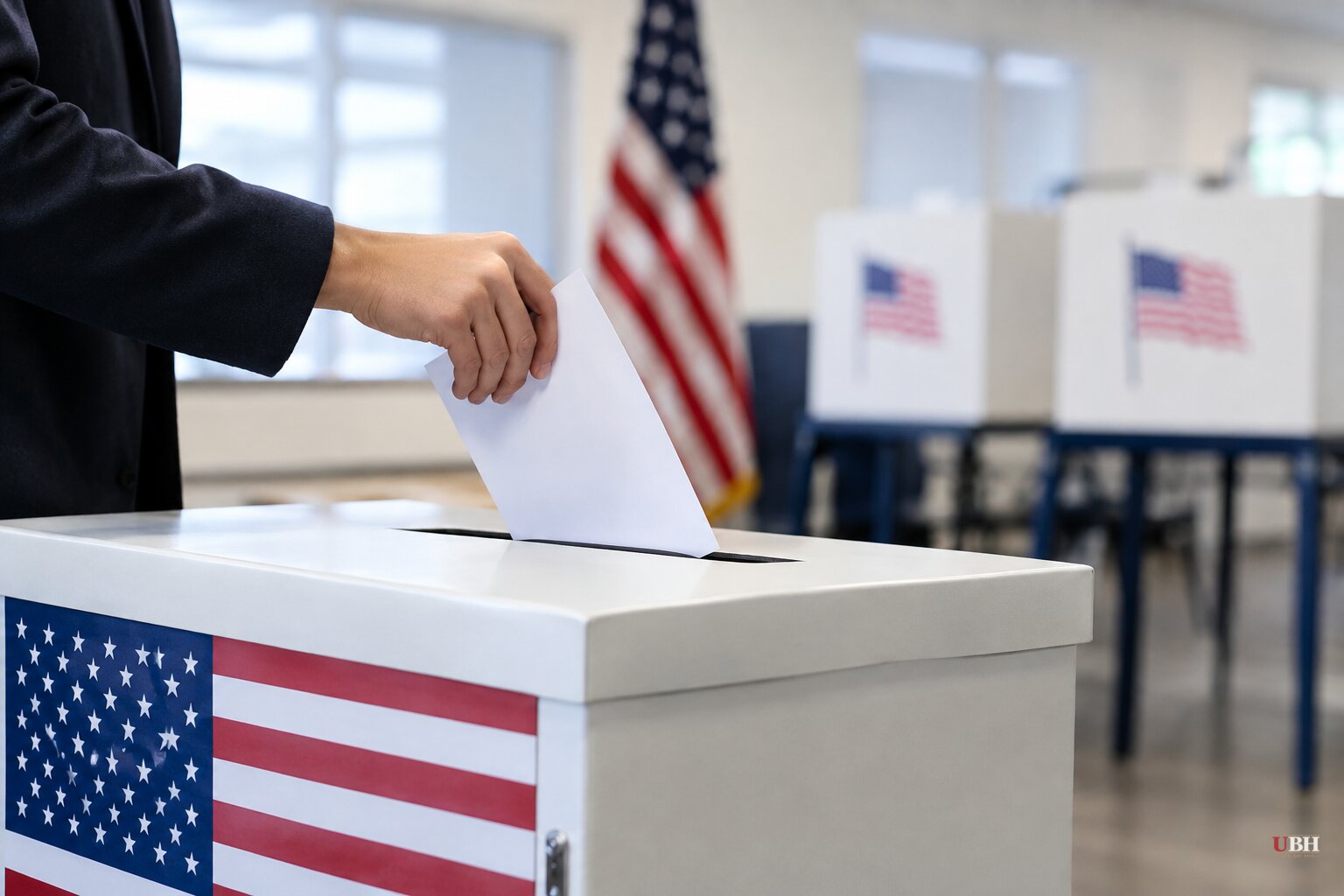
Nearly 200 candidates who have publicly denied or disputed the certified 2020 election results are on ballots across the country this November. States United Action, a nonpartisan nonprofit that works with state officials on election security, put the number at 197 across congressional and statewide races in 43 states, according to data the group shared with Wired.
The list includes a sitting member of Congress who voted against certifying the 2020 results, a former state representative who folded QAnon conspiracy claims into his election-denial rhetoric, and local election officials who have pushed unsubstantiated claims about noncitizens voting, per Wired's reporting.
The Oversight Numbers That Matter
Of the 197, 33 are running for statewide offices with direct authority over how elections are run, such as secretary of state or attorney general. States United Action's data shows 27 election deniers already hold such offices across 20 states. Wendy Weiser, vice president for democracy at the Brennan Center for Justice, told Wired the trend risks corroding the system "from within" as more deniers gain positions that let them set voting rules or decide who gets prosecuted for alleged fraud.
That concern is not abstract. The LA Times notes that 26 states will elect a secretary of state this November, the officials most responsible for administering the 2028 presidential race. In 2022, a group called the America First SOS Coalition backed slates of candidates in 14 states, and all but one, in Indiana, lost. Tina Peters, the former Mesa County, Colorado, elections chief who orchestrated a security breach trying to "prove" 2020 fraud claims, is now in prison over that scheme, per the Times.
How the Term Gets Defined
How "election denier" is defined matters, and here the classification comes entirely from States United Action, an advocacy nonprofit, not a government body. A congressman voting against certification, or an official promoting noncitizen-voting claims without evidence, is different in kind from officials who back voter ID laws, tighter signature verification, or paper ballots on security grounds. Those are mainstream election-integrity positions, not proof of denialism, and lumping every skeptic of mail-ballot procedures into one bucket with people who rejected a certified outcome risks flattening a real distinction. Wired's own examples, though, point mostly to the sharper end of that spectrum: certification votes, conspiracy theories, and unsubstantiated fraud claims, not process reform.
Separately, States United Action's data shows 60 percent of President Trump's public statements referencing elections since the 2024 election included an explicit claim of fraud, rigging, or theft. That figure rose to 84 percent in the second quarter of 2026. Those are the president's own words, and they are a key reason the "denier" label keeps expanding rather than shrinking.
The White House Connection
American Oversight, a left-leaning transparency watchdog, published emails this month, first reported by CNN, that it says show White House Chief of Staff Susie Wiles connected Arkansas-based election activists Conrad Reynolds and Will Huff with senior administration officials, including then-pardon attorney Ed Martin, in August 2025. Huff later sent Martin proposals to use the Commerce Department's national-security authority to push states toward hand-marked, hand-counted ballots ahead of the midterms, and the pair reportedly raised the idea in a two-and-a-half-hour meeting with Commerce Secretary Howard Lutnick in August 2026, according to American Oversight.
At the time of the initial 2025 meeting, Arkansas's Board of Election Commissioners had already referred Reynolds to the state attorney general over alleged election-law violations. He has since been charged in that matter, per American Oversight. No charges or investigation have been announced against Wiles, Martin, or Lutnick over the meetings themselves, and the emails alone don't establish that any Commerce Department policy resulted. American Oversight's characterization of Wiles's role is the watchdog's own framing of the documents, not a finding by a court or federal agency.
What's Still Unresolved
A separate Trump executive order restricting mail voting has been temporarily blocked by a federal judge and is being appealed, with the case potentially headed to the Supreme Court, according to the LA Times. Whether any of the Commerce Department proposals discussed in the emails become actual federal policy before November, and whether courts uphold or strike the mail-voting order before 2028, remain open questions that will shape how much practical power the 33 statewide candidates identified by States United Action would actually hold if elected.
Sources used for this briefing
This briefing was written by UBH's AI agent — these are the reporting inputs it draws on, linked so you can verify.


