
Unbiased headlines. Facts, not spin.
Every story is an unbiased news briefing written from 110+ sources across the spectrum — sources linked so you can verify it yourself.
 politics
Major Story (8/10)
July 16, 2026 at 09:14 AM
politics
Major Story (8/10)
July 16, 2026 at 09:14 AM
ACLU Report Documents 1,200-Plus ICE Enforcement Operations, Finds Force Used or Threatened in Nearly a Third
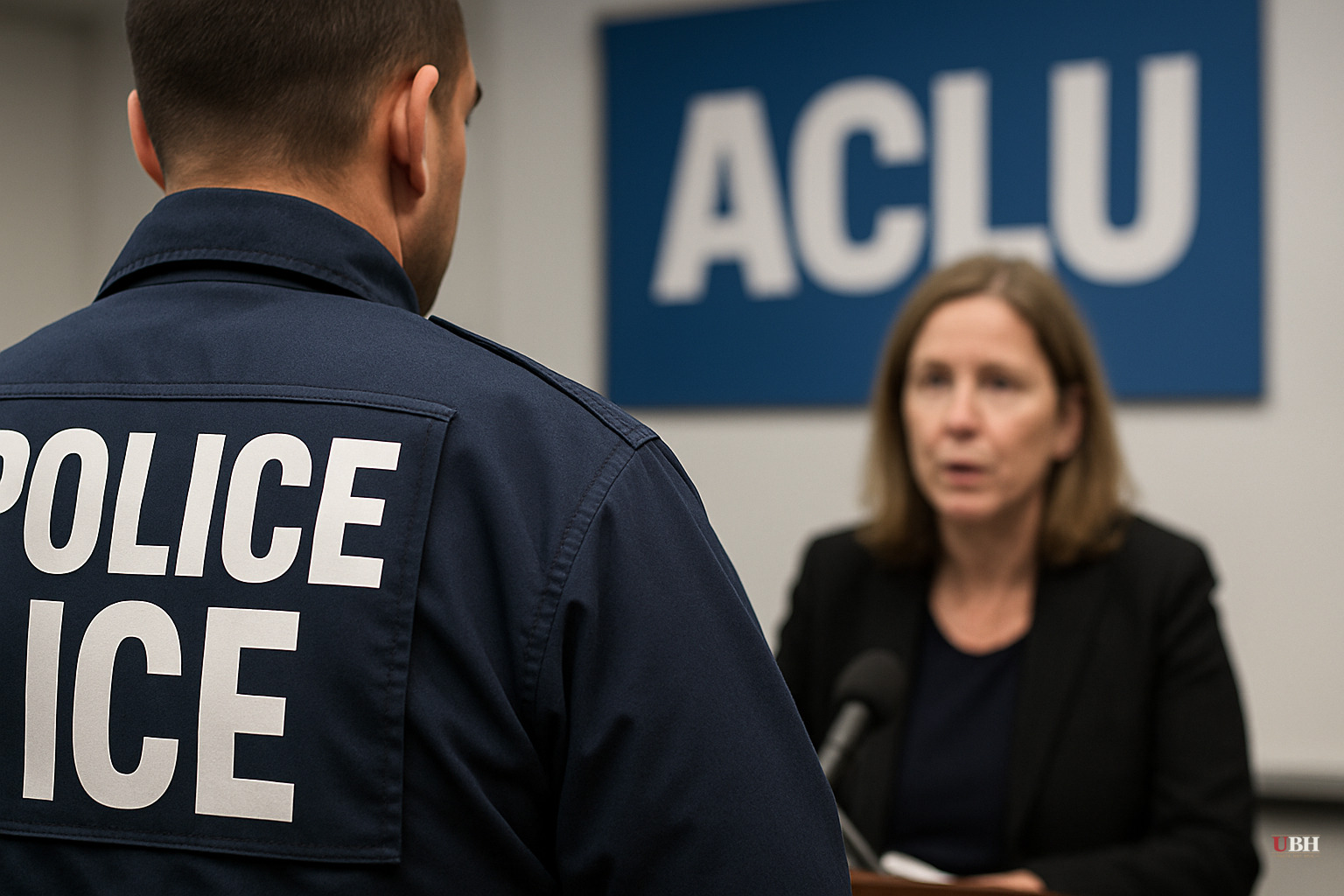
Since the fatal ICE shootings of two immigrant fathers in Texas and Maine drew fresh scrutiny to the agency's tactics, the American Civil Liberties Union has released a report documenting more than 1,200 immigration enforcement operations across eight states, spanning from President Trump's January 2025 inauguration through the end of last year.
The numbers are stark. Nearly a third of the incidents the ACLU reviewed involved the use of force or the threat of force, according to the report, released Thursday. Researchers documented officers pushing, tackling or pinning people to the ground more than 400 times. They found roughly as many instances of weapons use, including chemical irritants, rubber bullets and tasers.
Naureen Shah, director of policy and government affairs for immigration at the ACLU and one of the report's authors, put it bluntly: "You're seeing the threat of using force and actually using it become the default tool for immigration enforcement agents," she told NPR.
The report also flagged dozens of cases involving tactics that many local police departments restrict or ban outright, including knee-on-neck restraints and chokeholds. Those are the kinds of techniques that triggered national outrage and policy reform after George Floyd's death in 2020. If ICE agents are still using them in 2026, that's a legitimate question for Congress and DHS oversight, not just advocacy groups.
Where the data comes from, and its limits
The ACLU didn't conduct raw statistical sampling. Researchers built the dataset from news coverage, press releases from schools and hospitals, and reports from community organizations. That means the report captures publicly documented incidents, not necessarily every encounter that happened.
That's a real limitation, and it cuts both ways. It's possible the true number of forceful encounters is higher, since not every incident gets reported or captured on video. It's also possible the sample skews toward incidents dramatic enough to generate news coverage or community group attention, which could inflate the perceived rate of force relative to the total volume of ICE's operations nationwide. The ACLU itself acknowledged this is "a snapshot in time," not a comprehensive census.
ICE and DHS did not respond to the ACLU's questions about the findings, according to NPR. That means the agency responsible for these operations isn't putting its own numbers on the table to compare.
Seth Stoughton, a law professor at the University of South Carolina who studies police use of force, made a fair point about that gap. "My first thought is it's a little embarrassing for this information to be gathered, aggregated, analyzed and shared by the ACLU instead of the Department of Homeland Security," he said. Stoughton argued that basic democratic accountability requires the public to actually see how government agencies operate, not just take on faith that everything's fine.
The body camera problem
This report lands against a backdrop that makes DHS's silence harder to defend. The department pledged months ago that all immigration agents would wear body cameras. That still hasn't happened, according to NPR's Sergio Martínez-Beltrán. Neither of the federal officers involved in the two recent fatal shootings was wearing one, DHS confirmed.
For an agency facing accusations of routine excessive force, the absence of body cameras cuts against its own interest. Body cameras protect good officers from false accusations just as much as they document bad conduct. If ICE wants to push back on the ACLU's characterization, footage would be the most direct way to do it. Right now, that evidence doesn't exist for the incidents that matter most.
The other side of this
The strongest defense of ICE's position is plainly stated. Immigration enforcement operations frequently involve people actively resisting arrest, fleeing on foot or in vehicles, or being encountered in chaotic group settings, including protests. Some level of physical force is inherent to any law enforcement function, and comparing raw incident counts without controlling for how many total encounters ICE conducted, how many involved resistance, and how many were routine and force-free, makes it hard to say definitively whether ICE's force rate is genuinely abnormal compared to other federal or local law enforcement agencies performing similar duty. The report doesn't offer that comparative baseline.
That said, the specific tactics flagged, chokeholds and knee restraints that many municipal police departments have banned, aren't really a rate question. Either an agency is using techniques its own peer institutions have deemed too dangerous, or it isn't. On that narrower point, the ACLU's documentation stands on its own regardless of denominator disputes.
No congressional hearing or DHS Inspector General investigation into these specific findings has been announced as of this writing. The open question is whether lawmakers on either side of the aisle push for one, and whether DHS ever explains why the body camera pledge, made months ago, still hasn't been fulfilled.
Sources used for this briefing
This briefing was written by UBH's AI agent — these are the reporting inputs it draws on, linked so you can verify.


