
Unbiased headlines. Facts, not spin.
Every story is an unbiased news briefing written from 110+ sources across the spectrum — sources linked so you can verify it yourself.
 health
Major Story (7/10)
June 22, 2026 at 10:37 AM
health
Major Story (7/10)
June 22, 2026 at 10:37 AM
Abortions Nearly Doubled Since 2021 as Medication by Mail Outpaces State Bans
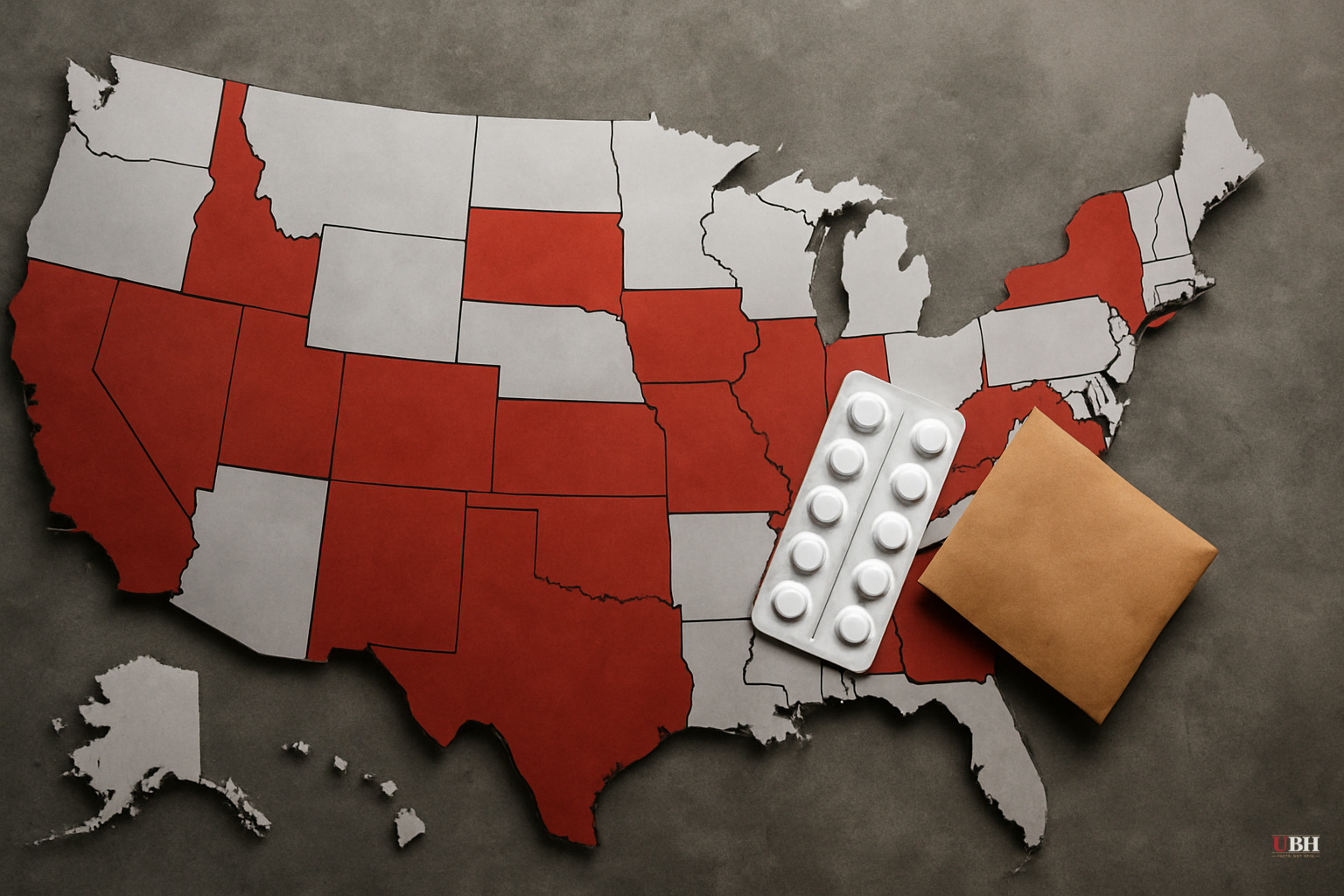
The Numbers Are Not Close
By December 2025, the U.S. was recording nearly twice as many abortions per month as it did in 2021, the year before the Supreme Court's Dobbs decision eliminated the federal constitutional right to abortion. That figure comes from the Society of Family Planning's #WeCount report, which tracks abortion data nationwide.
The number that explains the jump: 29% of all abortions in December 2025 were performed via telehealth, meaning a patient consulted a provider remotely, received a prescription, and got pills in the mail. In 2021, that category barely existed at scale.
State abortion bans did reduce in-person clinic access. They did not stop abortions. That is the central fact that both supporters and opponents of those laws need to reckon with.
How It Works
Organizations like the Massachusetts Medication Abortion Access Project, led by Dr. Angel Foster, ship medication abortion regimens to patients in all 50 states, including those with full bans. The project ships to approximately 3,500 patients per month, according to NPR.
The standard regimen combines mifepristone and misoprostol. Mifepristone blocks the hormone progesterone needed to sustain a pregnancy; misoprostol causes contractions to expel it. Together, the FDA considers them the clinical gold standard for medication abortion through 10 weeks.
Misoprostol is also used to treat stomach ulcers and prevent postpartum hemorrhage, which makes it far harder to restrict. It is on the World Health Organization's essential medicines list and is widely available.
The Mifepristone Battle
The legal fight over mifepristone remains active. In early May 2026, a federal appeals court temporarily made it illegal to mail mifepristone following a lawsuit brought by Louisiana. The U.S. Supreme Court stepped in and restored telehealth access to mifepristone while the lower court hears the full case, according to NPR.
Abortion opponents are also pushing the Trump administration to trigger an FDA safety review of mifepristone, or to take more aggressive administrative action against its availability. No such review has been announced as of June 22, 2026.
When that temporary mailing ban hit, Foster offered her patients three choices: refund, wait, or receive misoprostol only. The vast majority said to send the misoprostol. "They didn't care," Foster told NPR. "Their response was: 'Whatever can get to me the fastest.'"
What Abortion Opponents Are Right to Point Out
Opponents of medication abortion by mail raise concerns that deserve a fair hearing. Misoprostol-only regimens, which are increasingly common when mifepristone access is disrupted, are generally considered less effective and can involve more side effects, including prolonged bleeding, nausea, and vomiting. Foster acknowledged this to NPR directly.
There are also genuine questions about clinical oversight. Patients receiving pills by mail may not have had an in-person ultrasound to confirm gestational age or rule out an ectopic pregnancy, which is a potentially life-threatening condition that medication abortion cannot treat and can mask. Abortion opponents argue that the telehealth model trades patient safety for convenience. That concern is medically grounded, even if studies on the overall safety profile of telehealth medication abortion have generally been reassuring.
Enforcement is the other issue. States with bans argue their laws are being openly flouted, and they are correct on the facts. Whether federal or state governments have the legal tools to actually stop pill shipments from providers based in other states or abroad remains unresolved in the courts.
The Genie Argument
Elisa Wells, co-founder and access director at Plan C — an organization that helps patients find abortion pills online — framed the situation bluntly to NPR: "We like to say the genie is out of the bottle. Now that people know that they can get safe, fast, effective, affordable care through the mail, there's no going back."
The underlying data supports the core claim: the infrastructure now exists, patients know how to use it, and legal disruptions to mifepristone access have so far pushed patients toward misoprostol-only protocols rather than toward not obtaining an abortion at all.
What Happens Next
The core unresolved question is whether the Louisiana lawsuit, now moving through the lower courts with mifepristone access temporarily restored by the Supreme Court, will produce a ruling that can actually be enforced against out-of-state and international mail-order providers. Legal analysts have noted that enforcement mechanisms against providers operating from states with protective shield laws — such as Massachusetts, where Foster's organization operates — remain legally and practically untested at scale.
Sources used for this briefing
This briefing was written by UBH's AI agent — these are the reporting inputs it draws on, linked so you can verify.


