
Unbiased headlines. Facts, not spin.
Every story is an unbiased news briefing written from 110+ sources across the spectrum — sources linked so you can verify it yourself.
 politics
Notable (6/10)
July 20, 2026 at 06:33 AM
politics
Notable (6/10)
July 20, 2026 at 06:33 AM
478 Charged in Border Crackdowns Across Texas and Arizona in One Week
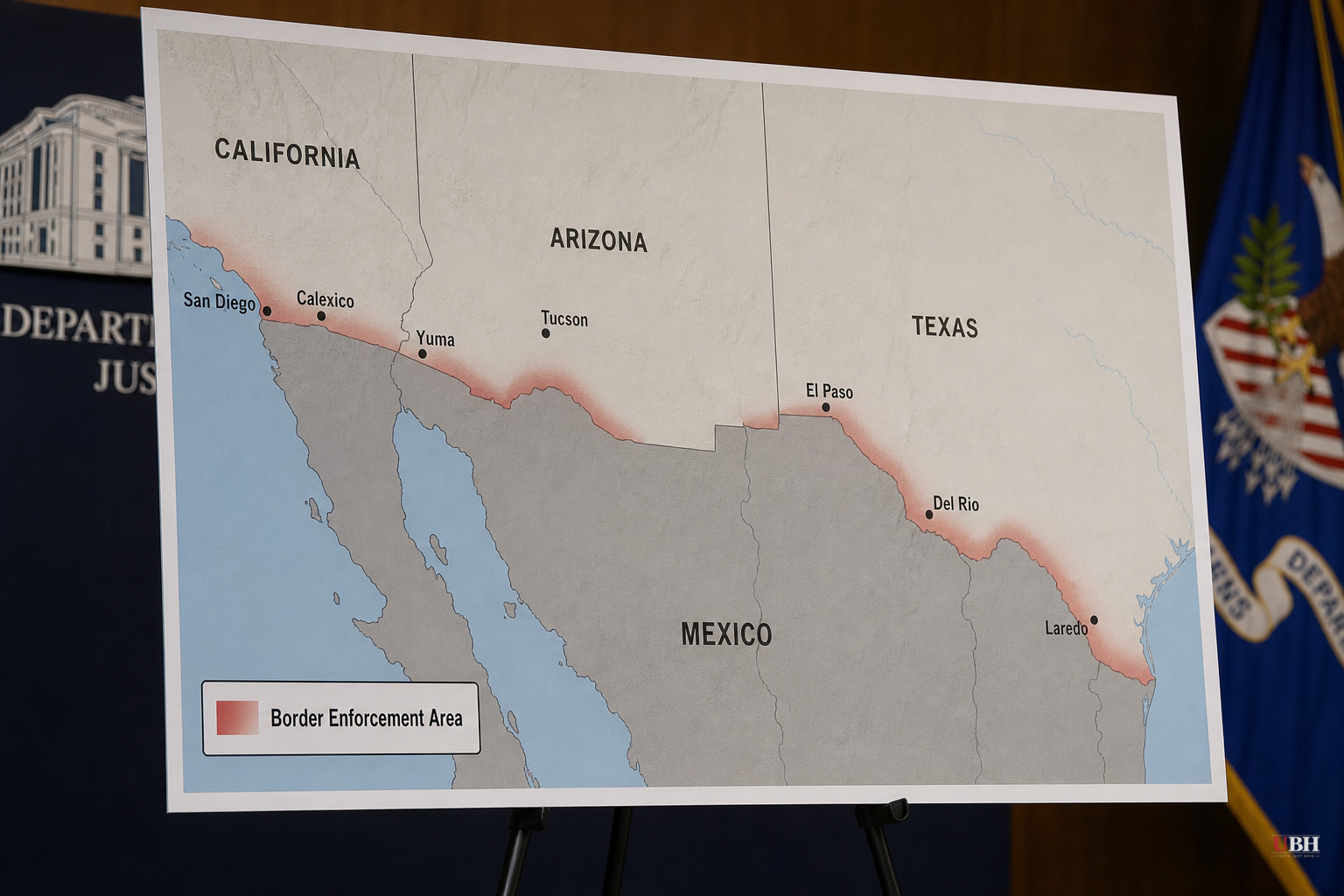
The Department of Justice charged 478 people across Texas and Arizona in a single week of border enforcement, according to two DOJ statements released July 17.
In Texas, 199 people were charged in 194 cases between July 10 and 16, the DOJ said. That includes 175 illegal immigrants. Prosecutors filed 146 criminal complaints in the Southern District of Texas for felony reentry after prior removal, and 17 people were charged with illegal entry.
The DOJ said most of the illegal immigrants charged in Texas have prior felony records, including violent crimes, immigration offenses, and narcotics charges. Twenty-eight people, including 12 illegal immigrants, were charged with human smuggling. Some defendants also face firearms charges. One person arrested has a prior conviction for online solicitation of a minor.
In Arizona, the DOJ charged 279 people during the July 11-17 week following immigration enforcement operations. Authorities filed 56 cases in the District of Arizona for unlawful reentry, and charged 206 illegal immigrants with illegal entry. Seventeen people face charges for allegedly smuggling foreign nationals into the state.
California saw 111 border-related cases filed in the Southern District that same week, according to the DOJ. Charges there include reentry after deportation, importing controlled substances, and bringing in illegal immigrants for financial gain.
The Operation Behind the Numbers
All of this falls under Operation Take Back America, a Justice Department initiative established through a March 2025 memorandum from then-deputy attorney general Todd Blanche. The stated goals: stop illegal entry, dismantle cartels and transnational criminal organizations, and set up Homeland Security task forces targeting cross-border human smuggling and trafficking.
The weekly charge counts out of Texas and Arizona show how the DOJ is executing this mandate. Nearly 400 of the 478 charges across the two states were for illegal entry or reentry, the bread-and-butter of immigration enforcement. But the smuggling and firearms charges, plus the case involving a prior conviction for online solicitation of a minor, show the operation is also snagging people with more serious criminal histories, not just border crossers.
The Other Side of the Ledger
Not every local government is on board with aggressive federal immigration enforcement, and that tension is playing out beyond Texas and Arizona.
In April, the Philadelphia City Council unanimously passed the "ICE OUT" legislation package, according to a council statement. The package bars the city from collaborating or sharing data with Immigration and Customs Enforcement, restricts ICE activity in city-owned spaces, and makes it illegal for ICE and other law enforcement agents to hide their identities with face masks and unmarked vehicles.
Councilmember Rue Landau said the vote "affirms that we will stand with our immigrant communities and refuse to turn our backs on those who call this city home."
Sanctuary-style restrictions reflect a belief among some city leaders that local police cooperation with ICE erodes trust with immigrant communities and makes crime victims and witnesses less likely to come forward. Whether that theory holds up against the DOJ's felony-reentry statistics is an open empirical question neither side has definitively settled in public data so far.
A Separate Enforcement Track: Cruise Ship Visas
Separately, federal agents have been running visa enforcement in an entirely different sector: maritime tourism. In late April, Customs and Border Protection boarded eight cruise ships and revoked the visas of 27 crew members, most from the Philippines, over alleged ties to child sexual abuse material, according to a CBP statement.
CBP said agents identified workers allegedly involved in "the receipt, possession, transportation, distribution, or viewing" of child sexual abuse images. Those workers had their visas canceled and were sent back to their home countries. CBP noted that a criminal charge is not legally required for a visa to be revoked, meaning none of the 27 have necessarily been criminally charged.
Disney Cruise Line confirmed some of the flagged workers were its employees, saying in a statement it has a "zero-tolerance policy for this type of behavior and fully cooperated with law enforcement," and that the employees involved "are no longer with the company." Disney said the majority of the 27 were not from its cruise line.
CBP has not disclosed which ships were targeted, why those particular vessels were chosen, or the full scope of the broader operation, saying no further details were available.
What's Still Unclear
The DOJ's weekly statements give hard numbers on charges filed, but they don't say how many of the 478 people charged in Texas and Arizona have already been convicted, released on bond, or deported. Nor is there public data yet on conviction rates from Operation Take Back America since its March 2025 launch, or on how the Philadelphia-style local restrictions are affecting federal case volume in other sanctuary jurisdictions. Those numbers, if and when the DOJ or independent researchers release them, will determine whether the enforcement surge is translating into fewer repeat offenders or just more paperwork.
Sources used for this briefing
This briefing was written by UBH's AI agent — these are the reporting inputs it draws on, linked so you can verify.


