
Unbiased headlines. Facts, not spin.
Unbiased Headlines is an independently owned news organization. We bring you the facts, not opinions, written fresh from 110+ named sources. Sources linked so you can verify it yourself.
 health
Major Story (7/10)
health
Major Story (7/10)
22.6% of U.S. Students Chronically Absent in 2025, Down From Pandemic Peak but Still Far Above Pre-Covid Levels
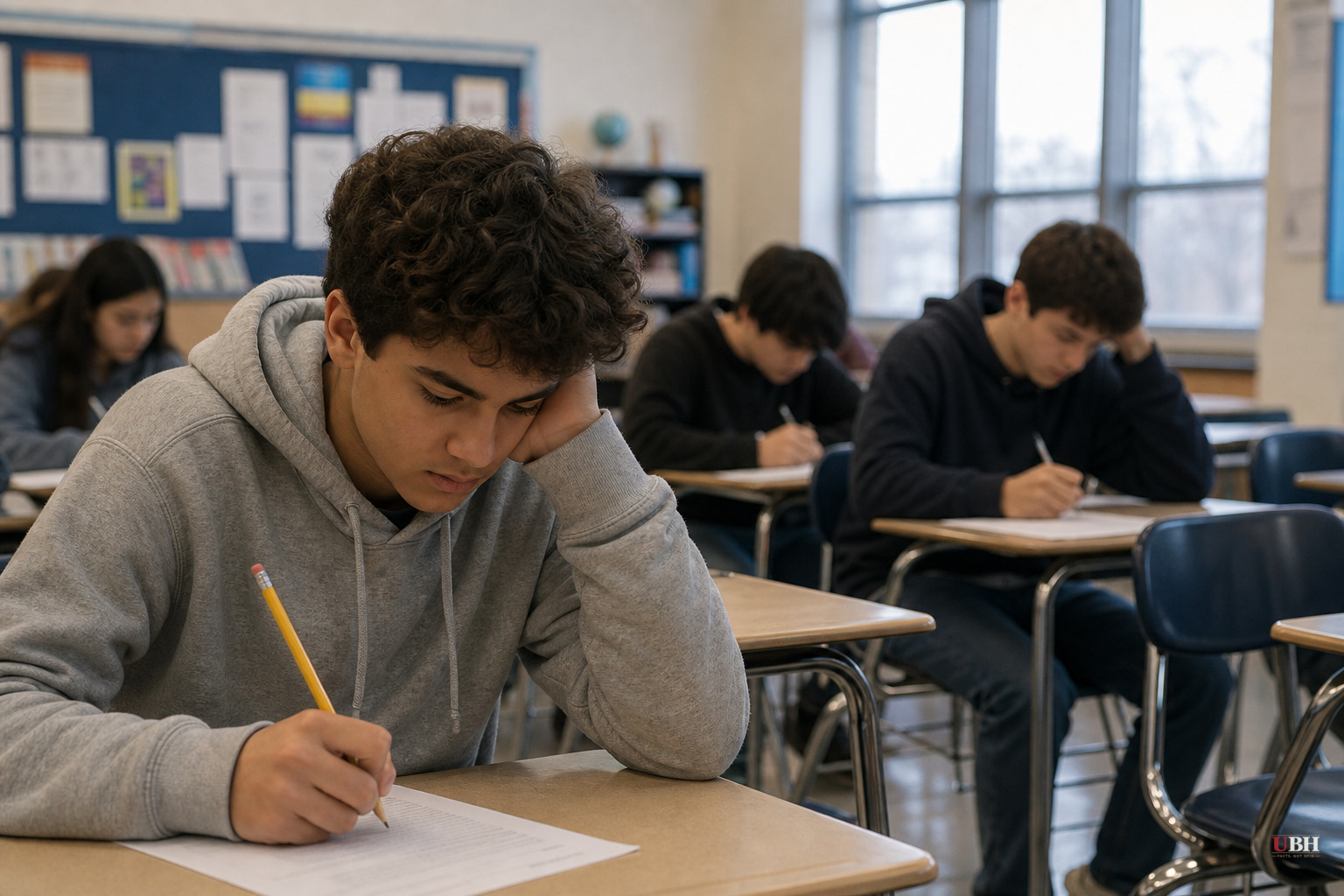
Nearly a quarter of American kids didn't show up to school enough to actually learn last year.
22.6 percent of students were chronically absent in 2025, according to the American Enterprise Institute. Chronic absenteeism means missing 10 percent or more of the school year, roughly 18 days. AEI called the slowdown in progress "a slowdown that should be met with urgent action, not acceptance."
Here's the timeline. Chronic absenteeism spiked to 28.3 percent in 2022, the peak of Covid disruption. It's come down since. But it's still way above pre-pandemic levels, and the rate of improvement is stalling out. Five years after schools reopened, districts still haven't clawed back to normal.
Where It's Worst
AEI found Alaska, Washington D.C., Oregon and New Mexico had the highest absenteeism rates. New Jersey, Virginia and Alabama had the lowest. That's a real split, and it's not about red states versus blue states. It's about which states got kids back in classrooms and which didn't.
The problem clusters hard in disadvantaged districts. In Illinois, the overall chronic absenteeism rate was about 25 percent, but 31 percent of low-income students were chronically absent, and nearly 40 percent of Black students were, according to AEI's research cited by The Independent. In Pittsburgh, 32 percent of students were chronically absent last year. A third of kids in some communities are missing enough school to fall behind for good.
The Academic Cost Is Real and Measured
This isn't just an attendance problem. It's an achievement problem, and the numbers back it up.
A Bellwether analysis, cited by K-12 Dive, found that a student who is chronically absent every year misses up to a full instructional year by the time they graduate high school. That's a year of school, gone.
Bellwether pointed to the 2024 Nation's Report Card, the National Assessment of Educational Progress, to show what that lost time costs. Reading and math scores for 4th and 8th graders showed little to no recovery from pandemic learning loss in 2024. For 8th graders, math scores dropped 8 points between 2019 and 2024, which Bellwether says equals more than a half-year of lost instructional time for the average student.
Among 12th graders, math scores hit their lowest point since 2005, according to NAEP data cited by Bellwether. Nearly a third of 12th graders said they missed three or more school days in the month before taking the 2024 assessment. Bellwether's conclusion: absenteeism across 4th, 8th, and 12th grade remained markedly higher in 2024 than before the pandemic.
NWEA, an assessment and research company, published a separate report in July finding that districts with persistently high chronic absenteeism after the pandemic are struggling far more to recover academically. Those districts are about 50 percent further from math recovery than districts that never had high absenteeism rates. The gap in reading recovery was smaller.
What Schools Are Actually Doing
Some districts are trying direct intervention instead of just tracking the numbers. In Pittsburgh, an organization called A+ Schools has been going door to door, offering families supplies and help with transportation to get kids back in class.
"Today is about bridging that gap, going and knocking on doors, letting folks know about what's available at the school to help them out," James Fogarty of A+ Schools told CBS Pittsburgh.
There's also a related issue called school avoidance, where kids refuse to go to school or can't stay for the full day. It hits disabled students especially hard. New York City recently settled a lawsuit accusing its public school system of failing to catch early warning signs of avoidance among disabled students, denying them a full education. The city now plans to put liaisons in every school building to watch for the mental health struggles and other issues that keep kids from showing up.
Bellwether's report also flags something schools themselves can't always control: teacher strikes, natural disasters, extreme weather days, a growing number of holidays on school calendars, and citywide celebrations all cut into the school year regardless of whether a kid is "absent" in the traditional sense.
The Independent's writeup leans heavily on the disparity angle, citing Illinois's racial and income breakdowns prominently, which is fair and sourced. But it doesn't dig into the academic cost data the way Bellwether and NWEA did. It also doesn't explain why the recovery has stalled, whether it's parental attitudes toward attendance post-Covid, remote-learning options that made missing school feel lower-stakes, or enforcement gaps in truancy policy. That's the actual policy question that goes largely unexamined across these reports.
Bellwether itself is upfront that its report doesn't prescribe a specific fix. Instead, it tells school boards and administrators to ask themselves hard questions about why kids in their districts aren't showing up, and whether their calendars, policies, and interventions are actually built around getting kids back in the building.
Rates are down from the 2022 peak. Nobody disputes that. But 22.6 percent is still nearly one in four kids missing enough school to fall behind, five years after Covid closures ended, and the tools that got the number down from 28 percent aren't moving the needle nearly as fast anymore.
Sources used for this briefing
2 links from 2 independent newsrooms (syndicated copies of the same report count once)
These are the sources it draws on, linked so you can verify.


