
Unbiased headlines. Facts, not spin.
Every story is an unbiased news briefing written from 110+ sources across the spectrum — sources linked so you can verify it yourself.
 politics
Notable (5/10)
July 8, 2026 at 11:34 PM
politics
Notable (5/10)
July 8, 2026 at 11:34 PM
2028 Democratic Field Moves Left on Israel, but the Policy Gaps Are Wider Than the Rhetoric
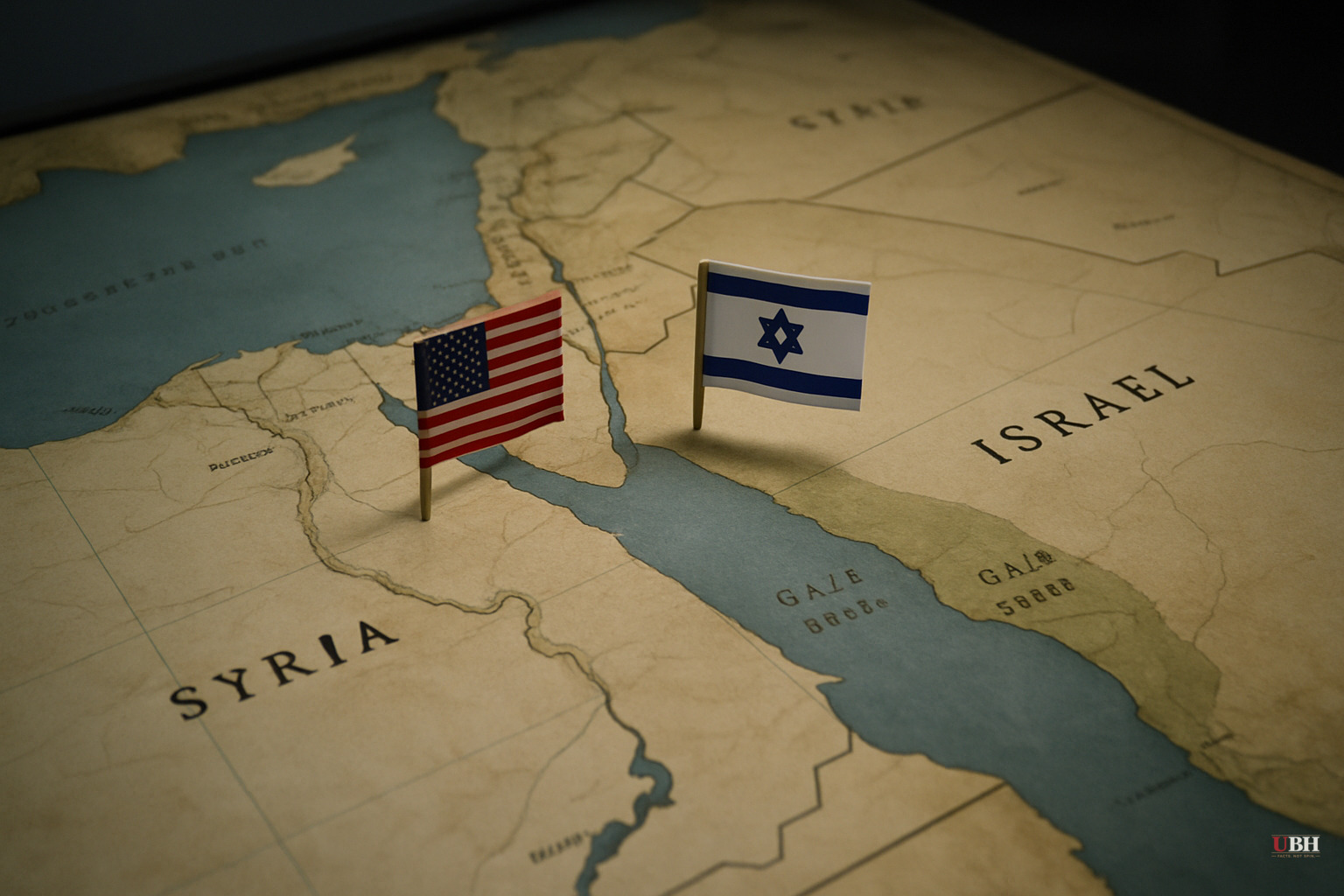
Since Emanuel delivered his Tel Aviv speech on July 8 calling unconditional U.S. support for Israel a 'mistake,' the contours of the Democratic 2028 primary's Israel debate have grown clearer and messier.
Emanuel's speech was the most prominent moment in an already-developing trend. As Jewish Insider reported, Senators Chris Van Hollen (D-MD) and Chris Murphy (D-CT), along with Representative Ro Khanna (D-CA), had been staking out critical positions on Israel for months before Emanuel flew to Tel Aviv.
What each candidate actually stands for
Van Hollen published an op-ed in The New York Times calling for the Democratic Party to abandon 'unconditional support to Israeli governments,' recognizing a Palestinian state 'subject to clear benchmarks,' and ending U.S. taxpayer-funded military assistance to Israel. He also warned, pointedly, that voters 'won't trust any Democratic presidential candidate who does not have a record of moral and strategic clarity on these issues.' Jewish Insider noted that passage reads like a 2028 campaign advertisement.
Murphy released a book last month titled Crisis of the Common Good: The Fight for Meaning and Connection in a Broken America, exactly the kind of pre-campaign move a senator makes before declaring. He has continued pushing what he calls a 'forward-looking foreign policy' that includes increasingly sharp criticism of Israel.
Khanna has gone furthest on substance. He told InDepth News writer Norman Solomon that 'it's not just avoiding AIPAC money — it's the guts to take them on with clear policy,' and has explicitly called for stopping military sales to Israel used in Gaza and Lebanon. He has also called what happened in Gaza a genocide, which California Governor Gavin Newsom, also eyeing 2028, refused to do.
Newsom's position illustrates the calculation most candidates are making. According to InDepth News, Newsom pledged to never take AIPAC money and appeared to compare Israel to an 'apartheid state' during an early March interview, then walked it back emphatically, declaring 'I revere the state of Israel.' Dropping AIPAC is the easy move. The hard move is the policy.
The polling math
The shift isn't ideological posturing in a vacuum. InDepth News cited polling from last month showing registered Democrats favor Palestinians over Israelis by a 67-17 percent margin. That number explains why politicians who spent careers on autopilot for Israel are suddenly finding their critical voices.
Emanuel's version of that shift is notably more moderate than Khanna's or Van Hollen's. He is not calling for an arms embargo. He wants Israel to purchase weapons from the United States like any other ally, ending aid packages in favor of direct arms sales, a position that, as the NY Post noted, Netanyahu and Republicans have themselves floated as an alternative to the current arrangement. Emanuel also called for a 23-state solution that would deliver Israel recognition from all 22 Arab League members in exchange for working toward a Palestinian state.
The strongest case for the other side
A fair reading of the pro-Israel argument—the one supporters would recognize—is that pulling U.S. military support during an active regional conflict does not produce peace. It produces a power vacuum that Iran, Hezbollah, and Hamas fill. The argument holds that unconditional support is not moral abdication but strategic deterrence: adversaries who believe American backing is contingent will test every condition. ADL CEO Jonathan Greenblatt made a version of this case at the ADL's national conference last month, specifically singling out Khanna and Van Hollen for criticism. Greenblatt's framing included insinuations of antisemitism, which is a weak rhetorical move, but the underlying strategic concern about conditionality is a real debate worth having, not a fringe position.
Emanuel himself acknowledged the security logic when he said the U.S. would not abandon Israel. His critique was targeted at Netanyahu's specific government and its specific policies, not at the alliance itself.
What's actually different
The gap that matters is between candidates who are dropping AIPAC as a political brand problem and candidates who are proposing to actually change the arms pipeline. As InDepth News put it, AIPAC's ultimate goal is to prevent federal officeholders from impeding the weapons flow to Israel, and most prospective Democrats, even the louder critics, have not committed to blocking that flow.
Khanna and Van Hollen are the exceptions. Every other figure in the field—Emanuel, Newsom, Kentucky Governor Andy Beshear, Murphy—has staked out positions that amount to 'more pressure, same alliance.'
The unresolved question heading into 2028: whether Democratic primary voters who poll 67-17 for Palestinians will accept 'more pressure, same alliance' from a nominee, or whether that gap will produce a primary fight that forces the eventual candidate further left than general-election math can sustain.
Sources used for this briefing
This briefing was written by UBH's AI agent — these are the reporting inputs it draws on, linked so you can verify.


