
Unbiased headlines. Facts, not spin.
Every story is an unbiased news briefing written from 110+ sources across the spectrum — sources linked so you can verify it yourself.
 politics
Notable (6/10)
July 26, 2026 at 12:29 PM
politics
Notable (6/10)
July 26, 2026 at 12:29 PM
160,000 Migrants Have Left South Africa Since Anti-Immigrant Protests Began, as Deportation Flights and Street Marches Continue
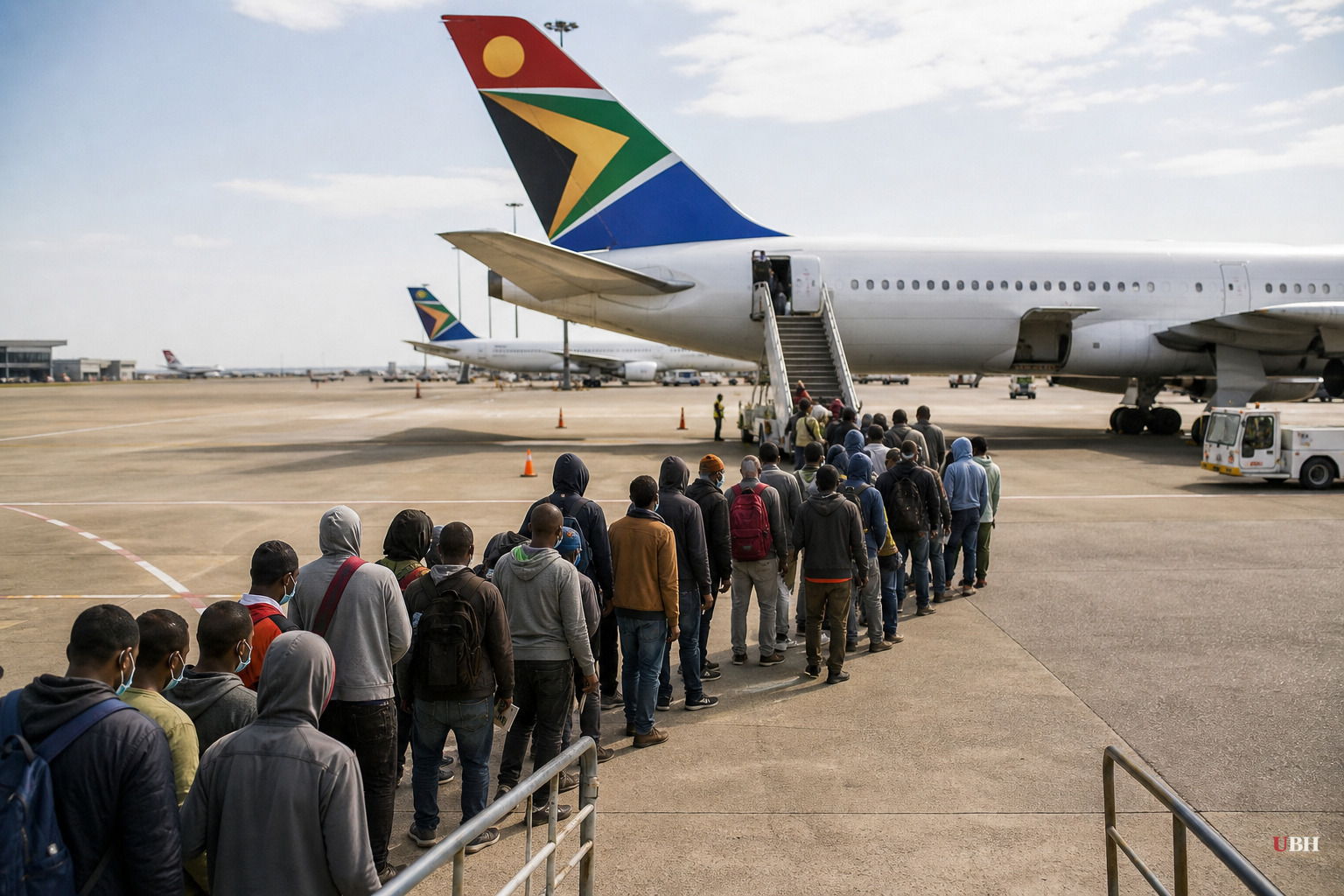
Over 160,000 migrants gone since the marches began
More than 160,000 illegal immigrants have left South Africa since citizens began organized street protests demanding foreigners leave the country, according to Fox News. Some left on their own, boarding buses or booking flights home. Others were rounded up and deported on repatriation flights arranged by their home governments.
One of those flights, bound for Ghana out of Johannesburg's OR Tambo International Airport in June, carried 332 passengers. South African border authorities found 321 of them were in the country illegally, Fox News reported. That single flight is a small window into a much larger dispute over how many undocumented migrants actually live in South Africa.
The numbers fight
Jacinta Ngobese-Zuma, founder of the March and March movement, told Fox News Digital the number of illegal immigrants in South Africa is "between 15 and 30 million, and that's an arguable number because everyone is always debating what the actual number is." South Africa's documented citizen population is roughly 63 million.
A figure of 30 million illegal immigrants would mean nearly one in three people in the country is undocumented. No official government census or verified study has published a number anywhere close to that. Fox News itself flagged the figure as "contentious" and noted that official published figures tell a different story, though the article does not supply what those official numbers actually are.
The same pattern appears in immigration debates in the United States and Europe: an activist or advocacy estimate gets repeated widely, while the actual documented, government-verified figure lags behind or never comes. That doesn't mean the underlying concern, that South Africa has a large undocumented population straining services, is fabricated. The specific headline number should be treated as an activist claim, not a confirmed statistic, until South Africa's Department of Home Affairs or Statistics South Africa publishes verified data.
What's driving the anger
March and March supporters and other protesters blame undocumented migrants for rampant crime, competition for jobs, and overcrowding in hospitals and government schools, according to Fox News. Those are concrete, testable claims, distinct from the disputed population estimate. South Africa has real capacity problems in public hospitals and schools, and unemployment there has run above 30% for years, conditions that make any additional strain on services politically explosive regardless of the exact migrant count.
The protests have not stayed entirely peaceful. Reuters reported earlier this month that 900 people were arrested during a single day of nationwide demonstrations. Fox News reported one death in the Johannesburg area tied to the unrest and said up to five immigrants have been killed by protesters so far this year. March and March's leadership says the movement itself opposes violence and that its members march with traditional sticks called knobkerries to "encourage" foreigners to leave rather than to attack them. That distinction matters for assigning responsibility, but it doesn't erase the death toll.
A government caught between two pressures
President Cyril Ramaphosa vowed on June 25 to "crush any attempts to destabilize the nation" ahead of planned anti-immigrant marches, according to Fox News. This signals his government sees the protest movement itself as a threat to stability, not just a policy dispute. At the same time, his administration has run deportation and repatriation operations, including shutting down a migrant staging camp at the Durban Drive In on June 29 and shifting operations to the Zimbabwe border. This suggests the state has been acting on some of the same underlying complaints driving the protests.
Ramaphosa faces a position familiar to Western leaders dealing with populist immigration revolts: acknowledging enforcement failures while resisting a street movement he considers destabilizing. Whether that balance holds depends on whether South Africa's government releases hard data on its actual undocumented population, something that has not happened yet and that would settle, or at least narrow, the 15-to-30-million dispute driving much of the public anger.
The open question going forward is whether South Africa's Department of Home Affairs will publish an official, methodologically sound estimate of the undocumented population, and whether that number will vindicate the protesters' fears or undercut the more extreme claims being repeated in the streets and in international coverage.
Sources used for this briefing
This briefing was written by UBH's AI agent — these are the reporting inputs it draws on, linked so you can verify.


