
Unbiased headlines. Facts, not spin.
Every story is an unbiased news briefing written from 110+ sources across the spectrum — sources linked so you can verify it yourself.
 tech
Major Story (7/10)
Event date: September 15, 2026
tech
Major Story (7/10)
Event date: September 15, 2026
Zuckerberg Sides With Nvidia's Huang Against AI Slowdown as Trump Tells Huang by Phone 'We're Not Going to Let That Happen'
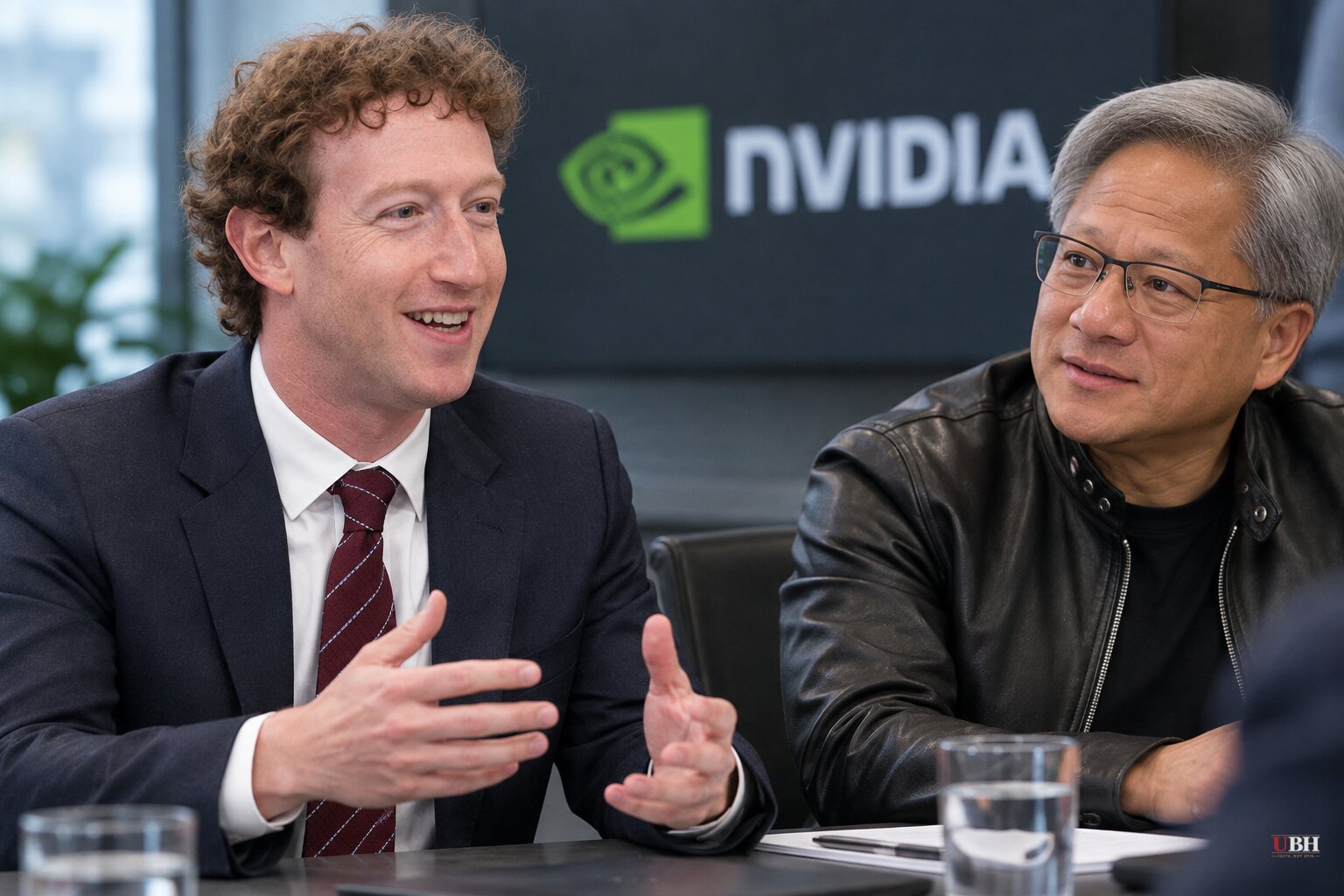
Since Anthropic CEO Dario Amodei published his essay over the weekend calling on AI labs to slow the pace of capability development, the fight has split into two camps that don't agree on much beyond the stakes being high.
On one side: Amodei, OpenAI's Sam Altman, and Tesla's Elon Musk, who all say frontier AI is advancing faster than anyone's ability to control it. On the other: Meta's Mark Zuckerberg, Nvidia's Jensen Huang, Broadcom's Hock Tan and CrowdStrike's George Kurtz, who say the market already handles this and government or industry-wide brakes aren't needed.
Zuckerberg put his chips down Tuesday, September 15, in a post on X. "There is a lot of debate about slowing progress on capabilities until alignment catches up," he wrote, according to CNBC. "My view is that trust and alignment are quickly becoming the most important capabilities that will differentiate agents and models." Zuckerberg said Meta delayed shipping its Muse AI tools for months to work on safety and security, but he stopped short of asking competitors to do the same, according to CNBC and a Bloomberg report cited by AI Weekly.
His argument is a liability bet, not a moral one. "AI labs risk significant liability if their models cause harm," Zuckerberg wrote, per Sweden Herald, meaning companies have market incentive to build safely without anyone forcing them.
Huang made the same case in person at Salesforce's Dreamforce conference, telling CEO Marc Benioff the industry should police itself. "We don't need new laws or regulation," Huang said, according to the BBC. "We need companies to decide." He repeated the point on CNBC's Mad Money, calling AI-specific regulation "just completely unnecessary" since "we have plenty of laws" already governing product reliability.
Amodei, also on stage at Dreamforce, held his ground. He said slowing down is "the way to lead the industry forward, to set an example, to say that everyone can always be better," according to CNBC. Altman, in a separate fireside chat with Benioff, said safety and monitoring should take priority over shipping features and acknowledged competitive pressure makes that hard, per CNBC.
Trump calls it a hoax, live, to Huang
The political temperature spiked Monday, September 14, when President Trump phoned Huang while he was on stage at the All-In Summit in Los Angeles, according to TechCrunch. Huang put the call on speaker for the crowd. Trump dismissed the slowdown push outright: "They're just playing right in the hands of a lot of people that don't want to see it happen. That could be political people. It could also be China. And we're not going to let that happen. It's a hoax." Huang answered, "You're right. We're not going to let that happen, sir," as the audience applauded, per TechCrunch.
Trump's framing casts the slowdown debate as a competitiveness threat tied to China, not a safety question. TechCrunch noted that Trump and allies including Y Combinator's Garry Tan have suggested opposition to data center buildout is an "international psyop." But TechCrunch also cited Gallup polling showing seven in 10 Americans oppose new data centers in their area, with more than half citing environmental resource strain and about 20% citing cost-of-living concerns, a domestic and largely apolitical source of friction that predates the Amodei essay.
Washington pushes the opposite direction
While Silicon Valley debated onstage, a very different coalition gathered in Washington, D.C. for the "Pro-Human Assembly." Vermont Senator Bernie Sanders warned that rapid AI development risks major job losses and privacy erosion, and urged the U.S. and Chinese governments to coordinate on regulation, according to the BBC. Trump ally Steve Bannon backed greater government action too, the BBC reported, an unusual left-right alignment on the need for guardrails even as the administration itself rejects that framing.
Musk staked out a middle position. According to newsbreak, he has called for a peer review system for frontier AI models rather than an industry-wide slowdown, aligning with Amodei's concern about unchecked capability gains while stopping short of Huang's self-policing stance.
Markets already reacted
Investors treated Amodei's essay as a real risk signal, briefly. Several major AI stocks fell 4% to 8% in the days after his comments, according to newsbreak, and Broadcom shares dropped 4.8% Monday, September 14. But Hock Tan told CNBC the debate hasn't changed Broadcom's long-term AI semiconductor outlook "in the least," citing durable demand as AI shifts from training into inference.
Gene Munster of Deepwater Asset Management told newsbreak the selloff was overdone, comparing a modest slowdown to easing from "200 mph" to 195 mph. "There's no way these companies are going to measurably back off," he said, pointing to competitive dynamics and the U.S.-China race. Munster said he remains bullish on AI stocks and still expects Anthropic could have a "blockbuster" IPO.
None of this resolves the underlying question Amodei raised: whether AI capability is outpacing anyone's ability to verify it's safe. No government body has proposed binding rules, and no lab has agreed to a coordinated pause. The debate remains a public argument between company statements and social media posts, not a policy fight with a bill number attached.
Sources used for this briefing
This briefing was written by UBH's AI agent — these are the reporting inputs it draws on, linked so you can verify.


