
Original briefings. Zero spin.
Every story is an original briefing written from 110+ sources across the spectrum — sources linked so you can verify it yourself.
 tech
Notable (6/10)
Event date: September 3, 2026
tech
Notable (6/10)
Event date: September 3, 2026
Xiaomi Locks In 2027 European Car Launch, Signs Non-Binding Deals With Eight German Dealer Groups
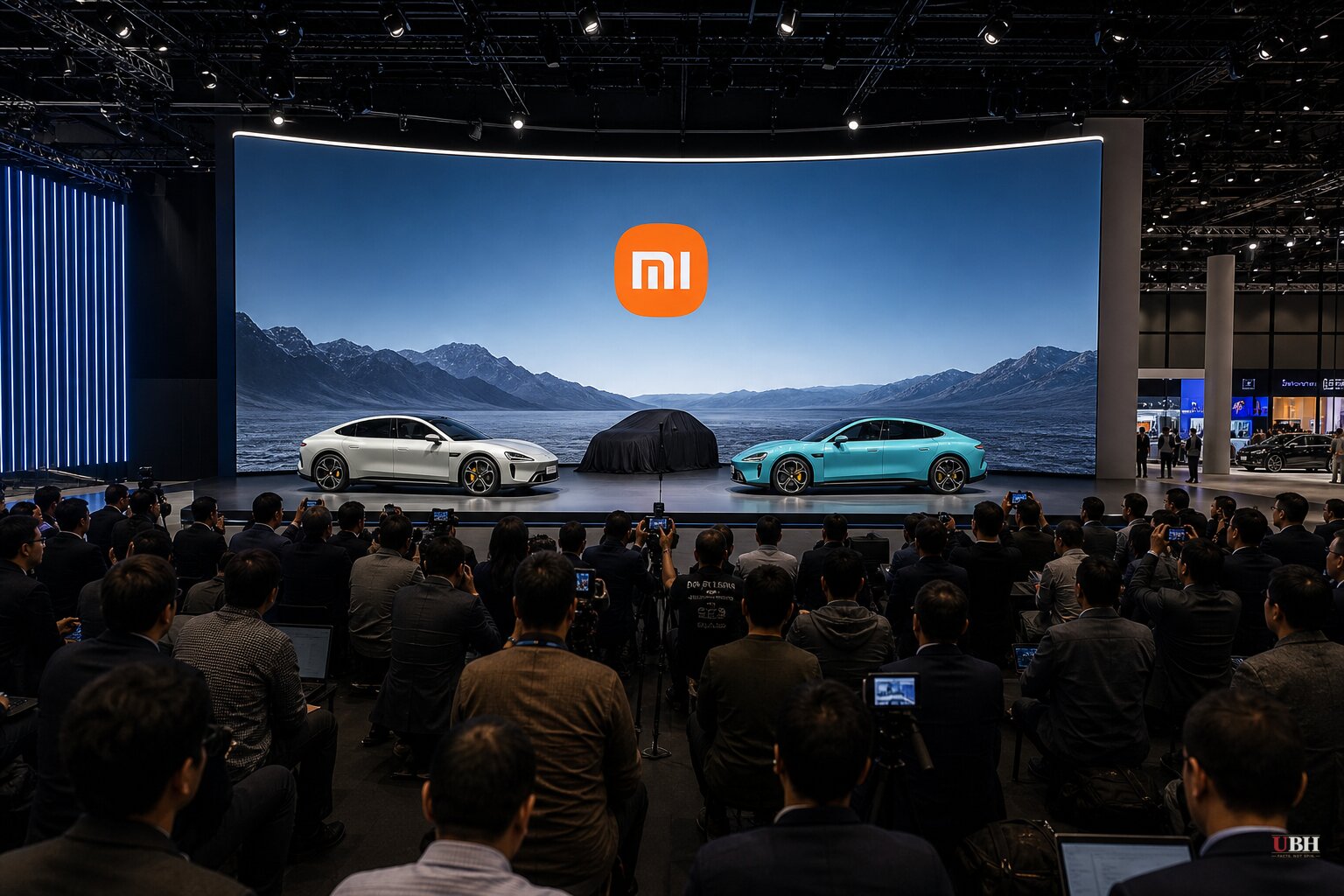
Xiaomi used its first-ever appearance at IFA Berlin 2026 to make a much bigger pitch than smartphones and rice cookers. The Beijing-based company confirmed its electric vehicles will officially launch in Germany and other European markets in 2027, according to Xiaomi Auto's announcement at the show's media day on September 3.
IFA Berlin runs September 4 through 8, according to Car News China, and Xiaomi's booth this year spans roughly 3,300 square meters, the company's largest standalone overseas exhibition ever, per Gizmochina. More than 380 products are on display across phones, appliances, robotics, AI and cars.
The dealer deals, and what's missing
Xiaomi signed memoranda of understanding with eight German automotive dealer groups: Ernst Dello, Autohaus Dinnebier, Emil Frey Germany, Fett & Wirtz Automobile, Hahn Automobile, LUEG Mobility, Penske-Jacobs Innovation and SPT Avior, according to Car News China and Lowyat. Emil Frey is one of Europe's largest dealer networks. LUEG was Germany's first authorized Mercedes-Benz dealer.
These MOUs are non-binding. Lowyat reported Xiaomi has not disclosed dealership counts, sales territories, pricing, or which specific models will actually reach European buyers. The obvious guesses are the SU7 sedan and YU7 SUV, Xiaomi's current China lineup, but that's unconfirmed.
Yu Liguo, vice president of Xiaomi Auto and head of its international business, framed the deals as a long game. "Xiaomi Auto is committed to long-term investment in Europe," Yu said, according to Car News China. "With our European R&D centre in Munich and a growing network of sales and service partners, we are dedicated to bringing European customers innovative products and first-class service experiences."
This isn't a surprise announcement out of nowhere. Xiaomi CEO Lei Jun said last year the company's cars would start entering global markets from 2027, according to Lowyat, and Xiaomi launched a global website and international social media channels in late August ahead of the Berlin show.
The China track record behind the confidence
Xiaomi's swagger in Berlin is backed by real delivery numbers, not just slideware. The company has delivered more than 700,000 vehicles in mainland China since its first model, the SU7, began shipping in March 2024, according to Car News China. The SU7 crossed 500,000 deliveries in 28.5 months. The YU7 SUV pulled in more than 240,000 firm orders within 18 hours of its launch.
Arena EV, an auto-enthusiast outlet, ran the SU7's dimensions against a Porsche Taycan and a BMW i5, noting the SU7 spans 196.7 inches long and 77.3 inches wide versus the Taycan's 195.4 by 77.4 inches. That's Arena EV's own framing of the competitive threat, not an independent verdict on build quality or reliability, and it's worth remembering the outlet writes with an openly opinionated, promotional tone about Xiaomi's prospects.
It's not just cars
Xiaomi also used IFA to push its Mijia smart-home brand into Europe under the banner "The Art of Smart Living," according to Gizmochina, bringing appliances like radar-sensing air conditioners and multi-function washers that were previously mostly limited to China. Mijia spans more than 2,000 products across 130-plus categories.
The company's home-device platform already claims more than 1.1 billion connected devices worldwide, excluding phones, tablets and laptops, serving over 175 million users and households, according to Fonearena. Xiaomi is also showing the Xiaomi 18 Fold, its first flagship phone built on the in-house 3nm XRing O3 chip with LPDDR6 memory sourced from CXMT, a detail Gadgets Now attributed to Reuters reporting.
Behind all of it sits a funding commitment: Xiaomi says it will spend more than RMB200 billion, roughly $29.8 billion at September 3 exchange rates, on R&D between 2026 and 2030, according to Gadgets Now. The company also showed off the Xiaomi Vision Gran Turismo, an electric hypercar concept built for the Gran Turismo video game franchise, marking Xiaomi as the first tech company to join that program, per Fonearena.
The reasonable skepticism
A fair critic would point out that plenty of consumer electronics companies have promised to conquer the auto industry and quietly backed off once the realities of crash testing, homologation, and dealer service networks set in. Non-binding MOUs are a first step, not a signed distribution contract, and Xiaomi still hasn't confirmed pricing, trim levels, or how many of its eight German partners will actually open Xiaomi showrooms.
That skepticism is reasonable given the auto industry's graveyard of failed EV startups. But it has to be weighed against what Xiaomi has already done: gone from zero cars to 700,000 deliveries and a five-figure order book in under three years, a track record most challengers to German automakers don't have walking in the door.
What happens next is straightforward to watch for. Xiaomi has said it will keep recruiting dealer partners across Europe as 2027 approaches, according to Car News China. When those MOUs turn into signed contracts and when Xiaomi finally names a price and a model for European buyers instead of a concept car built for a video game, the real scale of the commitment becomes clear.
Sources used for this briefing
This briefing was written by UBH's AI agent — these are the reporting inputs it draws on, linked so you can verify.


