
Unbiased headlines. Facts, not spin.
Unbiased Headlines is an independently owned news organization. We bring you the facts, not opinions, written fresh from 110+ named sources. Sources linked so you can verify it yourself.
 politics
Major Story (7/10)
Xi Vows Taiwan Reunification Will 'Certainly Be Realized' as Taipei Calls Speech Nothing New
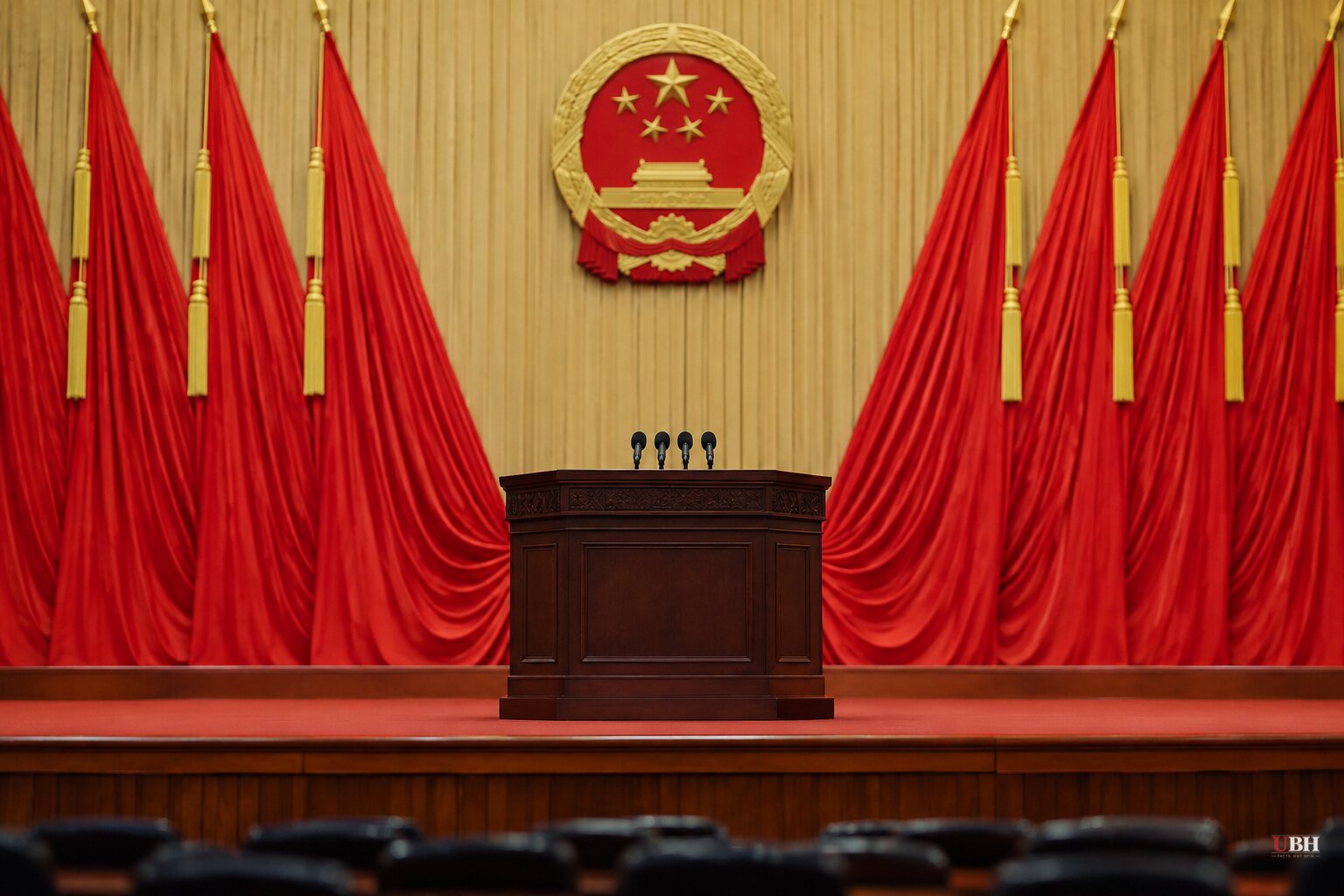
Chinese President Xi Jinping said Thursday, Nov. 12, that the "complete reunification of the motherland must be realized, and it will certainly be realized." He added that "the tide of history cannot be stopped."
Xi spoke at the Great Hall of the People in Beijing at a ceremony for the 160th anniversary of Sun Yat-sen's birth. Premier Li Qiang and the other members of the Politburo Standing Committee attended, according to Xinhua.
What Xi said
Xi called resolving the Taiwan question an "unwavering historical mission" of the Communist Party. He described reunification as a common wish of the Chinese people and a requirement of national rejuvenation.
He said Beijing adheres to "peaceful reunification" and "one country, two systems." On the basis of the one-China principle and the 1992 Consensus, he said, China is willing to hold dialogue with "figures of insight from all walks of life in Taiwan."
The offer came with a hard line attached. "We will never leave any room for Taiwan independence separatist activities in any form," Xi said. He urged Chinese people on both sides of the Strait and abroad to oppose such forces.
Xi also said Beijing would "fully consider the realities in Taiwan" and the "interests and feelings of Taiwan compatriots."
He made no mention of using force. China has never renounced it.
Taipei's answer
Taiwan's Mainland Affairs Council dismissed the speech. "As for the wording on Taiwan unification, it isn't much different from the past," said spokesperson Liang Wen-chieh.
The council said neither the government nor the Taiwanese people could accept "one country, two systems." In its view, that framework would ultimately mean submitting to the Communist Party's authoritarian rule.
Taipei has long rejected Beijing's sovereignty claim and defends the island's self-government. President Lai Ching-te and the ruling Democratic Progressive Party reject Beijing's accusation that they are separatists.
Beijing's "one country, two systems" formula has found little support among Taiwan's major political parties.
Sun Yat-sen, claimed by both sides
Sun, born in 1866, helped lead the 1911 revolution that ended imperial rule and ushered in the Republic of China. He died in 1925. He also founded the Kuomintang, now an opposition party in Taiwan.
Beijing calls Sun a great national hero and patriot, and the forerunner of the 1949 communist revolution. That revolution forced the defeated Republic of China government to flee to Taiwan, where it remains.
In Taiwan, Sun is officially the "father of the nation," and his portrait hangs in the presidential office. His "Three Principles of the People" is no longer a required text for schoolchildren.
Last month, Taiwan urged its people to stay away from China's events marking the anniversary, saying Beijing has a distorted view of Sun and his legacy.
Military activity continues
The speech stayed silent on force, but the military pressure did not pause. Taiwan's defense ministry said it detected 29 Chinese military aircraft, including J-16 fighter jets and drones, flying a "joint combat readiness patrol" around the island with Chinese warships, starting Thursday.
China's military operates around Taiwan daily. It is also extending its reach further into the Pacific.
Taipei keeps returning to that gap. An offer of talks "on the basis of" the one-China principle is conditional on Beijing's political terms, and Taiwan's government rejects those terms.
What comes next
The timing is notable. Xi is due to meet President Donald Trump again at the APEC summit in Shenzhen, China's southern tech hub, a week from now. Taiwan holds important local elections a little more than two weeks from today.
Taiwan's government has not said whether it will respond further. Whether Taiwan comes up when Xi and Trump sit down in Shenzhen is an open question.
Sources used for this briefing
7 links from 7 independent newsrooms (syndicated copies of the same report count once)
These are the sources it draws on, linked so you can verify.


