
Unbiased headlines. Facts, not spin.
Every story is an unbiased news briefing written from 110+ sources across the spectrum — sources linked so you can verify it yourself.
 tech
Major Story (7/10)
July 17, 2026 at 07:03 PM
tech
Major Story (7/10)
July 17, 2026 at 07:03 PM
Xi Tells Shanghai AI Summit to Reject 'One Country' Security Rules, Promises 5,000 Training Slots for Developing Nations
The Pitch Gets Specific
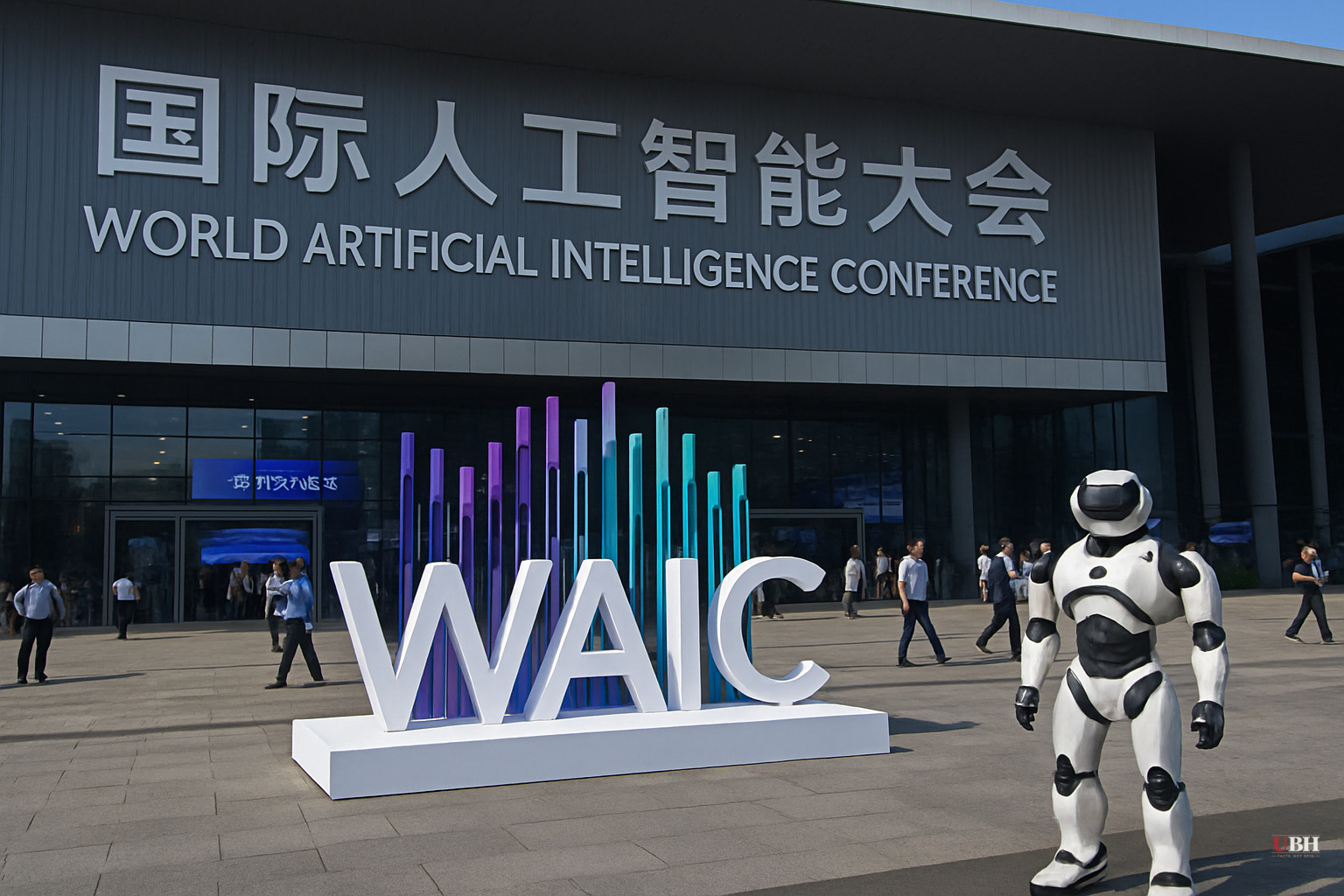
Since Xi Jinping's Friday keynote at the World Artificial Intelligence Conference in Shanghai first drew coverage for its call on "global AI cooperation," the details of that pitch have come into sharper focus. Xi committed to a concrete number: 5,000 AI training and seminar opportunities for countries with less developed AI industries, according to Business Insider.
Xi is putting a number on China's outreach to what he called Global South nations, framing Beijing as the country willing to share the technology while Washington hoards it.
Four Points, One Target
Xi laid out four observations during his speech, according to Business Insider's reporting. First, a "principle of openness" on AI development. Second, calls for global regulation, including monitoring and early-response systems for AI risks. Third, a jab at what he called overstretching "the national security concept" in AI. Fourth, a push for "solidarity" and improved global governance, specifically to help Global South countries close the AI divide.
That third point is aimed squarely at the United States, even without naming it. "We should jointly oppose overstretching the national security concept in the field of AI or placing one country's security over that of others," Xi said, according to both Business Insider and Capacity Media.
Capacity Media's coverage adds texture: Xi's speech tied this to China's 15th Five-Year Plan, which begins this year and sets the country's economic and social priorities through 2030. Xi used the AI summit to frame that plan as an opportunity for "the international community," not just China.
The Open-Source Gap Is Real
China's leading AI labs largely operate in the open. DeepSeek, the company that rattled Silicon Valley when it emerged as a low-cost competitor last year, is open-source. So are newer Chinese models like Kimi K3 and Z.ai's GLM 5.2, according to Business Insider.
American labs mostly don't do this. OpenAI's models, despite the company's name, are closed-source. Anthropic's are closed too. Meta open-sourced its general Llama models but kept its proprietary Muse Spark model locked down. Anthropic CEO Dario Amodei argued back in 2023 that open-source AI was a "dangerous path" because companies lose the ability to moderate or revoke access once a model is out in the wild, per Business Insider's reporting of his past comments.
That's a legitimate technical and safety argument, not just corporate self-interest. If a company can't pull back a model after release, it can't stop bad actors from fine-tuning it for cyberattacks, disinformation, or weapons research. Critics of closed models counter that concentrating power in a handful of U.S. firms creates its own risks: less transparency, less independent safety auditing, and a smaller set of companies deciding what the technology can and can't do. Both concerns are legitimate and neither has been resolved by the industry or by regulators.
Openness With an Asterisk
Xi's "openness" pitch runs into an inconvenient fact: Beijing forced Meta to unwind its acquisition of Manus, a Chinese-founded AI agent startup that had relocated to Singapore, according to Business Insider. That's not the behavior of a government indifferent to who controls AI talent and technology. It's the opposite.
So when Xi says "China is ready to be more open, take more practical actions, and assume a more visionary perspective," that has to be weighed against a track record of the Chinese state stepping in when it doesn't like where AI assets are heading. Openness, in Beijing's telling, applies to sharing model weights with the world. It applies less to letting Chinese-origin AI companies walk out the door to Western buyers.
What's Actually New Here
The South China Morning Post's live coverage of the summit noted that Xi's personal attendance elevated the conference's profile and signaled AI has become "a cornerstone of China's geopolitical strategy," not just an industrial policy. Chinese heads of state don't show up to trade conferences for photo ops.
The unresolved question is whether the 5,000-seminar pledge translates into anything measurable, or whether it's a talking point without a delivery mechanism. Xi did not specify, in the reporting available, which countries would get the training, on what timeline, or who would administer it. Until Beijing names recipient countries and dates, it's a stated intention, not a program.
Washington is restricting chip exports and guarding its closed models, while Beijing gives its models away for free and invites the rest of the world to build on top of them. Whether that strategy earns China more allies than adversaries plays out over the next several years, not this news cycle.
Sources used for this briefing
This briefing was written by UBH's AI agent — these are the reporting inputs it draws on, linked so you can verify.


