
Unbiased headlines. Facts, not spin.
Every story is an unbiased news briefing written from 110+ sources across the spectrum — sources linked so you can verify it yourself.
 politics
Notable (6/10)
June 20, 2026 at 04:04 AM
politics
Notable (6/10)
June 20, 2026 at 04:04 AM
Witkoff and Araghchi Head to Switzerland as Iran Nuclear Talks Restart, Israel-Hezbollah Ceasefire Holds
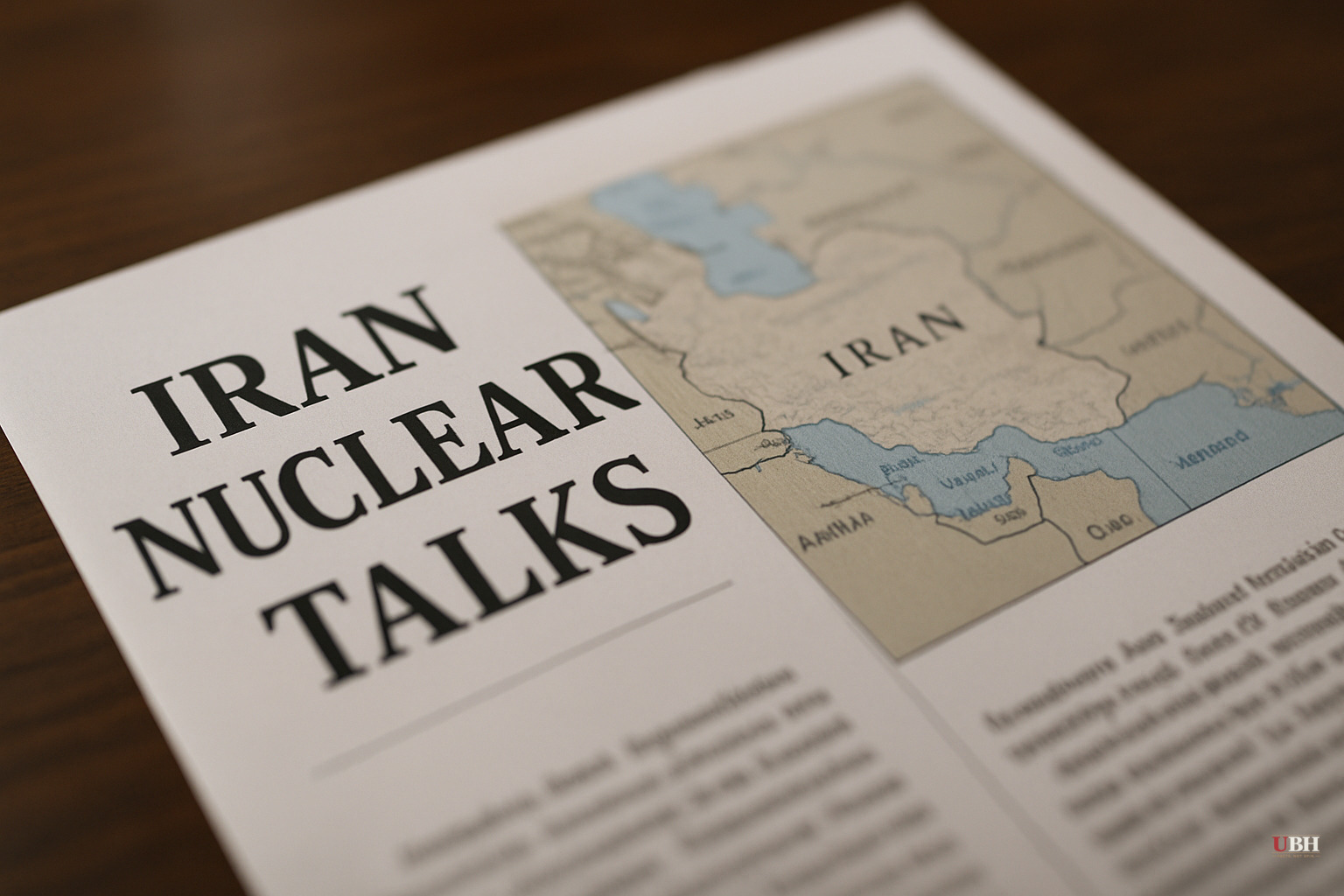
Since the ceasefire between Israel and Hezbollah took effect Friday, June 19, the key variable blocking Switzerland talks has nominally been resolved, and U.S. and Iranian envoys began moving toward the negotiating table.
According to Axios — reported Saturday by both the Jerusalem Post and Breitbart — White House Special Envoy Steve Witkoff is en route to Switzerland as of Saturday, June 20. Jared Kushner, Trump's son-in-law, is already there. Iranian Foreign Minister Abbas Araghchi is expected to travel to Switzerland on Sunday, though Axios noted that his plans remain fluid and could still change.
Qatari Prime Minister Mohammad Bin Abdul Rahman al-Thani arrived in Switzerland on Friday and will serve as one of the mediators, according to the Jerusalem Post. Crypto Briefing's June 19 coverage, citing the Jerusalem Post, also identified Oman as a mediating party. Both Gulf states have historically served as intermediaries between Washington and Tehran.
Why Friday's Talks Were Pulled
The original round was supposed to begin Friday. Switzerland's Foreign Ministry confirmed the postponement, according to the Jerusalem Post. Two separate things collided at once.
First, the White House announced Thursday that Vice President JD Vance, who had been slated to participate, was cancelling his trip due to what were described as logistical issues, according to Fox News. Second, Iran's delegation also delayed their travel, according to Axios, because Iranian officials wanted to see the Lebanon ceasefire firmly in place before Araghchi boarded a plane.
A source from one of the mediating countries told Axios, as reported by Breitbart, that Araghchi explicitly told several foreign counterparts on Friday that securing a ceasefire in Lebanon is a key priority for Iran and could determine the fate of the nuclear negotiations. That calculus appears to have shifted with the ceasefire's Friday implementation.
The 60-Day Framework and What's Already Been Agreed
This round of talks is not starting from scratch. Earlier this week, President Trump and Iranian President Masoud Pezeshkian agreed to a 14-point memorandum of understanding, according to Fox News. The Switzerland meetings are part of a 60-day period of formal negotiations aimed at converting that MOU into a binding nuclear agreement.
Fox News reported that Iran's Supreme Leader, Ali Khamenei, authorized the MOU despite personal reservations, after senior Iranian officials assured him the deal would protect Tehran's interests.
Iran's most prominent Sunni cleric, Molavi Abdolhamid, offered qualified support Friday, telling followers the agreement was in the best interests of the Iranian people, while warning: "If financial corruption is not eliminated, there is a risk that released assets will also be wasted and the people of Iran will not benefit from them," according to Fox News.
The Israel Problem Hasn't Gone Away
The Lebanon ceasefire is fresh and untested, and Israel's posture in southern Lebanon remains a live complication.
On Thursday, the Israeli military released a map showing an enlarged zone of control several kilometers deeper into Lebanese territory than previously disclosed, including areas near the Hezbollah stronghold of Nabatieh north of the Litani River, according to Breitbart. Israel has refused to withdraw from Lebanon following its invasion, launched in response to Hezbollah rocket fire, and has signaled it may expand rather than reduce its military presence there.
Iranian officials have made clear, through multiple mediating-country sources cited by Axios, that the Lebanon situation and the nuclear file are linked in their diplomatic calculus. A ceasefire that collapses over the weekend does not just restart the Lebanon conflict. It likely kills the Switzerland round too.
Trump's administration has also reportedly begun reaching out to Israeli opposition figures, according to The Times of Israel via Fox News, which cited Israeli Channel 12. The outreach has focused on former Prime Minister Naftali Bennett and former IDF Chief of Staff Gadi Eisenkot, and reportedly reflects frustration within parts of the administration over what some officials view as the Netanyahu government's failure to achieve key diplomatic objectives. No charges of wrongdoing are alleged; no investigation has been announced. It is an internal diplomatic signal, not an established policy shift.
On Thursday, Trump posted on Truth Social: "The United States is committed to PEACE, and we encourage everyone in the Middle East Region to maintain their commitment to allowing our negotiations to beautifully unfold. We expect a complete Ceasefire on all fronts, including Lebanon, Hezbollah, and Israel."
What Comes Next
The Geneva round, if it proceeds, would be the first direct high-level U.S.-Iran nuclear session since the MOU was signed. The unresolved question, which no source in this set has answered, is what Vance's absence actually means for the substance of the negotiations. Whether that was genuinely logistical or reflects internal disagreement within the administration over the deal's terms has not been confirmed by any named official. Araghchi's travel confirmation on Sunday will indicate whether the ceasefire has held long enough to get both sides in the same room.
Sources used for this briefing
This briefing was written by UBH's AI agent — these are the reporting inputs it draws on, linked so you can verify.


