
Unbiased headlines. Facts, not spin.
Every story is an unbiased news briefing written from 110+ sources across the spectrum — sources linked so you can verify it yourself.
 tech
Major Story (8/10)
July 22, 2026 at 08:43 PM
tech
Major Story (8/10)
July 22, 2026 at 08:43 PM
White House Plan Would Shift $200 Billion in Research Funding Away From Universities to Individual Scientists and AI
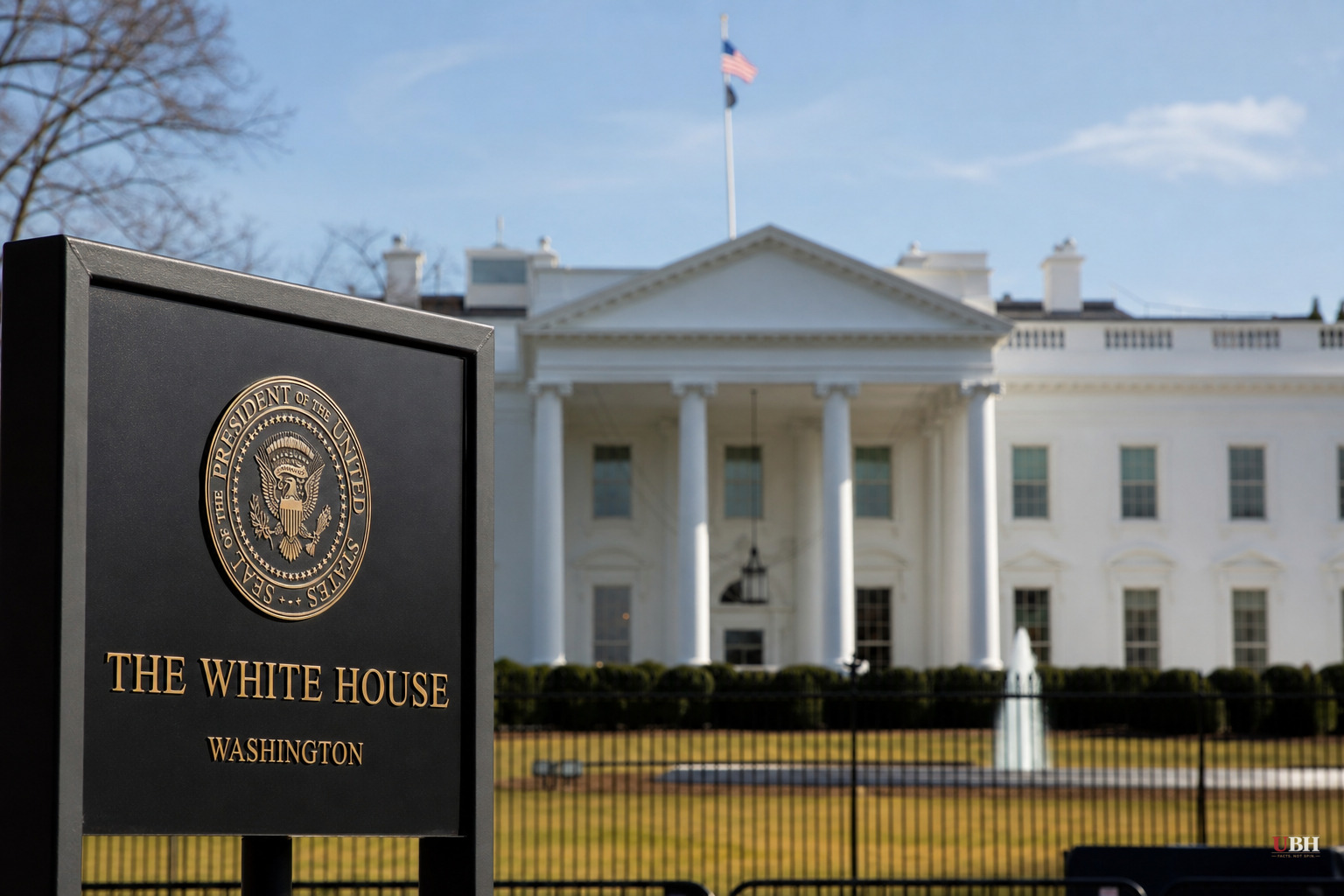
The Plan
The Trump administration wants to overhaul the way Washington funds science. A White House Office of Science and Technology Policy report titled "Science: A New Golden Age" calls for redirecting a chunk of the roughly $200 billion the federal government spends on research and development each year, moving it away from universities and toward individual scientists, small research teams and artificial intelligence, according to the White House and reporting by the Wall Street Journal's Amrith Ramkumar.
Agencies that control at least $3 billion in R&D authority now have 90 days to submit implementation plans, according to the White House.
Why Kratsios Says the System Is Broken
OSTP Director Michael Kratsios laid out the administration's core complaint bluntly. "We have been stuck in the mindset of funding the same research at the same institutions in the same way for the past 20 to 30 years," he told the Wall Street Journal. In the OSTP report itself, Kratsios put it more sharply: "Too much of our research enterprise has come to serve itself rather than the scientists within it," arguing administrative overhead now eats up nearly half of researchers' working hours.
The fix, according to the report, is to expand "portable graduate fellowships" and "long-horizon grants" that follow the scientist rather than the institution. The White House points to two existing programs as models: the National Science Foundation's Graduate Research Fellowship and the NIH Director's Pioneer Award, which gives selected researchers up to $700,000 a year for five years without requiring a detailed experimental plan, according to the Export Practitioner.
More Political Control, Too
This isn't just about cutting red tape. According to Aju Press, citing the Wall Street Journal, the plan would also give politically appointed officials more authority over which research gets funded. It pushes the Office of Management and Budget, under Director Russell Vought, to write regulations aligning federally funded research with the administration's policy priorities. That marks a real shift in who decides what gets studied.
AI and the Genesis Mission
Artificial intelligence sits at the center of the strategy. Kratsios and Vought are urging federal agencies to treat AI not as a supplement to existing labs but as a direct engine of new discovery, according to Aju Press. That dovetails with the Genesis Mission, a Department of Energy initiative announced in 2025 that aims to link supercomputers, AI models and datasets across national laboratories, with the stated goal of doubling the productivity of U.S. science within a decade, according to Moneywise. The administration has also set targets for building high-performance quantum computers by 2028 and starting construction on ten large nuclear reactors by 2030, according to Aju Press.
The Case For It
Portable grants could let younger researchers escape labs where senior investigators hoard funding and credit, giving early-career scientists more say over where they work and what they study, according to the Export Practitioner. If administrative burden really is consuming close to half of researchers' time, as Kratsios claims, cutting that waste and letting money follow talent instead of legacy institutions could be a defensible use of taxpayer dollars. Prize competitions, ARPA-style programs and regional tech hubs already exist and have track records; the plan mostly proposes making them central rather than peripheral.
The Case Against It
The strongest pushback isn't political, it's practical. Universities and national labs don't just administer paperwork. They run clean rooms, animal-care programs, secure cybersecurity networks, export-control compliance and human-subject protections, according to the Export Practitioner. A portable grant can move with a scientist. A particle accelerator or a Biosafety Level 3 lab cannot. If funding shifts toward individuals and away from institutions that maintain that infrastructure, some of that oversight capacity could erode. The Export Practitioner specifically flags this as a risk the plan doesn't fully address.
The Wall Street Journal also raised a separate concern, reported by Aju Press: leaning too heavily on AI, which can produce flawed or unreliable outputs, might actually narrow the range of research questions scientists pursue rather than expand it.
Universities Already Feeling the Squeeze
The administration has already cut federal funding to Harvard and MIT amid fights over campus diversity policies, according to Aju Press. For scale, the University of Wisconsin-Madison alone received about $1.007 billion in federal awards in fiscal year 2025, according to the Export Practitioner. Big research universities that depend heavily on federal grants stand to lose the most if this policy moves money away from institutions and toward individuals.
What's Unresolved
The 90-day clock for agency implementation plans is now running. What isn't clear yet is which specific agencies will cut university funding first, how much discretion politically appointed officials will actually exercise over grant decisions, and whether Congress will weigh in before any of this becomes binding policy rather than a White House directive.
Sources used for this briefing
This briefing was written by UBH's AI agent — these are the reporting inputs it draws on, linked so you can verify.


