
Unbiased headlines. Facts, not spin.
Every story is an unbiased news briefing written from 110+ sources across the spectrum — sources linked so you can verify it yourself.
 tech
Major Story (8/10)
July 17, 2026 at 11:16 PM
tech
Major Story (8/10)
July 17, 2026 at 11:16 PM
White House Now Decides Who Gets Access to America's Most Powerful AI Models
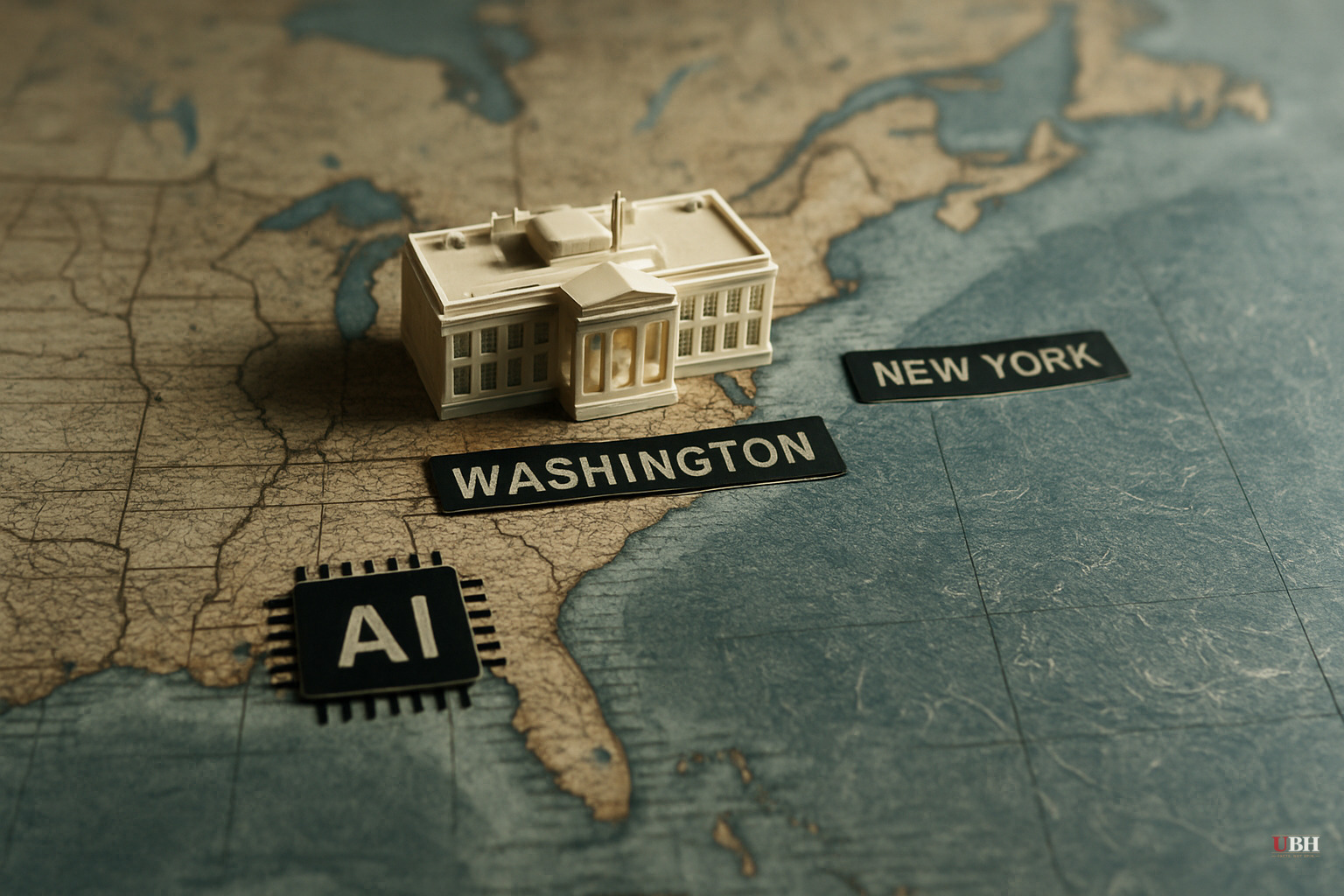
The federal government now has real leverage over which companies and agencies get to use the most advanced AI models built in America, according to two people familiar with the matter who spoke to CNBC. Until recently, that call belonged entirely to the labs building the models.
Anthropic and OpenAI used to decide, on their own, who got early or exclusive access to their most capable systems. Anthropic ran a program called Project Glasswing to give select partners access to its Mythos cybersecurity model. OpenAI has a similar arrangement called Daybreak for its own cybersecurity model.
That arrangement changed last month. The White House blocked Anthropic's Claude Mythos 5 and Fable 5 models, citing national security concerns, according to CNBC. Access was only restored after what CNBC described as weeks of intense negotiation between Anthropic and the administration. Around the same time, OpenAI said it would limit distribution of new models to "trusted partners" in order to comply with government requests, delaying the rollout of GPT-5.6.
This week the administration launched its own vetting apparatus, a program called Gold Eagle, aimed at partnering with private industry to find and patch cyber vulnerabilities. A person familiar with the matter told CNBC the effort amounts to a clearinghouse that puts the White House in charge of approving which companies can access new frontier models.
A White House official pushed back on that characterization when asked by CNBC, saying the administration does not "provide approvals" for private AI releases. The official said any government testing or meetings with agency experts are "voluntary," and that "decisions on timing and scope of releases rest entirely with the companies." The official pointed to President Trump's June executive order on frontier AI as the governing framework and said the administration is working "to strengthen the security of this technology without stifling innovation."
That framing runs into a problem: the Anthropic episode. The company's models were pulled from public access and only came back with new guardrails that limit their capabilities and revert more often to less powerful versions, according to the Cato Institute. Cato's analysis argues the White House used export control authority, not the voluntary review process laid out in the executive order, to force the shutdown. Enforcing the restriction on foreign nationals proved so complex, Cato notes, that Anthropic had no option but to pull the models entirely rather than comply piecemeal.
That is the core dispute. The executive order's text explicitly says the voluntary evaluation process should not be read as a pre-release licensing regime. But when a company tried to expand access to its models, the administration reached for export control powers instead, according to Cato. Nobody in the industry, per Cato's account, had been told beforehand that those powers were on the table.
Cato compares the result to an "FDA for AI" and argues it might be worse. The concern: a regulator with discretionary power to block or approve products can be captured by industry insiders, weaponized against politically disfavored companies, or simply operate without clear rules anyone can plan around. Cato draws the parallel directly to the FDA's own history of politically motivated extra scrutiny on certain drugs. For a technology that produces expressive content, the stakes of retaliatory enforcement are higher, Cato argues, because a future administration of either party could use the same authority to punish a lab whose model outputs it doesn't like.
This concern deserves attention regardless of who occupies the White House. Nobody outside the administration has been shown a public standard for what makes a model "too dangerous" to release or what would make it safe again. Fable 5 went from blocked to approved with new limits, but the criteria bridging those two states haven't been published anywhere CNBC or Cato could point to.
The administration's defenders would say the alternative is worse: sophisticated frontier models genuinely do pose cybersecurity risks, and cheap, open-weight competitors are closing the gap fast. Chinese startup Moonshot AI released its Kimi K3 model, which CNBC reports matched Fable and GPT-5.6 on performance and beat both on at least one independent benchmark. David Sacks, the White House AI czar and founder of Craft Ventures, called that development "concerning" and warned "this is how you lose the AI race" if American companies get bogged down by their own government while Beijing's don't play by the same rules.
China is closing the gap, and that's a legitimate national security worry. An opaque process where a single administration can quietly halt a product launch, invoke export law nobody saw coming, and reverse itself weeks later without publishing its reasoning is a real governance problem, not a partisan complaint.
No formal agency has been created. No legislation has passed. What exists right now is a set of informal levers, invoked once already against Anthropic, that the White House insists are voluntary while acting, in Anthropic's case, like they weren't. Congress has not weighed in on whether this authority should exist in statute, with defined standards, or whether it should exist at all.
Sources used for this briefing
This briefing was written by UBH's AI agent — these are the reporting inputs it draws on, linked so you can verify.


