
Unbiased headlines. Facts, not spin.
Every story is an unbiased news briefing written from 110+ sources across the spectrum — sources linked so you can verify it yourself.
 tech
Major Story (8/10)
July 22, 2026 at 09:33 PM
tech
Major Story (8/10)
July 22, 2026 at 09:33 PM
White House Commits $5 Billion to Genesis Mission, Enlists 20 Federal Agencies for AI Science Push
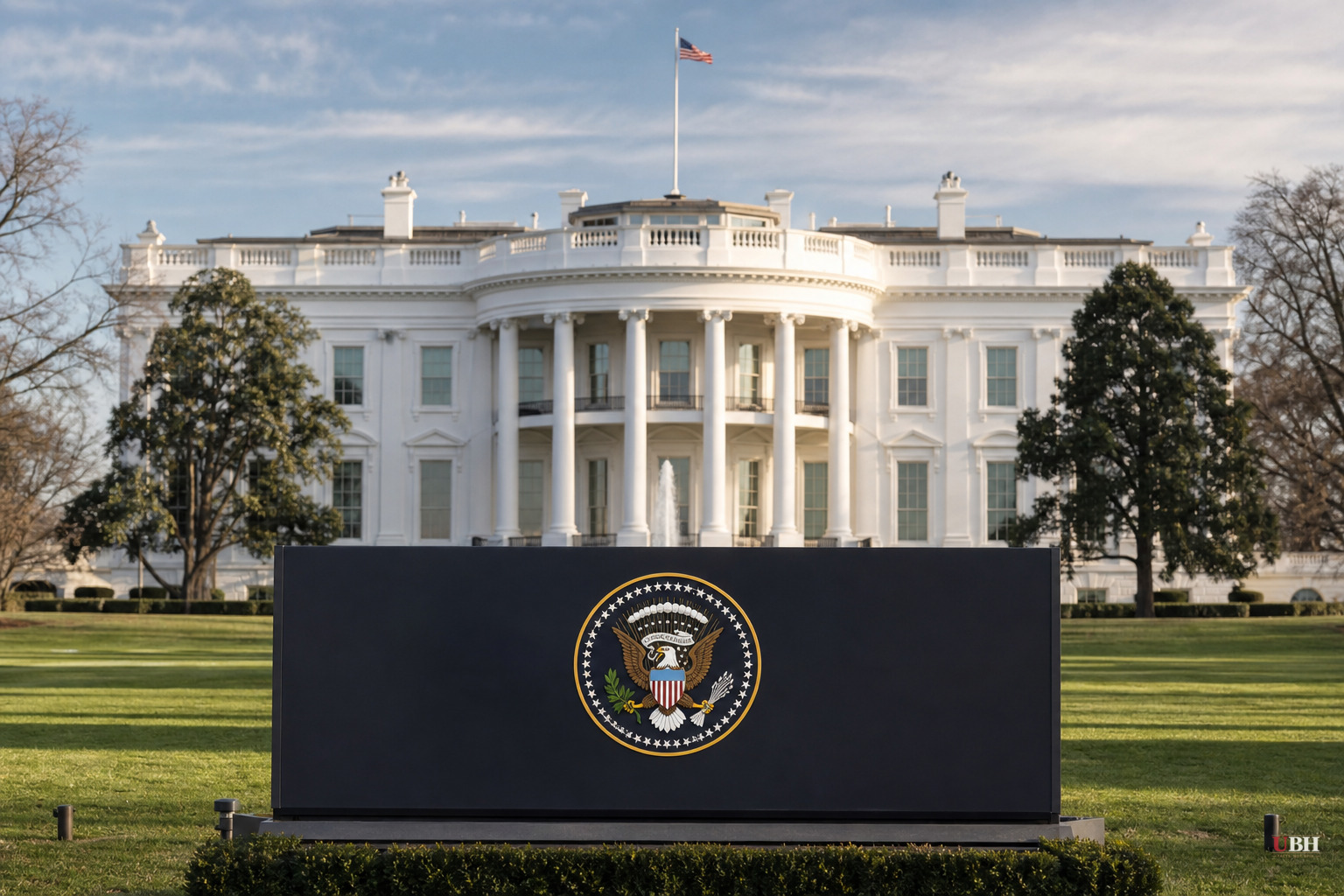
The White House put numbers on the table Wednesday for a science initiative that's been building since last fall. Michael Kratsios, director of the White House Office of Science and Technology Policy, unveiled more than $5 billion in federal commitments to the Genesis Mission at a summit in Washington, D.C., according to the White House and FedScoop.
This isn't a new program. President Trump created the Genesis Mission by executive order in November 2025, with the Department of Energy running point. What changed Wednesday is scale. What started as a DOE project now includes 20 federal agencies, according to FedScoop, up from the roughly 15 agencies Engadget reported were involved earlier this year. The Department of Defense, Department of Health and Human Services, Department of Transportation, Department of the Interior, NASA, and the National Science Foundation are all now formally in.
The Money and the Projects
The Department of Energy picked 278 projects out of more than 5,000 applications, Energy Secretary Chris Wright said at the summit, according to TNW. Wright called the response rate the largest for any program in DOE history.
The single biggest award is $60 million for a three-year project called Prometheus, which will use AI to help design, license, manufacture, and operate nuclear reactors, TNW reported. That project has already pulled in more than $200 million in industry cost-share and $30 million in private capital on top of the federal money, an indication private investors think the nuclear AI angle has legs regardless of what Washington does next.
The Pentagon is putting real money behind it too. Emil Michael, the Defense Department's under secretary of war for research and engineering, told FedScoop the department is on track to commit more than $200 million to Genesis Mission work in fiscal 2026, jumping to more than $1.3 billion in fiscal 2027. Michael said DOD's priorities are quantum computing and digital twins, framing it partly as a fix for a defense industrial base he says has been hollowed out by decades of outsourcing.
HHS Secretary Robert Kennedy and NIH Director Dr. Jay Bhattacharya both tied their agencies' involvement to what the administration calls the "Bio Genesis Mission," aimed at chronic disease research. Bhattacharya said the goal is accelerating treatments for cancer, chronic disease, and rare conditions "while upholding the rigorous scientific standards and responsible stewardship that earn the public's trust," according to the White House's own release.
33 Challenges, Up From 26
DOE first rolled out 26 "National Science and Technology Challenges" back in February as what officials called a direct call to action for industry and researchers. That list has now grown to 33, FedScoop reported, including new challenges on designing weapons components with AI-driven workflows, running autonomous biological experiments, and mining decades of space data.
Ethan Klein, the U.S. chief technology officer, told reporters the expansion has been in the works for months, driven by overlap between agencies with biotech and health missions.
The Bigger Bet: Rewiring How Science Gets Funded
Alongside the funding announcement, Kratsios delivered a report to Trump titled "Science: A New Golden Age," which the White House is calling the first comprehensive rethink of the U.S. science system in more than 80 years, according to TNW.
The report calls for shifting federal research money, roughly $200 billion a year, away from universities and toward individual scientists and AI-powered research systems. It cites the NIH Director's Pioneer Award, which hands select researchers up to $700,000 a year for five years with no detailed experimental plan required, as the model the administration wants to expand.
Agencies with at least $3 billion in research authority will have to submit implementation plans within 90 days, per TNW's reporting.
There's a legitimate case for this shift. University overhead rates and slow-moving grant bureaucracies have been criticized for years, by researchers across the political spectrum, as friction that slows down actual discovery. Betting more directly on individual scientists and AI tools is a real attempt to fix that, not just an ideological swipe at academia.
But it's also a direct hit to how research universities have operated for generations, and university administrators who depend on that $200 billion pipeline are going to push back hard once the 90-day implementation plans start landing. Nobody in these sources says how universities are supposed to adapt, or what happens to existing multi-year grants already routed through them.
What's Still Unclear
Microsoft has set up a coordination office called SPARK and is contributing cloud computing and AI credits, according to Engadget, but the White House's own materials don't spell out a dollar figure for that in-kind contribution. And with 20 agencies now involved and money flowing through fiscal 2027, the open question is whether DOE, as the lead agency, can actually coordinate that many bureaucracies without the whole thing turning into the kind of overlapping, duplicative spending the administration says it's trying to eliminate elsewhere in government.
Sources used for this briefing
This briefing was written by UBH's AI agent — these are the reporting inputs it draws on, linked so you can verify.


