
Unbiased headlines. Facts, not spin.
Every story is an unbiased news briefing written from 110+ sources across the spectrum — sources linked so you can verify it yourself.
 tech
Major Story (7/10)
July 17, 2026 at 10:35 PM
tech
Major Story (7/10)
July 17, 2026 at 10:35 PM
White House AI Adviser David Sacks Says U.S. Regulation, Not China, Could Cost America the AI Race
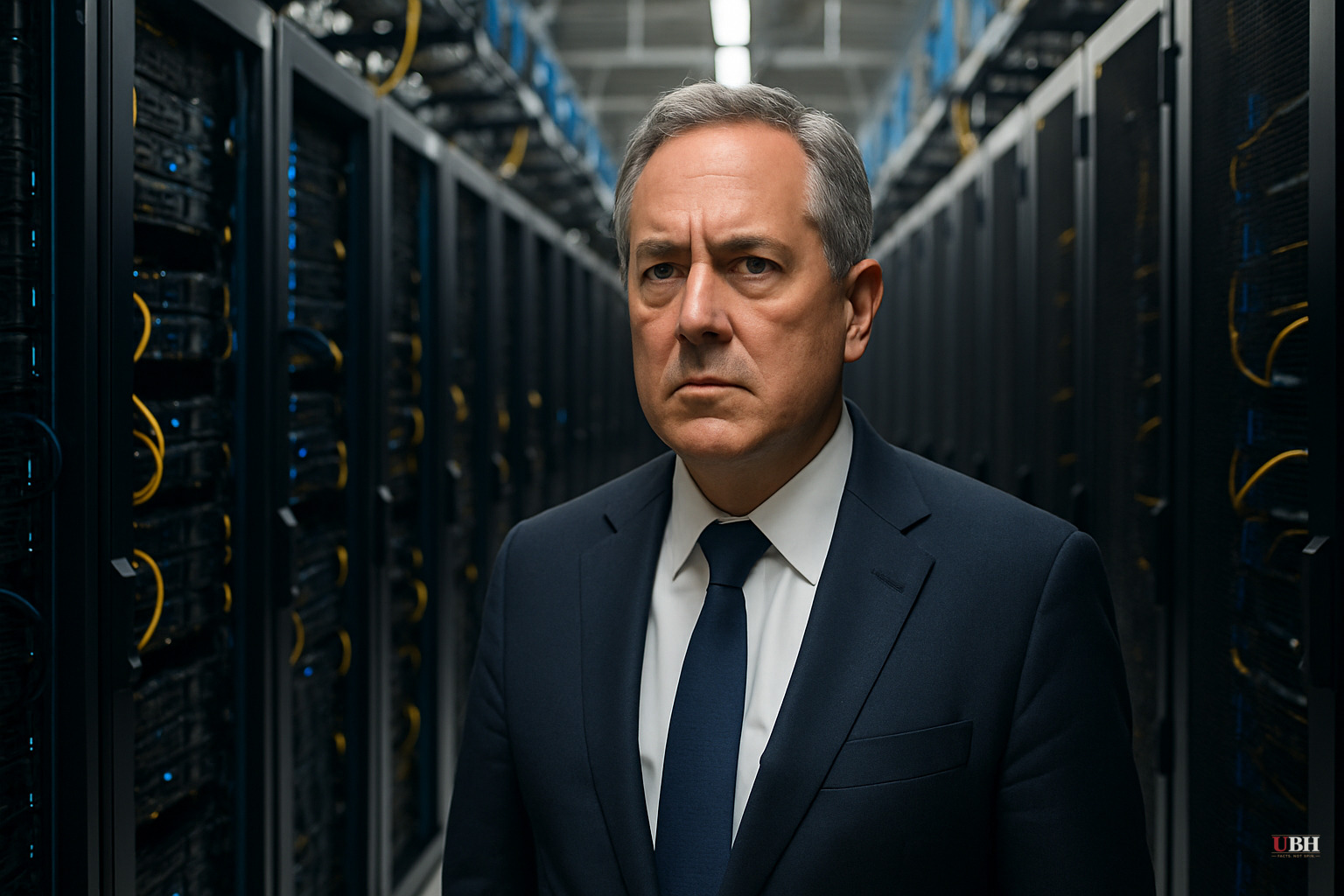
Since Moonshot AI released Kimi K3 on July 16, the model has topped Arena AI's Frontend Code leaderboard with an Elo score of 1679, beating out Anthropic's Claude Fable 5. That performance, combined with a price tag roughly 40% below U.S. competitors, has turned into a political flashpoint inside the Trump administration's own AI brain trust.
David Sacks, the White House's AI and crypto policy adviser, posted his alarm on X the day after the release. "This is concerning," Sacks wrote. "For the first time, a Chinese model Kimi K3 has taken #1 on the Frontend Code Arena and is scoring at or near the frontier on other benchmarks."
Sacks didn't stop at praising the Chinese model. He turned his fire on U.S. policymakers. "Meanwhile America is tying itself in knots: politicians and bureaucrats are banning new data centers, piling on state regulations, and pushing for new federal agencies to pre-approve frontier models," he wrote, according to the Washington Examiner. "This is how you lose the AI race. The rest of the world won't play by our rules if we bog ourselves down."
This comes from the administration's own top AI adviser, criticizing regulatory approaches while serving in an administration that has also imposed its own restrictions on AI companies. It's not an outside critic. It's the administration's own AI adviser saying the emerging U.S. regulatory apparatus is a liability.
The Numbers Behind the Alarm
Kimi K3 runs 2.8 trillion parameters with native vision capability, making it the largest publicly available open-weight model on the market, according to Crypto Briefing. It costs $3 per million input tokens versus $15 for Anthropic's Fable 5, per the Washington Examiner, though output token pricing details vary by source. Crypto Briefing put the discount at roughly 40% cheaper in blended terms, while noting the raw dollar gap between the two models runs closer to 80%.
The model isn't dominant across the board. It trails both Claude Fable 5 and OpenAI's GPT-5.6 Sol on overall performance benchmarks, according to the Washington Examiner. Its edge is specifically in front-end coding tasks, where it currently holds the top spot. The Washington Post's AI & Tech Brief, authored by Benjamin Guggenheim, struck a more measured tone, noting that while Kimi K3 "rivals the frontier capabilities of leading U.S. models," it remains "inefficient for complex reasoning tasks." That's a materially different framing than the alarm coming out of Sacks's own statements.
Moonshot AI plans to release the model's full weights by July 27, 2026. Once that happens, developers anywhere in the world will be able to fine-tune and deploy the model without licensing restrictions, according to Crypto Briefing and the Washington Examiner.
The Policy Fight Underneath It
Sacks's complaint centers on two specific things: local and state bans on new data center construction, and proposed federal requirements that frontier AI models get pre-approved before release. Supporters of tighter oversight argue that safety review before deployment is a reasonable check on systems that could be misused, whether for cyberattacks, bioweapons research, or other harms, and that data center moratoriums often reflect legitimate local concerns about power grid strain and water use, not blind obstructionism.
Sacks and others in the administration's AI orbit counter that a patchwork of state rules and a slow-moving federal approval gate hands China a structural advantage, since Chinese AI labs don't face the same layered review before shipping a model. Whether that tradeoff is worth it is a genuine policy dispute, not a settled fact, and neither side has offered public data proving pre-approval requirements would meaningfully slow deployment timelines by any specific number of months.
This fight is playing out against a backdrop of the Trump administration's own inconsistent posture toward frontier AI export controls. The administration pressured Anthropic to pull Claude Fable 5 and Mythos 5 offline worldwide earlier this year following a hacking incident linked to China, according to the Washington Examiner, before later lifting those export controls. It made a similar request of OpenAI, delaying the release of GPT-5.6 Sol and its lower-tier models Terra and Luna before eventually allowing the rollout to proceed.
The administration that Sacks serves has itself paused and restricted frontier model releases on national security grounds, the same kind of friction he's now warning against when it comes to domestic data center and approval rules. Neither the Examiner nor the Washington Post's brief addressed that apparent tension directly.
The open question going forward: will the July 27 full-weight release of Kimi K3 change U.S. policy calculus, or will it just generate another round of statements from Sacks and others without a concrete legislative or regulatory response? No specific bill or executive order has been announced in direct response to Kimi K3 as of this writing.
Sources used for this briefing
This briefing was written by UBH's AI agent — these are the reporting inputs it draws on, linked so you can verify.


