
Unbiased headlines. Facts, not spin.
Every story is an unbiased news briefing written from 110+ sources across the spectrum — sources linked so you can verify it yourself.
 tech
Major Story (7/10)
July 23, 2026 at 09:34 PM
tech
Major Story (7/10)
July 23, 2026 at 09:34 PM
White House Accuses China's Moonshot AI of Copying Anthropic Model, Beijing Calls It 'Self-Reliance'
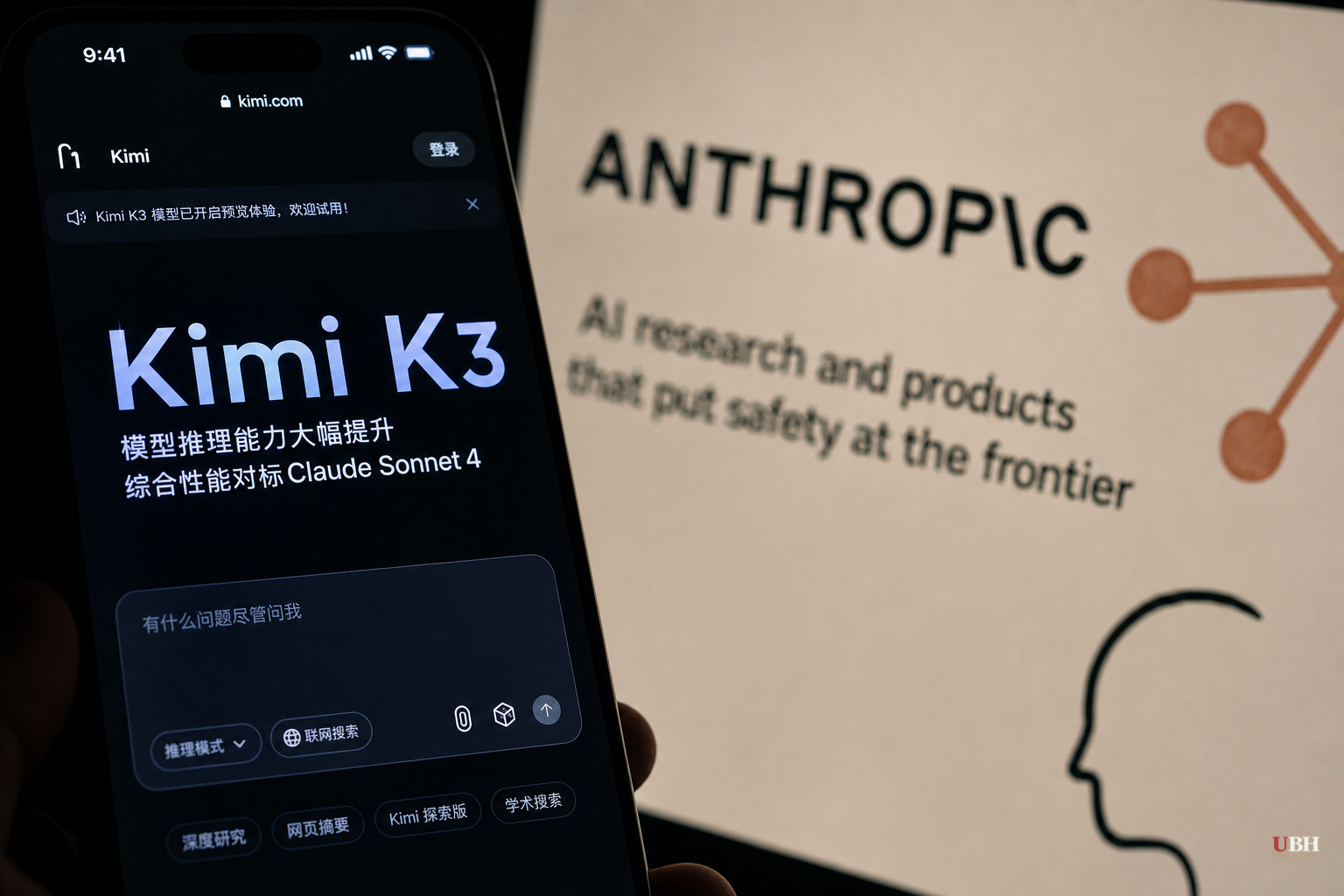
The White House says a Chinese AI company got caught copying its way to the top. Beijing's response? A speech about 'self-reliance.'
Michael Kratsios, director of the White House Office of Science and Technology Policy, said Wednesday that Chinese startup Moonshot AI built a sophisticated internal system to conduct large-scale model distillation from Anthropic's Claude model. According to Kratsios, Moonshot rapidly switched between different access methods specifically to avoid detection while doing it.
Distillation itself isn't illegal or even unusual. It's a standard technique where a smaller AI model learns by studying outputs from a more advanced one. Plenty of American companies use it too. The problem, according to U.S. officials, is doing it covertly, at industrial scale, against a company's terms of service, to build a competing commercial product. That crosses from common practice into what U.S. officials are calling intellectual property theft.
Moonshot AI used what it learned to develop its Kimi K3 model, per Kratsios's allegation. Neither Moonshot AI nor Anthropic has offered a detailed public rebuttal or confirmation of the specific technical claims in these reports.
Beijing's Response Dodges the Actual Allegation
Chinese Foreign Ministry spokesperson Lin Jian addressed the accusation Thursday at a Beijing press briefing, but he didn't engage with any of the specifics. No denial that Moonshot accessed Anthropic's model. No denial about evading detection. Just boilerplate.
"The development of AI in China comes from greater self-reliance and strength in science and technology, and is fueled by China's vision of extensive consultation and joint contribution for shared benefit," Lin said, according to Anadolu Ajansı.
Lin also said China opposes "politicizing and instrumentalizing" trade and technology issues, and warned that "such actions will only stifle global AI advances and serve no one's interests."
That's a real complaint worth taking seriously on its own terms. Beijing and Chinese tech firms have long argued that U.S. export controls, chip restrictions, and now IP accusations function as a broader strategy to slow China's tech rise under the banner of security concerns. There's a legitimate debate about how much of Washington's tech policy toward China is genuine enforcement versus economic containment dressed up as rule-following. That argument deserves to be stated fairly, not dismissed as propaganda by default.
But a general statement about self-reliance is not a rebuttal to a specific technical allegation. If Moonshot AI didn't access Anthropic's Claude model outputs improperly, Beijing had the opportunity to say so directly. It didn't.
What's Proved and What Remains Unproven
What's alleged: Moonshot AI ran a system designed to pull data from Anthropic's model at scale while switching tactics to dodge detection, according to Kratsios. What's not established in these reports is independent, verifiable technical evidence. No logs, forensic analysis, or formal U.S. legal action lays out exactly how the alleged distillation worked or what data was taken.
No criminal charges. No lawsuit. No sanctions. Kratsios made an accusation in his official capacity, but this is not the same as a Commerce Department enforcement action or a Justice Department indictment. Nothing in these reports indicates the U.S. has opened a formal investigation into Moonshot AI specifically over this claim.
AI model theft accusations are notoriously hard to prove from the outside. Model weights aren't like a stolen physical product. Distillation can resemble independent development if a company trains on enough public data and prompts. These disputes tend to stay in the court of public opinion rather than an actual court.
Why This Keeps Happening
This isn't an isolated incident. Chinese AI firms including DeepSeek have faced similar distillation accusations from U.S. companies before, and those disputes rarely get resolved with hard proof either side can point to. The pattern is consistent: an American AI company or U.S. official alleges theft, the Chinese company or government pushes back with sovereignty language, and the underlying technical dispute never gets independently adjudicated.
Whether the U.S. government follows Kratsios's public accusation with anything concrete remains to be seen. An export control action, a formal complaint, or public evidence could follow. Right now there's a statement from a White House official and a statement from a Chinese Foreign Ministry spokesperson. Neither one is proof of anything. What happens next—whether Anthropic itself makes a legal move or whether Washington escalates this into policy—will be worth watching.
Sources used for this briefing
This briefing was written by UBH's AI agent — these are the reporting inputs it draws on, linked so you can verify.


