
Unbiased headlines. Facts, not spin.
Every story is an unbiased news briefing written from 110+ sources across the spectrum — sources linked so you can verify it yourself.
 tech
Notable (6/10)
September 18, 2026 at 08:19 AM
tech
Notable (6/10)
September 18, 2026 at 08:19 AM
Waymo to Launch Robotaxi Service in Singapore by 2028, Its First Southeast Asia Market
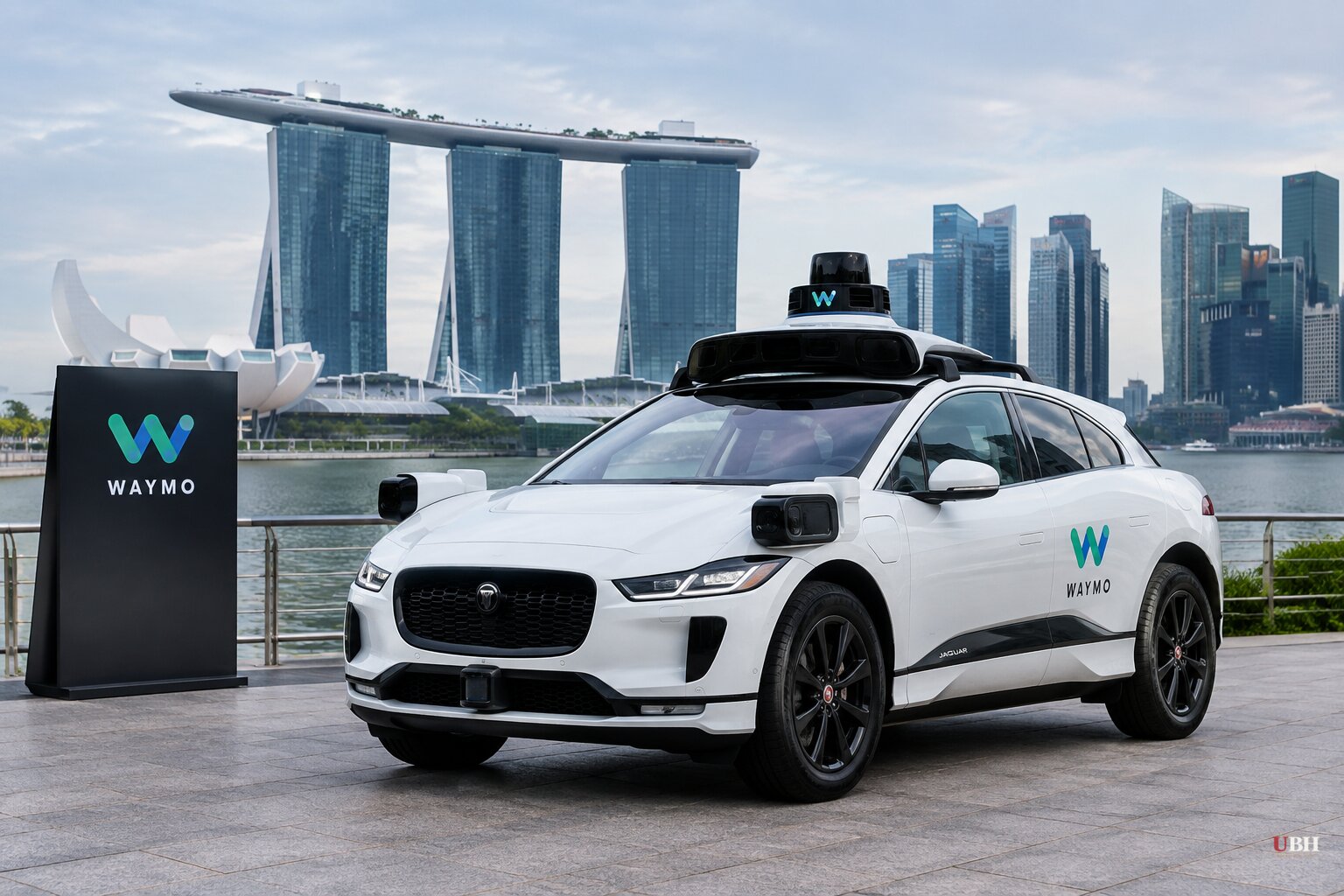
Waymo announced Friday it plans to launch a fully driverless ride-hailing service in Singapore in 2028, its first entry into Southeast Asia. The Alphabet-owned company is partnering directly with Singapore's Ministry of Transport and Land Transport Authority (LTA) on the rollout, according to Channel NewsAsia and AsiaOne.
The plan runs in three phases. Waymo's all-electric Jaguar I-PACE vehicles are set to arrive in Singapore within the next few months, according to Bloomberg. Starting in 2027, trained "autonomous specialists" will manually drive those vehicles to map local roads and learn Singapore's monsoon weather patterns, the company said. Fully autonomous public rides through the Waymo app are targeted for 2028, subject to regulatory sign-off.
That sign-off isn't automatic. The Verge reports Singapore requires every autonomous vehicle to pass a safety assessment run by the Centre of Excellence for Testing and Research (CETRAN), developed with LTA and Traffic Police input, before it can carry passengers on public roads. Waymo already has a foothold there: it set up a corporate entity in Singapore earlier this year and sits on the country's Steering Committee on Autonomous Vehicles, per The Verge. Channel NewsAsia reports testing will begin in western Singapore, around the Labrador and Harbourfront area.
Waymo co-CEO Tekedra Mawakana framed the move as a natural fit. "Singapore has built one of the safest, most efficient, and most forward-thinking transportation ecosystems in the world," she said in the company's statement, adding that Waymo's approach "directly mirrors" Singapore's focus on reliability and sustainability. Singapore's Transport Minister Jeffrey Siow said at a Sept. 18 launch event, according to Fortune, that the country has "been preparing for driverless autonomous vehicles for more than a decade" and predicted "many autonomous vehicles in Singapore" within five years.
Singapore isn't waiting around for one company
Waymo is walking into a market that already has players. Fortune reports Chinese autonomous-vehicle firms WeRide and Pony AI partnered with ride-hailing platform Grab and transport operator ComfortDelGro last year to bring self-driving vehicles to Singapore, and both currently run autonomous shuttle services in the government-designated Punggol test district. Hyundai-backed Motional ran a robotaxi pilot in Singapore back in 2016, according to The Verge. Singapore has also approved autonomous freight delivery, road sweepers, and self-driving buses for airport workers.
The jobs question
A fair concern raised by drivers and labor advocates in any AV rollout is straightforward: if robots take the wheel, what happens to the humans who currently drive for a living? Singapore's government addressed that directly. AsiaOne reports LTA stated the government "will not allow AV deployment to run ahead of our ability to retrain and support affected drivers," pointing to a manpower transition package announced in July that drivers can tap into. LTA said it will keep working with industry partners to help drivers acquire new skills or shift into new roles.
That's a policy commitment, not a guaranteed outcome. No source in this reporting quantifies how many taxi or private-hire drivers could be displaced, or how the transition package's funding compares to the scale of the workforce it's meant to support. Singapore's professed intent to manage the transition responsibly remains unproven until AVs actually scale up on Singapore roads.
The contrast with the U.S.
Singapore's regulators are moving with a defined framework and a public timeline. That stands in contrast to Waymo's home turf. The Verge reports Waymo currently runs about 4,000 vehicles across roughly 15 U.S. cities, including recent additions like Nashville, Denver, San Diego, and Las Vegas, but "regulatory hurdles and political opposition" have kept it out of New York City, Chicago, and Washington, D.C. A company that can get a green light from a foreign government faster than from some of its own country's biggest cities offers an interesting comparison.
Singapore is part of a growing list of Waymo's international bets. The company has said it will launch in London by the end of 2026, Tokyo in 2027 through partnerships with taxi app operator GO and Nihon Kotsu, and Munich in late 2027, its first European Union market. Whether Waymo's 2028 Singapore target holds depends on how the 2027 mapping and CETRAN safety review play out. Singapore's LTA has given itself an explicit out: the government has said it won't let AV deployment outpace its ability to support displaced drivers, which means the 2028 launch date carries an asterisk until that safety and labor groundwork is actually done.
Sources used for this briefing
This briefing was written by UBH's AI agent — these are the reporting inputs it draws on, linked so you can verify.


