
Unbiased headlines. Facts, not spin.
Unbiased Headlines is an independently owned news organization. We bring you the facts, not opinions, written fresh from 110+ named sources. Sources linked so you can verify it yourself.
 defense
Major Story (7/10)
Washington Post: Iran used Musk's Starlink to support attacks on US forces, Pentagon won't confirm
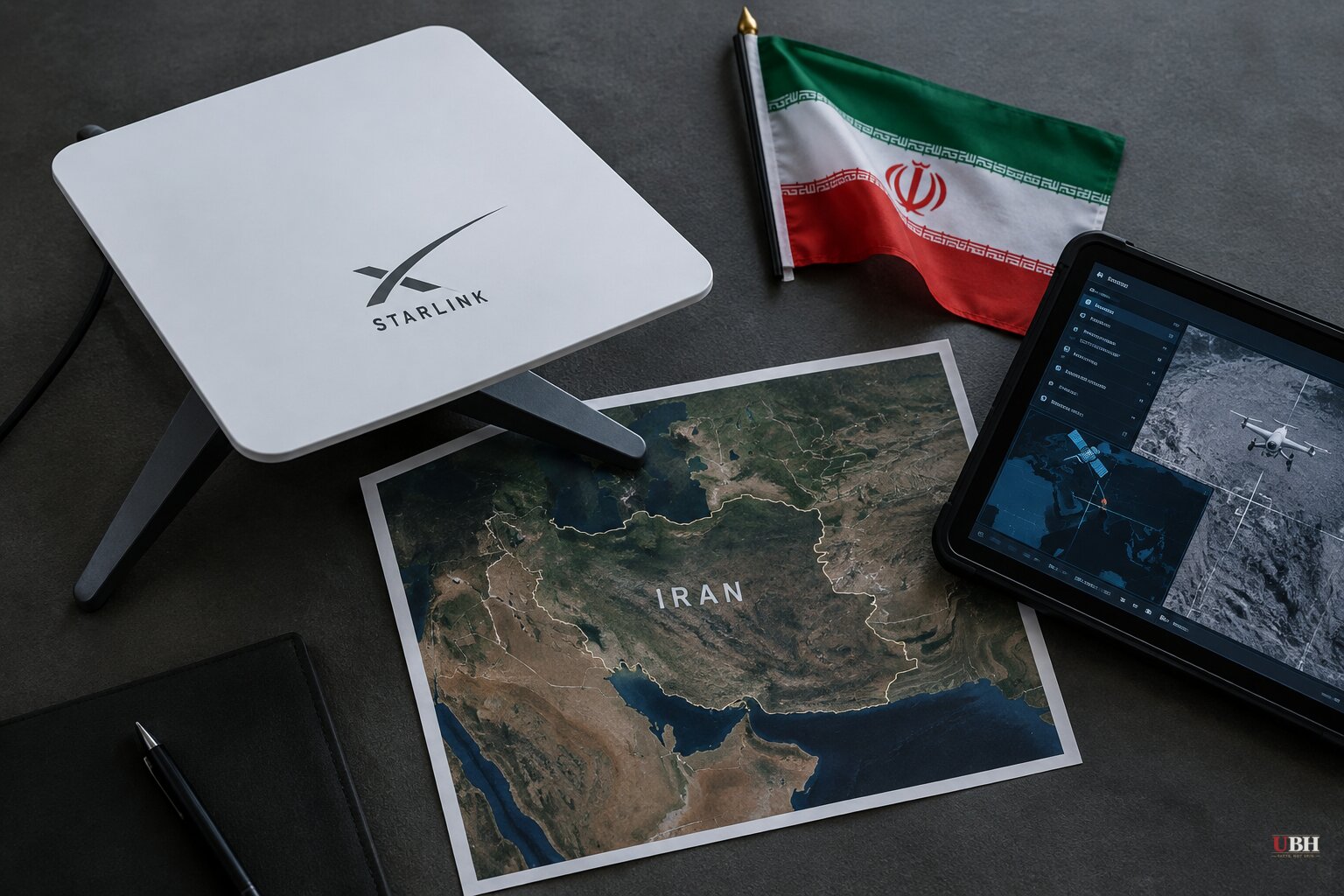
Iran used Elon Musk's Starlink satellite internet service to support military operations against US forces in the opening days of the war, The Washington Post reported Saturday, Nov. 28. The paper cited four people familiar with the operations, all speaking anonymously.
The Pentagon has not confirmed it. SpaceX and Musk did not respond to the Post's requests for comment.
What the Post's sources describe
According to the Post, the use was detected in early March, after the United States and Israel began striking Iran and Tehran fired missiles and drones at US bases across the region.
One person familiar with a classified US Central Command update delivered to Defense Secretary Pete Hegseth this summer said it briefly described Iran's use of Starlink. The report said Iran used it for command and control of forces and to oversee one-way attack drone operations.
That person told the Post that Starlink appeared to serve as an alternative communications channel while US forces focused on degrading Iran's traditional systems.
These are all anonymous accounts. No document has been made public.
The Pentagon's response
Pentagon spokeswoman Kingsley Wilson did not confirm any of it. "We are not aware of the existence of a Central Command report to [the defense secretary's office] pertaining to this subject," she told the Post.
She declined to say whether Iran was using Starlink in its military operations more broadly. Central Command also declined to answer detailed questions about Iranian use of the service.
The Port Shuaiba strike
On March 1, an Iranian drone strike hit a US military facility at Port Shuaiba, Kuwait, and killed six US service members. The Post did not establish whether Starlink was used in that attack.
The Pentagon has not made public the findings of its investigation into the strike. Whether Iranian drones or their operators relied on Starlink that day is an open question.
Musk's reaction and SpaceX's changes
Per the Post, Musk learned of two separate unauthorized uses of his service in that first week of March. One was Iran's. The other was the US military's.
The Post reported that Musk was angry the Pentagon was flying one-way drones on Starshield, SpaceX's military version of Starlink, under a cheaper subscription meant only for ground use. The drones were part of the Low-cost Uncrewed Combat Attack System, known as LUCAS. A person familiar with the matter told the Post the aerial plan cost five times as much as the land-bound subscription.
One person told the Post that at least two company executives were fired by the end of that week over the two incidents. SpaceX has not commented on that account.
Musk addressed the weapons question publicly on March 1. Replying on X to claims that the military was using Starlink on LUCAS drones, he wrote: "It is a violation of commercial Starlink terms of service to use the terminal for weapon systems. This applies to all users and is shut down when discovered."
That is the company's stated policy. The Post's sources say it was not enforced in time in at least two cases.
Within hours of the March 1 strike, SpaceX imposed identity-verification requirements for aircraft flying faster than 100 mph, according to general aviation pilots and customer emails the Post cited. SpaceX also tightened checks on customers buying through resellers, the Post reported. The company has not publicly tied either change to Iran.
The civilian problem
Shutting Starlink off in Iran is not a clean fix. Civilians and dissidents rely on the service during government-imposed internet blackouts, and a blanket cutoff would disconnect them too. The Post flagged that tradeoff.
The story also lays out how much battlefield communication now runs through one privately owned constellation. The US military pays a private company for satellite service, and Iran's forces allegedly reached the same network through commercial channels. Which customers get service is decided largely by SpaceX's own terms and enforcement.
Another detail is the subscription mismatch. If the Post's source is right, the Pentagon was running combat drones on a plan priced for ground use, a contracting question that falls squarely on the Defense Department.
What remains unresolved
The Pentagon's investigation of the Port Shuaiba strike has no public findings. Hegseth's office has not said whether it received the summer Central Command update the Post's source describes, and Wilson's statement leaves that open. Whether Congress asks for the report, or for the strike investigation, is the next thing to watch.
Sources used for this briefing
6 links from 6 independent newsrooms (syndicated copies of the same report count once)
These are the sources it draws on, linked so you can verify.


