
Unbiased headlines. Facts, not spin.
Every story is an unbiased news briefing written from 110+ sources across the spectrum — sources linked so you can verify it yourself.
 finance
Notable (6/10)
July 18, 2026 at 11:48 AM
finance
Notable (6/10)
July 18, 2026 at 11:48 AM
Wall Street Builds AI Tools to Decode a Fed Chairman Who Won't Explain Himself
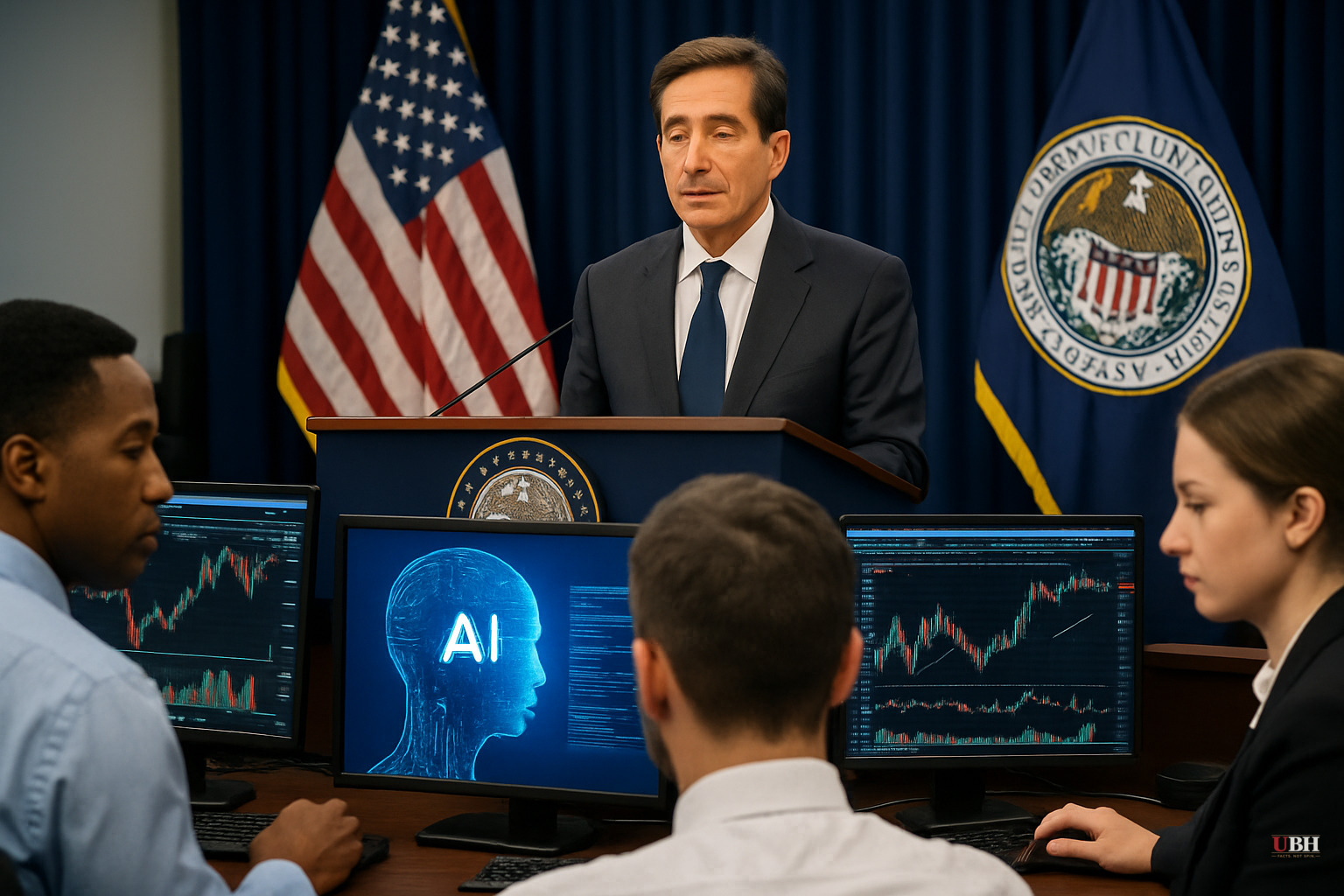
Since Kevin Warsh became Federal Reserve Chairman in May, he has cut the Fed's public communication down to the bone. Wall Street's answer, so far, is to build robots to fill in the blanks.
F/m Investments, a D.C.-based firm that runs exchange-traded funds tied to inflation and U.S. Treasurys, released an AI tool this week called "WarshGPT," according to CNBC. The tool digests roughly 1,800 documents and transcripts of Warsh's past remarks, aiming to help traders predict how he'll approach economic questions now that he's giving them far less to work with directly.
CEO Alexander Morris told CNBC his firm built a business decoding "Fedspeak," the dense, hedge-everything language that Fed chairs have used for decades to signal policy intentions without saying anything too concrete. Warsh, Morris said, effectively told markets he's done playing that game. "He just said he was going to go quiet on us," Morris said.
The numbers back that up. CNBC's own analysis found the Fed's June meeting statement, the first released under Warsh, ran about 130 words. Prior statements under Jerome Powell regularly topped 300 words. Warsh has called the shorter statement intentional, describing it as "shorter" and "simpler," and confirmed it deliberately excludes forward guidance, the language the Fed has historically used to hint at future rate moves.
The press conference gap is even starker. According to UBS, Warsh devoted just 5% of his sentences in his first post-decision press conference to policy-relevant topics. Under Powell, that figure averaged 27% per meeting. That represents a deliberate shift in how the chairman engages with markets on policy questions.
Why This Matters for Every 401(k) and Mortgage
Forward guidance isn't some abstract Fed nerd concept. It's the mechanism by which markets price mortgages, corporate bonds, and stock valuations before rate decisions actually happen. When the Fed hints strongly that cuts are coming, long-term rates start falling in anticipation. When it goes dark, markets are left guessing, and guessing means volatility.
Warsh has set up an internal task force specifically focused on reshaping how the Fed communicates, according to CNBC. That's a structural signal this isn't a temporary phase. It's the new operating model.
The Greenspan Comparison
Fed watchers keep reaching back to Alan Greenspan for a historical parallel, and it's a fair one. Gary Richardson, a former Fed historian now teaching economics at UC Irvine, told CNBC that during the Greenspan era, people joked the Fed chairman saying "good evening" could move markets. Financial media literally tracked how thick Greenspan's briefcase was on meeting days, theorizing a bulkier bag meant he'd loaded up on evidence for a rate change.
Richardson's broader point is the one that matters here: opacity doesn't stop investors from trying to predict the Fed. It just changes their methods. "With limited information, people are going to try to do anything they can to figure out what the Fed is thinking," Richardson told CNBC.
That's exactly what's happening now, except the tools have gotten a lot more sophisticated than briefcase-watching. Instead of parsing body language, firms are training large language models on years of a chairman's speeches, op-eds, and testimony to build a statistical fingerprint of how he thinks.
The Case for Warsh's Approach, and the Case Against
There's a legitimate argument for what Warsh is doing. Forward guidance can backfire. It ties the Fed's hands, invites markets to overreact to hints that don't materialize, and can make the central bank look like it's trying to manage market psychology rather than just setting policy based on data. A leaner statement forces markets to react to actual decisions and actual data releases, not to speculation about a speech's adjective choices.
The counterargument is just as real: less guidance means more volatility, and volatility has costs. Investors, businesses, and everyday borrowers price risk based partly on how confident they are about where rates are headed. If the Fed goes dark, uncertainty premiums go up, and that shows up in borrowing costs for real people, not just traders at ETF shops.
Neither of those arguments has been tested yet with real economic data. Warsh has only led one meeting cycle under this new format. Whether shorter statements and quieter press conferences actually make policy more credible, or just push more speculative energy into the market via tools like WarshGPT, is an open question no one can answer from a single data point.
What's Next
The next scheduled Fed meeting will be the real test of whether Warsh sticks with the terse format under pressure, particularly if inflation or labor data surprises to the upside or downside between now and then. F/m Investments' Morris and firms building similar AI tools will get their first real chance to see if machine-parsed Fedspeak actually predicts Warsh's decisions, or if it's just an expensive way to guess.
Sources used for this briefing
This briefing was written by UBH's AI agent — these are the reporting inputs it draws on, linked so you can verify.


