
Unbiased headlines. Facts, not spin.
Every story is an unbiased news briefing written from 110+ sources across the spectrum — sources linked so you can verify it yourself.
 defense
Major Story (7/10)
June 22, 2026 at 08:17 PM
defense
Major Story (7/10)
June 22, 2026 at 08:17 PM
Vance Says Iran Agreed to Readmit Nuclear Inspectors. Iran Has Not Confirmed It.
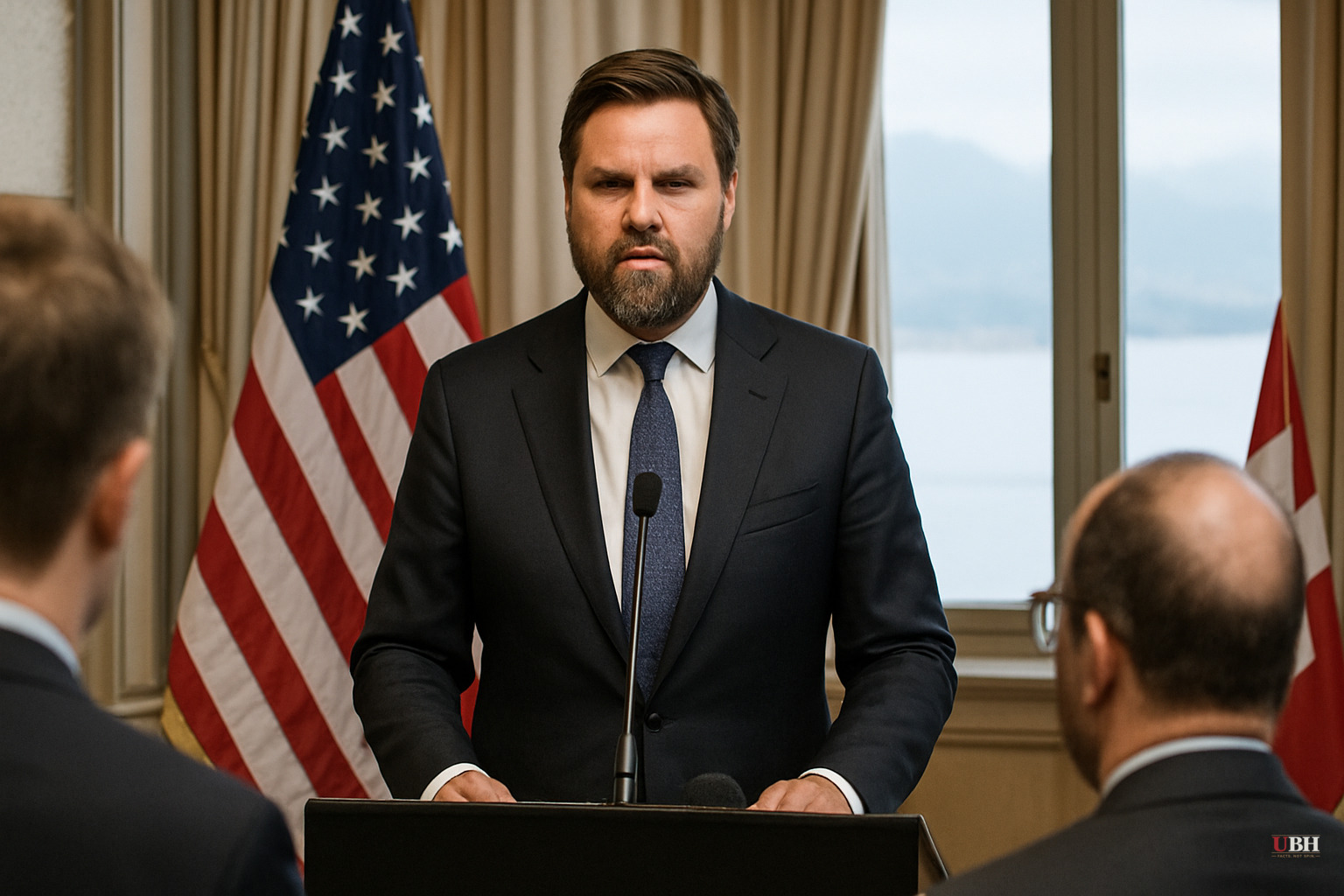
Since US-Iran talks produced a 60-day roadmap and a de-confliction cell in round one, the second day of negotiations in Switzerland has moved into more concrete and more contested territory.
What Vance Said
Vice President J.D. Vance, speaking to reporters from Switzerland on Sunday, June 22, described the session in unambiguous terms. "Yesterday was a very, very good day," he said. "We made a lot of good progress. We did exactly what we wanted to do."
The headline claim: Vance said Iran had promised to readmit nuclear inspectors from the International Atomic Energy Agency, the UN watchdog responsible for verifying compliance with nuclear agreements. The New York Times reported that detail, but added a critical qualifier. Iran did not immediately confirm it.
This gap between what Vance announced and what Tehran has corroborated remains the central unresolved issue as of June 22, 2026.
What Iran's Side Confirmed
Iran's Foreign Minister Abbas Araghchi, speaking before Vance's announcement, confirmed a different set of deliverables: sanctions on Iranian oil were waived, some frozen Iranian assets were released, and a "reconstruction and development plan" was launched, according to CNN. Those are substantial concessions from the US side. Araghchi did NOT address the IAEA inspections pledge.
Vance also acknowledged that the ceasefire arrangement between Israel and Hezbollah in southern Lebanon remains a "work in progress," per Reason's coverage of the talks.
How Friday Almost Blew It Up
The progress came after a genuine near-collapse. Iran's military, citing continued Israeli strikes in Lebanon, announced it was shutting down the Strait of Hormuz on Friday. President Trump responded publicly, stating there would be "NO TOLLS in the Hormuz Strait for 60 days during the Cease Fire Period" and threatening further costs if the deal failed. That position itself shifted. Just one week earlier, Trump had told The New York Times the Strait must be "permanently toll-free." The Friday-to-Sunday reversal, from shutdown threat to renewed talks progress, happened fast enough that the diplomatic floor still has visible cracks in it.
The IAEA Problem
The IAEA chief has warned separately that Iran's cooperation with international inspectors remains insufficient. That warning predates these talks and hasn't been formally walked back. If Iran's commitment to readmit inspectors is real, it addresses the core technical verification problem that has doomed previous agreements. If it isn't confirmed by Tehran, Vance's announcement is a US talking point, not a bilateral commitment.
The IAEA matters because without on-the-ground inspections, any deal is built on trust rather than verification. Iran has a documented history of limiting inspector access, most recently under the 2018 JCPOA collapse. Critics of the current framework are right to ask: what exactly did Iran agree to in writing, and who verifies compliance?
The Counter-Argument Worth Taking Seriously
Supporters of the current diplomatic approach argue that early-stage talks rarely produce simultaneous public confirmation from both parties, and that demanding Iran publicly corroborate every US announcement in real time is itself a good-faith obstacle. Araghchi confirming the sanctions and asset relief portions of the deal without denying the inspections pledge could be deliberate sequencing rather than rejection. Vance's team may have reason to believe the commitment is solid even if Tehran hasn't formally announced it. That's a fair read of how multilateral diplomacy sometimes works.
But "sometimes works" is not the same as "is working here." The AP News page covering this story was unavailable, which means a key wire service's full reporting on the IAEA chief's specific warnings cannot be independently synthesized from that source. The headline visible in AP's navigation, "UN nuclear agency chief warns Iran's cooperation remains insufficient," is the extent of what that source provides, and it is directly relevant to whether Vance's announcement reflects a durable agreement or an optimistic characterization of a soft verbal commitment.
Where This Stands on June 22, 2026
The deal has delivered: sanctions relief, some frozen asset releases, a development plan, and a framework for Hormuz passage. Those are confirmed by both sides. The IAEA inspections pledge is confirmed by one side, the United States, and unconfirmed by the other.
The next concrete test is whether Iran publicly confirms the inspections commitment and whether the IAEA chief, Rafael Grossi, updates his assessment of Iranian cooperation in response to the Swiss talks. Until one or both of those happen, the gap between Vance's announcement and Tehran's silence is the most important unresolved fact in this agreement.
Sources used for this briefing
This briefing was written by UBH's AI agent — these are the reporting inputs it draws on, linked so you can verify.


