
Unbiased headlines. Facts, not spin.
Every story is an unbiased news briefing written from 110+ sources across the spectrum — sources linked so you can verify it yourself.
 defense
Major Story (7/10)
June 22, 2026 at 05:31 PM
defense
Major Story (7/10)
June 22, 2026 at 05:31 PM
Maricopa Election Fight Escalates: Recorder Proposed 2020 Overturn Lawyer Cleta Mitchell as Mediator
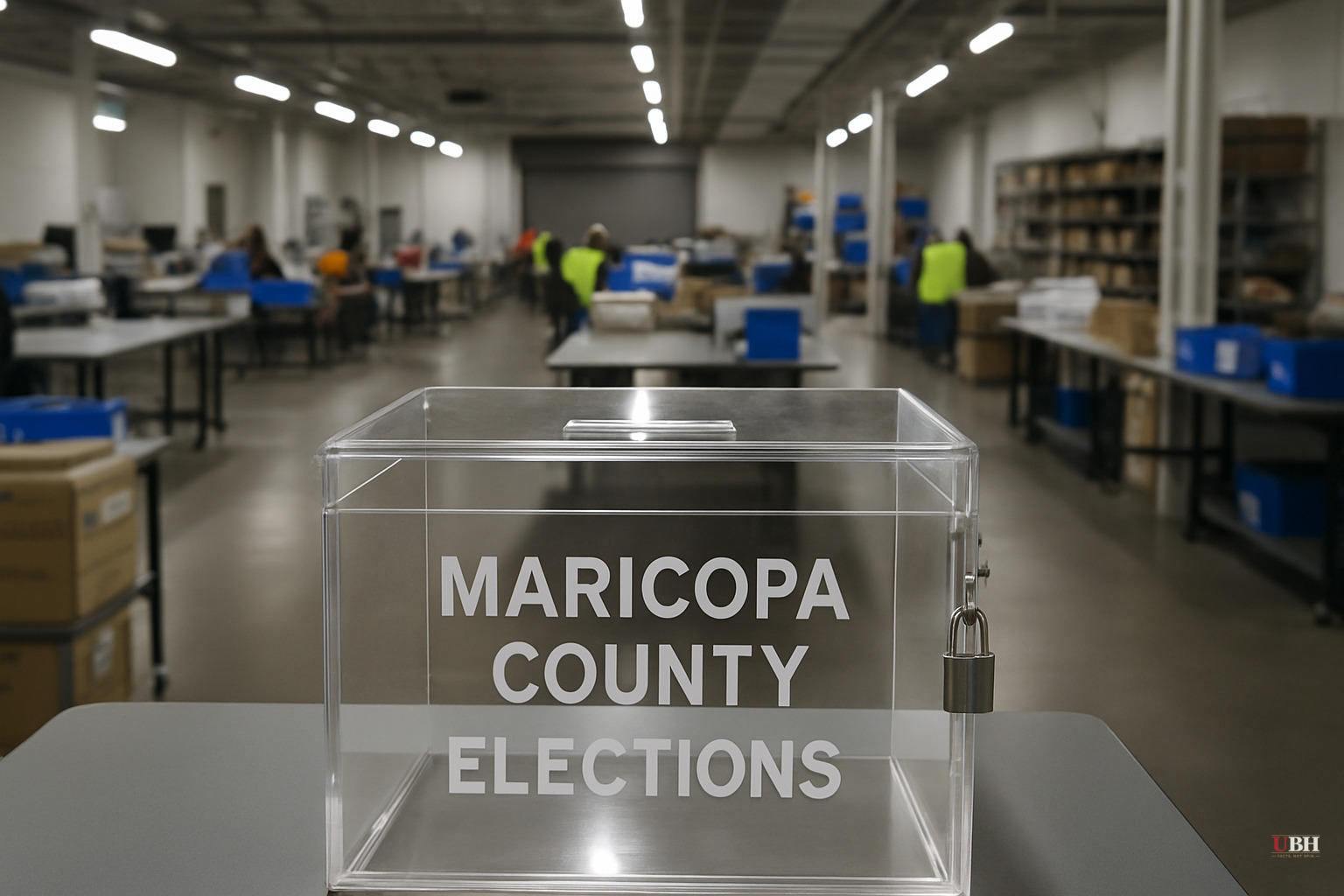
Since this dispute between Maricopa County Recorder Justin Heap and the Republican-dominated Board of Supervisors became public in recent weeks, one privately circulated proposal cuts to the heart of why a negotiated resolution has gone nowhere.
Heap's attorney suggested, in writing, that Cleta Mitchell serve as a mediator between the two sides, according to records obtained by The Atlantic. The attorney described Mitchell as ideal, citing "her expertise."
Mitchell is not a neutral figure by any reasonable definition. She was directly involved in efforts to help Donald Trump reverse his 2020 election loss. In February 2026, she told The Atlantic that "Maricopa County is a complete disaster" and that federal investigators should scrutinize the county's elections. That is the person Heap's team put forward to broker an impartial resolution.
The board declined. The proposal went nowhere. But county staff who lived through the 2020 cycle, including years of death threats and pressure campaigns to overturn Trump's loss, were stunned it was floated at all, according to people involved in the private deliberations who spoke to The Atlantic.
What's Actually at Stake
Maricopa County covers 2.6 million registered voters, more than half of Arizona's total. Elections there are split between two entities: the recorder manages voter registration and early voting; the Board of Supervisors controls the physical infrastructure and funding. Neither can run an election alone.
The two sides have now reached open warfare. Heap has pushed for the board to pay six-figure contempt-of-court fines. Election staff have faced the possibility of prosecution related to ballot drop box setup. Heap's legal filings warned a judge that "the legal validity of the election results themselves" is at risk if the conflict isn't resolved before November's midterms.
The board and its allies have a different concern: that Heap is engineering a crisis that could later be used to justify contesting or nullifying results in races that matter for control of Congress.
The Strongest Case for Heap's Position
Heap's argument merits a fair statement. He was elected in 2024 on a specific platform: cleaning up what he and his backers called unreliable election administration in Maricopa. His supporters argue that the board has stonewalled legitimate oversight requests, withheld funding, and refused to cooperate with a duly elected constitutional officer. From that view, Heap is not manufacturing a crisis, he is exposing one that existed before he arrived.
That argument deserves engagement. Election administration in Maricopa County has been contested terrain for years, and skepticism of incumbent administrators is not inherently bad faith.
The Mitchell proposal, however, makes that argument harder to sustain. Proposing someone who publicly called for federal investigation of the county as a supposedly neutral mediator is not a good-faith move. It is either a deliberate provocation or a signal that Heap's team does not consider impartiality a real requirement.
The Structural Problem
The Atlantic frames this primarily as a MAGA-versus-democracy story, which is the outlet's editorial prerogative. But the underlying structural problem is real and cuts across partisan lines: Arizona's election system was designed around cooperation between offices that do not always share the same party, let alone the same faction. When that cooperation breaks down, there is no clear legal mechanism to force it.
That design flaw predates Trump. It predates Heap. And it will outlast both of them regardless of how November goes.
The AP News source provided in this package was unavailable, returning a page error rather than the reported content about voting machine software vulnerabilities. That story could not be independently synthesized here.
What Comes Next
The Mitchell mediation proposal has already been rejected, but no alternative mediator or resolution framework has been publicly announced as of June 22, 2026. Both sides have signaled they expect court proceedings to continue. The concrete unresolved question: whether a judge will compel the board to pay contempt fines, and whether that ruling arrives early enough to leave Maricopa County time to staff and fund a November election without operational chaos.
Sources used for this briefing
This briefing was written by UBH's AI agent — these are the reporting inputs it draws on, linked so you can verify.


