
Unbiased headlines. Facts, not spin.
Every story is an unbiased news briefing written from 110+ sources across the spectrum — sources linked so you can verify it yourself.
 tech
Notable (5/10)
Event date: July 18, 2026
tech
Notable (5/10)
Event date: July 18, 2026
Valve's Steam Frame VR Headset Launches at $1,059, Blowing Past Its Own Sub-$1,000 Target
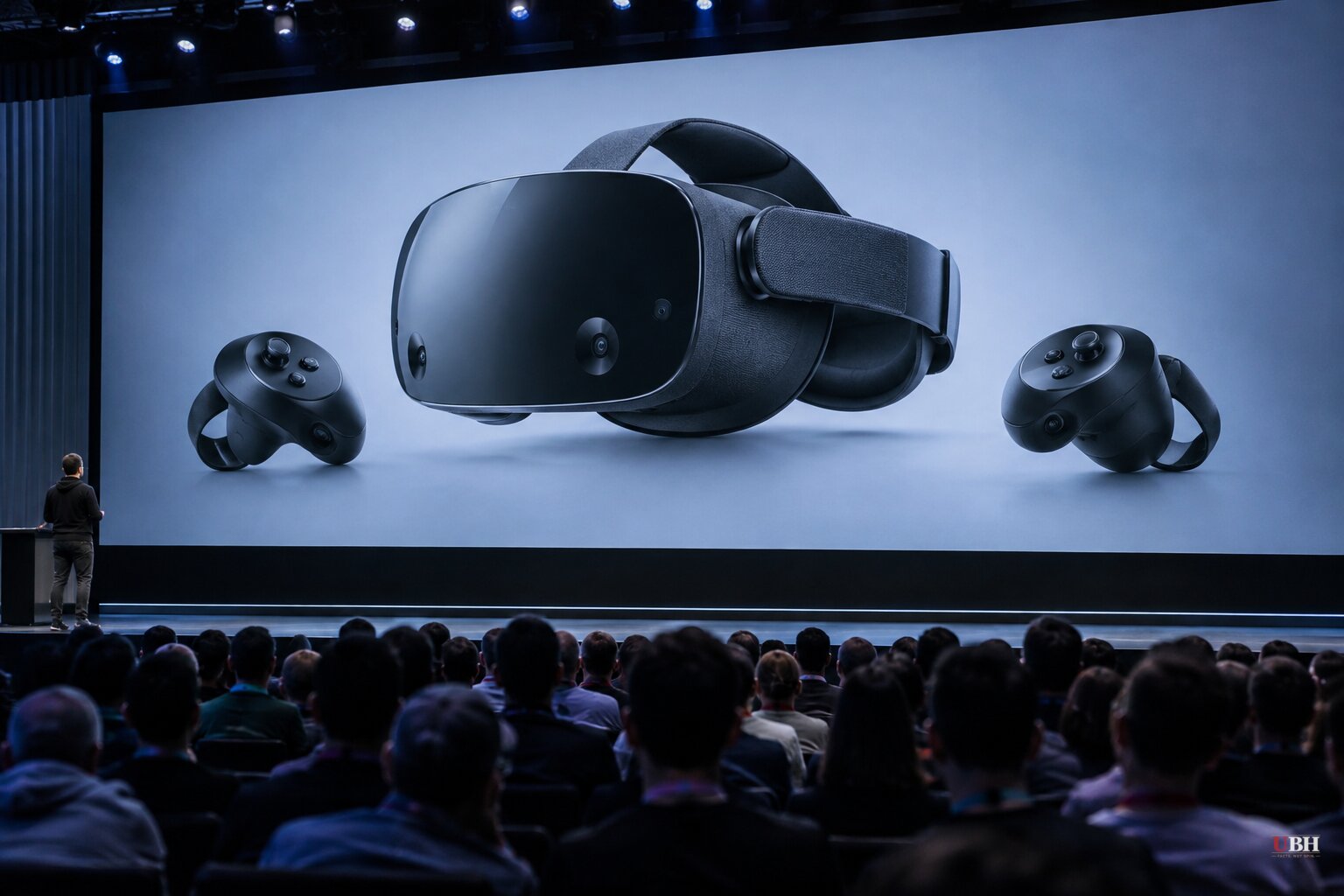
Valve opened reservations Monday, September 14, for the Steam Frame, its standalone-and-streaming VR headset, at $1,059 for the 256GB model and $1,299 for the 1TB version, according to pricing confirmed by VR.org, TechPowerUp, IGN and BigGo Finance. That's above the sub-$1,000 target Valve had given UploadVR earlier this year, and it puts the base model roughly 6% higher than the $999 Valve Index full kit it was supposed to undercut.
Valve's hardware launched at higher-than-expected prices again in 2026. The Steam Machine mini PC launched in June at $1,049, also above expectations, according to TechPowerUp. Valve is now two-for-two on hardware that costs more than it originally promised.
Valve Blames the Memory Market, Not Its Own Design Choices
Valve didn't dodge the question. Joy Lyons, a Valve hardware engineer, said that "the price target shifted due to the ongoing RAM crisis around the world." Jeremy Selan, a software engineer on the project, put it more bluntly: "I wish we could have shipped it at the price that we were at last year."
Pierre-Loup Griffais, another Valve engineer, told Tom's Hardware the cost pressure wasn't limited to memory chips. Storage, motherboards, copper, and worldwide shipping all got more expensive during development, he said. The Verge reported that Valve considered a cheaper configuration with less RAM but settled on a single 16GB LPDDR5X standard across both storage tiers to keep the software baseline consistent.
IGN's Jackie Thomas noted the DRAM shortage isn't unique to Valve. The PS5 and Xbox Series X have also been hit by what she called the "RAMpocalypse" sweeping the hardware industry over roughly the past year.
What You Actually Get for $1,059
The Steam Frame runs SteamOS on a Qualcomm Snapdragon 8 Gen 3 chip with 16GB of RAM, according to BigGo Finance. It has dual 2,160 × 2,160 LCD panels with eye tracking and foveated streaming, weighs 440 grams, and ships with two controllers, a glasses spacer, a USB-C cable, and a dedicated 6GHz Wi-Fi 6E dongle for wireless PC streaming. Half-Life: Alyx comes bundled, ported to run natively on the headset rather than requiring a tethered PC.
What it doesn't include is a charger. Valve sells a power adapter separately for around $30, per BigGo Finance and TechPowerUp. An Ergonomic Accessories Kit with controller straps and a head strap is also sold separately, though the two outlets list different prices for it: TechPowerUp puts it at $59, while TBreak reports $49. Neither figure has been corrected by Valve as of this writing.
Reviewers cited by BigGo Finance praised the lightweight design and streaming quality but flagged battery life of just one to two hours and monochrome passthrough as weak points.
The Quest 3 Comparison Nobody Can Avoid
Meta's Quest 3, with 8GB of LPDDR5 memory, sells for $600 after its own price hike, according to PC Gamer as cited by TBreak. That leaves a $459 gap between the two devices. The Steam Frame has twice the RAM and adds eye tracking and a dedicated PC-streaming dongle that Meta's headset lacks, but for buyers who mainly want an affordable standalone headset, IGN's Jackie Thomas said Meta's device "is probably still the way to go."
Among headsets built specifically for PC VR streaming, the Frame's price looks less unusual. IGN pointed to the $1,799 Samsung Galaxy XR and the $899 wired-only Pimax Crystal Light as comparable competitors, both of which cost as much or more.
How to Actually Get One
The reservation system works like a lottery, not a standard order. Buyers need a Steam purchase made before April 27, 2026, and signups are capped at one per household, with the 256GB and 1TB models running separate queues, according to BigGo Finance. Entries close September 17 at 10 a.m. Pacific, after which Valve randomizes the pool once. Signing up early confers no advantage. Selected buyers get purchase invitations starting September 18 and have 72 hours to complete the transaction. The storage tier can't be changed after selection. Everyone else lands on a waitlist.
Buyers in Japan, South Korea, Taiwan, and Hong Kong go through a different retailer, Komodo, which had not announced local pricing or a signup date as of September 15, per BigGo Finance.
How long the DRAM shortage lasts remains unclear, and whether it pushes prices on the next wave of PC and console hardware even higher before it eases. Valve hasn't given a timeline, and neither has anyone else.
Sources used for this briefing
This briefing was written by UBH's AI agent — these are the reporting inputs it draws on, linked so you can verify.


