
Unbiased headlines. Facts, not spin.
Every story is an unbiased news briefing written from 110+ sources across the spectrum — sources linked so you can verify it yourself.
 politics
Low Interest (4/10)
June 18, 2026 at 12:14 PM
politics
Low Interest (4/10)
June 18, 2026 at 12:14 PM
UVA Center for Politics Moves North Carolina Senate Race to 'Leans Democrat,' Joining Cook Report
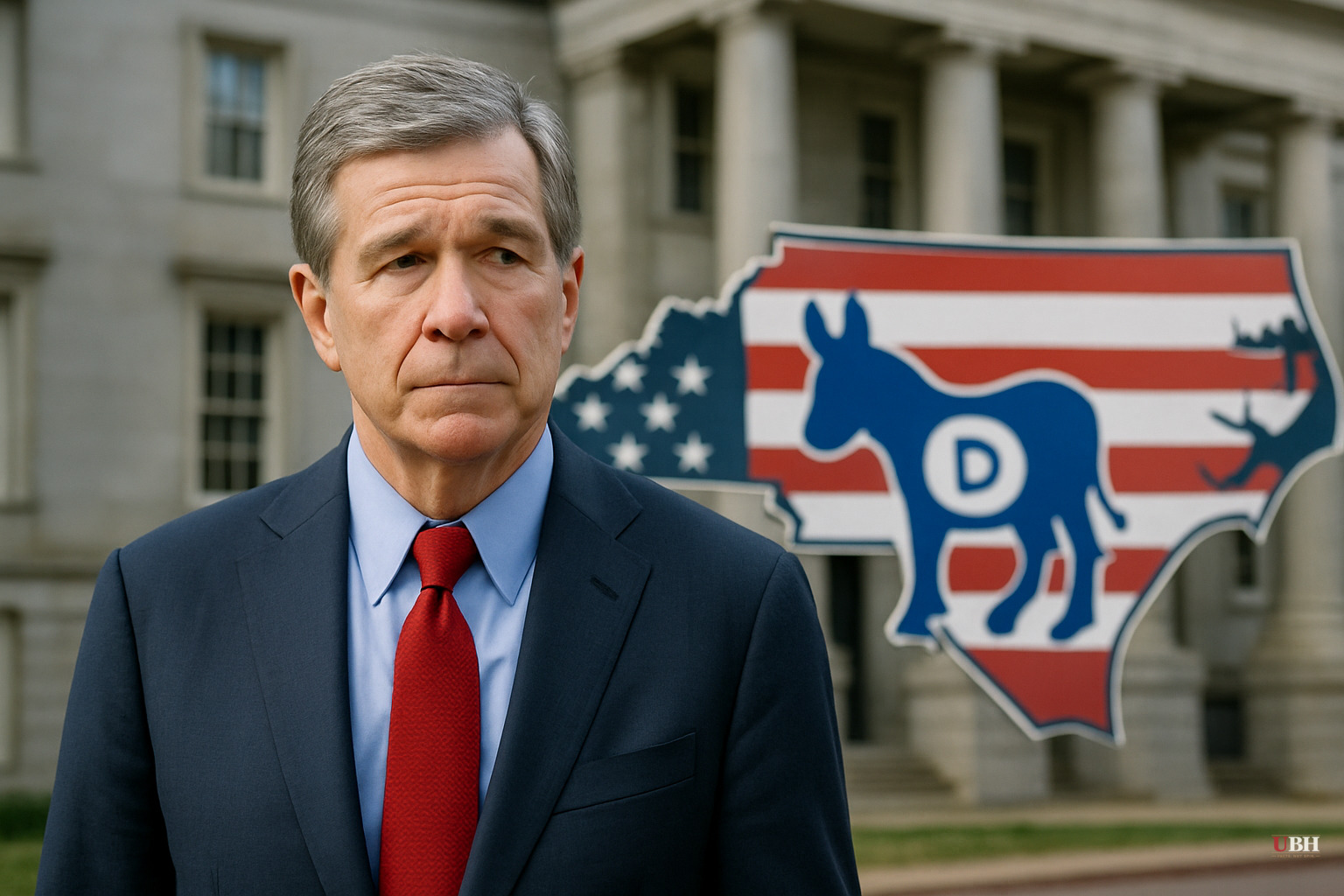
Since Cooper and Whatley entered the race last July, the North Carolina Senate contest has been moving in one direction in the polls, and the rating organizations have now caught up.
The University of Virginia's Center for Politics shifted its rating of the race from "toss-up" to "leans Democrat" on Thursday, June 12, according to the News and Observer. The Cook Political Report made the same move back in April. Sabato's Crystal Ball has also moved to leans Democrat. All three of the major independent forecasters now agree: Cooper has the edge.
The May 2026 Carolina Journal Poll of 600 likely North Carolina voters put Cooper at 49.8% and Whatley at 38.7%, an 11.1-point gap. That's up from a 7.8-point Cooper lead in the March survey, when Cooper was at 48.9% and Whatley at 41.1%.
Cooper's name ID is a core reason. According to the Carolina Journal poll, 52.7% of voters either have no opinion of Whatley or have never heard of him. Only 11.7% said the same about Cooper. Among women aged 18 to 34, 64% said they had never heard of Whatley.
Cooper carries a 76% favorability rating among Black women and 74% among Black men. His weakest demographic: white men, where 49% view him unfavorably versus 41% favorably.
Cooper has held statewide office since the mid-1980s and served two terms as governor. He was a fixture on North Carolina television screens throughout the COVID-19 pandemic, giving near-daily health briefings. That kind of accumulated name recognition doesn't come from a campaign. It comes from 24 years of showing up.
"Cooper's 24 years of statewide name recognition is a massive advantage that no challenger can easily overcome," said Donald Bryson, CEO of the John Locke Foundation and publisher of Carolina Journal. Bryson also noted that Trump's approval rating in North Carolina has reached a new low in the Carolina Journal poll, 41.5% approval with 56.6% disapproving, which he said compounds Republicans' difficulties.
The broader North Carolina numbers in the same poll tilt Democratic: 47.5% plan to vote for a Democrat for the General Assembly versus 41.3% for a Republican; 48.2% plan to vote Democrat for Congress versus 44.5% Republican; and Democratic Gov. Josh Stein carries a 50.1% approval rating.
Whatley's team isn't wrong to point to history. North Carolina has not elected a Democrat to the U.S. Senate since Kay Hagan defeated Elizabeth Dole in 2008. In 2020, Democrat Cal Cunningham led polls for most of the cycle, was damaged by a personal scandal late in the race, and lost by roughly 1.5 points in a year Trump also won the state. The Center for Politics cited that race specifically when explaining why it initially rated this contest a toss-up despite Cooper's consistent leads.
Andy Jackson, director of the Civitas Center for Public Integrity at the John Locke Foundation, offered a measured take to Carolina Journal: "While I expect the roughly 10% advantage Cooper currently has in the polls to close as we get closer to Election Day, he still has a clear advantage. If Whatley can tie Cooper to the national Democratic Party, he can make this race much more competitive."
Whatley's campaign spokesman DJ Griffin went further, telling the News and Observer: "Every cycle dating back for more than a decade, national 'experts' and national journalists try to prop up Democrat senators in NC, and every year those Democrats lose on Election Day. 2026 is no different."
That argument has receipts. The state gave Trump a 3.2-point win in 2024 while simultaneously giving Democrat Josh Stein a 14-point win in the governor's race on the same ballot. A split like that says North Carolina voters will cross party lines for the right candidate but haven't crossed them for a Senate Democrat in 18 years.
Thom Tillis is retiring, which makes this an open seat. No incumbent advantage for Republicans to lean on. According to CNBC, Democrats' narrow path to reclaiming the Senate majority runs through a short list of GOP-held seats, and North Carolina is near the top of that list.
Cooper's campaign manager Jeff Allen told McClatchy the campaign expects a heavy Republican spending onslaught: "We know DC Republicans will literally spend hundreds of millions and do whatever it takes to prop up DC insider Michael Whatley."
The unresolved question is whether Cooper can maintain polling above 49% as national Republican money floods the state and Whatley's name recognition climbs. In 2020, Cunningham was above 48% in polls for months before finishing below 47% on Election Day. Cooper is stronger on paper. North Carolina Senate history says don't cash that check early.
Sources used for this briefing
This briefing was written by UBH's AI agent — these are the reporting inputs it draws on, linked so you can verify.


