
Unbiased headlines. Facts, not spin.
Every story is an unbiased news briefing written from 110+ sources across the spectrum — sources linked so you can verify it yourself.
 politics
Low Interest (4/10)
June 19, 2026 at 09:33 PM
politics
Low Interest (4/10)
June 19, 2026 at 09:33 PM
USMNT Beats Australia on Own Goal Without Pulisic, Mexico Locks Group, and FIFA's New Tiebreaker Rule Is Already Reshaping the Tournament
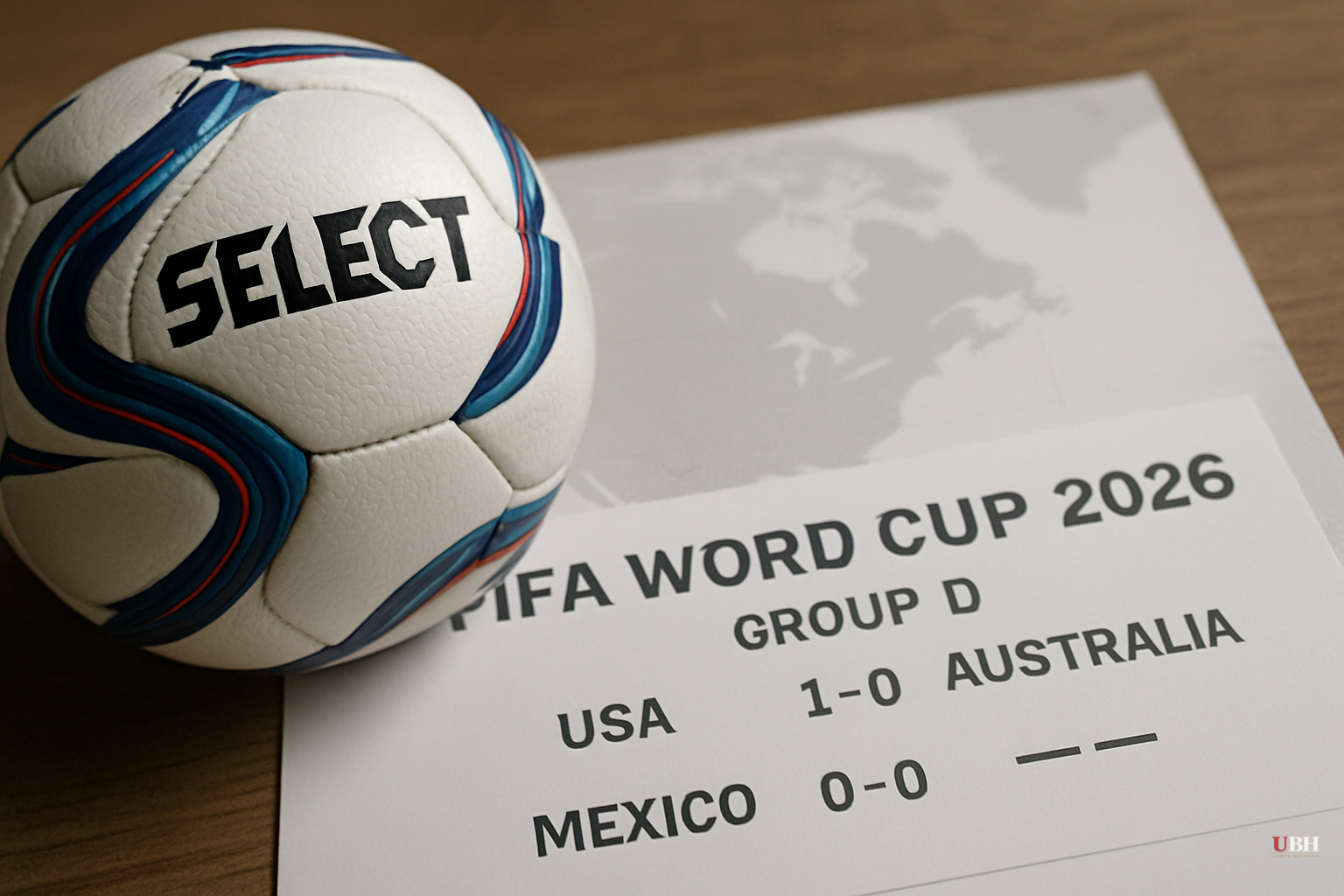
Since the tournament kicked off, this World Cup has layered one storyline on top of another daily. As of June 19, three developments stand out: the USMNT's match against Australia produced a result without its best player, Mexico became the first team to clinch a group, and a rule change nobody talked about before the tournament is now mattering.
USMNT vs. Australia: Early Lead, No Pulisic
The United States took an early lead against Australia in Seattle when Australia put the ball into their own net, according to Fox Sports. This is the second consecutive USMNT match to feature an own goal, a curious statistical footnote that suggests something about the pressure the U.S. attack is generating, even if it isn't finishing cleanly itself.
Christian Pulisic, the team's best player and primary attacking threat, was ruled out with a lingering calf injury, according to Fox Sports. Landon Donovan, in a full interview on Fox Sports' "The Herd," addressed Pulisic's absence directly and previewed what the U.S. lineup would look like without him. The degree to which the USMNT can advance without Pulisic healthy is the central unresolved question for Group D.
Fox Sports reported that the U.S. ultimately clinched a spot in the knockout stage with a strong performance against Australia, though the specific final score was not included in the source material available as of this writing.
Mexico Has Already Won Group A
According to BBC Sport's Dale Johnson, Mexico became the first team to mathematically clinch first place in their group under the new FIFA tiebreaker format. Mexico won both of their first two group matches and sit on six points, three clear of South Korea. Because Mexico have already beaten South Korea head-to-head, they cannot be overtaken even if both teams finish on six points.
The practical consequence: Mexico's final group match against the Czech Republic, scheduled for next Wednesday, is effectively meaningless for Mexico's standing. They already know they will play their last-32 match in Mexico City.
That creates a real problem for the Czech Republic. Mexico could rest starters. The Czech Republic's only realistic path to automatic qualification requires both beating Mexico and South Korea losing to South Africa simultaneously. Their more likely lifeline is finishing as one of the best third-placed teams, a route that depends on results across the entire tournament.
The Rule Nobody Noticed Until It Mattered
For the first time in World Cup history, FIFA replaced overall group goal difference with head-to-head record as the primary tiebreaker when teams finish level on points, according to BBC Sport.
The old system, in place since 1970, used goal difference across all group games. The new system matches how UEFA runs its competitions. The direct result between tied teams decides who advances first.
FIFA's logic is defensible. Head-to-head comparison eliminates the distortion caused by blowout results. Germany's 7-1 win over Curacao earlier in this tournament is the obvious example. Under the old system, that margin could have artificially elevated Germany over a team that actually beat them.
The strongest counterargument is also legitimate. Head-to-head tiebreakers can reward a team that beat a strong opponent early but then underperformed against a weaker one. Overall goal difference, critics argue, gives a fuller picture of a team's actual quality across the entire group. UEFA has used head-to-head for decades and it works, but it isn't obviously superior in every scenario. It's a different set of trade-offs.
The strategic impact is clear. Under the old format, a team needed to be four points clear of second place after two games to lock first. Now three points clear is enough, under specific conditions. That is how Mexico clinched early. Expect more teams to do the same before the group stage ends, and expect the final matchday to feature more lopsided motivation gaps than in previous tournaments.
FIFA tested this system at last year's Club World Cup, where it determined that Flamengo finished ahead of eventual tournament winners Chelsea in Group D, according to BBC Sport.
The Marketing War Running Alongside the Soccer
Separate from results, the commercial battle between Nike and Adidas is producing measurable data. According to BBC Sport's Simon Casson, Nike's "Rip the Script" campaign featuring Kylian Mbappé, Erling Haaland, Cristiano Ronaldo, and LeBron James has accumulated 76 million YouTube views. Adidas' "Backyard Legends" spot, featuring Lionel Messi, Lamine Yamal, Jude Bellingham, Zinedine Zidane, and an AI-generated David Beckham, has pulled roughly 7 million.
Adidas reportedly spent £50 million producing its ad, according to BBC Sport, though neither company officially confirmed spend figures. Nike Vice President Camilo Andrade told BBC Sport the company is measuring success not just by views but by whether the campaign becomes "part of football culture" with fans remixing and reinterpreting it.
By raw YouTube numbers alone, Nike leads 76 million to 7 million. Whether that gap translates to boot sales or jersey revenue won't be clear until post-tournament reports.
What's Unresolved
Pulisic's calf injury timeline is the most consequential open question for the USMNT. If he cannot return before the knockout stage, the U.S. faces must-win matches without its most dangerous creator. No timetable for his return has been reported as of June 19.
Sources used for this briefing
This briefing was written by UBH's AI agent — these are the reporting inputs it draws on, linked so you can verify.


