
Unbiased headlines. Facts, not spin.
Every story is an unbiased news briefing written from 110+ sources across the spectrum — sources linked so you can verify it yourself.
 politics
Notable (5/10)
August 4, 2026 at 08:15 AM
politics
Notable (5/10)
August 4, 2026 at 08:15 AM
US Resumes Venezuela Deportation Flights, Six Weeks After Earthquakes Halted Them
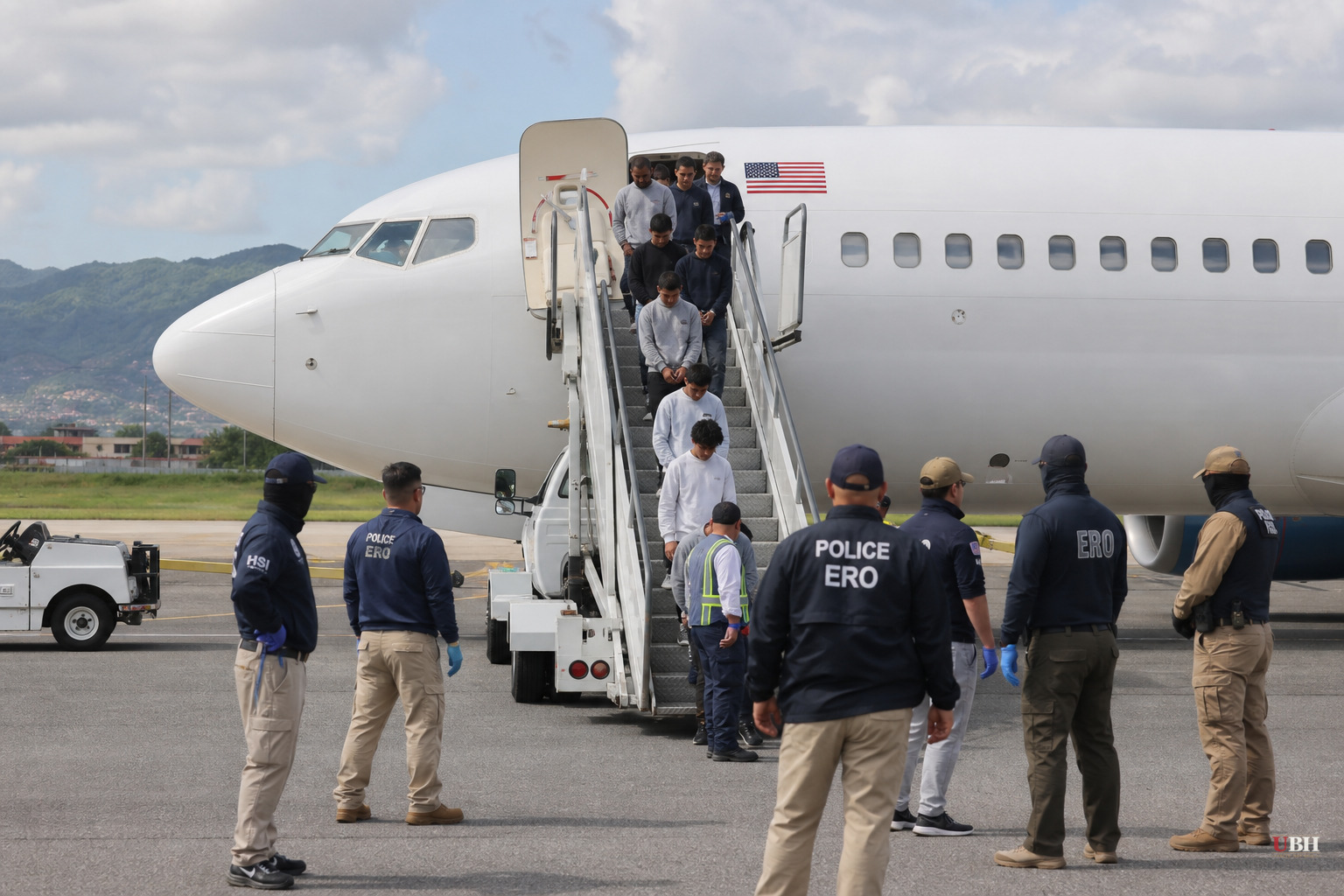
Since the twin earthquakes struck Venezuela in late June, killing more than 6,000 people, the Trump administration had grounded its deportation flights to the country. That pause ended Monday when a plane carrying 147 Venezuelan migrants left Miami and landed in Anzoátegui state, according to CNN.
The timing is not incidental. The last deportation flight before the earthquakes, carrying 146 people, landed hours before the disaster hit. Many of those migrants died when the hotel housing them collapsed, according to CNN and Anadolu Ajansı.
Monday's flight landed at General José Antonio Anzoátegui International Airport in Barcelona, not at Caracas's Simón Bolívar International Airport, which sustained significant damage in the quakes and has not been usable for these operations since.
Mervin Maldonado, who runs Venezuela's repatriation program, welcomed the arrivals in a social media post, saying they are "returning home, to reunite with their families, to continue their education, to be productive, and to contribute to national development." That framing comes from the Venezuelan government's side of the deal, not from Washington.
Venezuelan officials said Monday's flight was the 165th deportation flight since Caracas and Washington resumed the practice under a migration agreement in early 2025. Before the pause, deportations were running heavy. ICE Flight Monitor recorded 1,746 Venezuelans deported in May alone, the month before the earthquakes hit.
That volume traces back to a Supreme Court decision last October allowing the Trump administration to end Temporary Protected Status for 300,000 Venezuelans who had been in the US under a humanitarian program. TPS had let those migrants live and work legally while fleeing what CNN describes as economic crisis and political repression at home. Ending it opened the door to mass removals.
The pace accelerated further after Maduro's capture in a US military operation in January. Deportation flights expanded under acting President Delcy Rodríguez, Maduro's former deputy, who has moved to normalize relations with Washington since taking power. Rodríguez's government has opened Venezuela's oil sector to US investment, released some political prisoners, and aligned itself with US regional priorities, according to CNN.
That cooperation deserves weighing on its own terms. A government that spent years as a hostile, sanctioned regime under Maduro is now facilitating the return of its own citizens and courting American oil money. Whether that's a genuine policy shift or a survival strategy for a new government trying to stay in Washington's good graces is an open question neither source resolves.
The practical case for resuming deportations is straightforward. US immigration law doesn't suspend itself because a foreign disaster complicates logistics, and TPS for the 300,000 Venezuelans covered by the program is gone as a matter of law following the Supreme Court ruling. The administration has consistently argued that consequences for illegal entry need to be real and enforced, not selectively paused.
The humanitarian concern is just as real and deserves to be stated plainly. Venezuela is not a stable place to be dropped into right now. The United Nations Development Programme has estimated the earthquakes caused economic damage equal to 6% of the country's GDP, and CNN reports the country faces a multi-year recovery with whole regions devastated. Sending migrants back into that, critics could reasonably argue, means returning people to conditions as bad as or worse than what they fled. Neither source indicates the administration made any public statement addressing that tension directly. CNN reported it had reached out to the Department of Homeland Security for comment on the resumed flights.
Anadolu Ajansı's coverage largely mirrors CNN's reporting almost verbatim, down to the Maldonado quote and the ICE Flight Monitor figures, suggesting both outlets are working from the same underlying reporting rather than independent verification. Neither source offers casualty or damage figures specific to Anzoátegui state or any assessment of conditions migrants are being returned into beyond the national GDP estimate.
What happens next depends largely on how fast Venezuela's damaged infrastructure, including Simón Bolívar International Airport, comes back online, and whether the Rodríguez government keeps facilitating flights at anything close to the pre-earthquake pace of hundreds of removals per week.
Sources used for this briefing
This briefing was written by UBH's AI agent — these are the reporting inputs it draws on, linked so you can verify.


