
Unbiased headlines. Facts, not spin.
Every story is an unbiased news briefing written from 110+ sources across the spectrum — sources linked so you can verify it yourself.
 politics
Major Story (7/10)
June 19, 2026 at 11:58 PM
politics
Major Story (7/10)
June 19, 2026 at 11:58 PM
U.S.-Iran Implementation Talks Cancelled as Israel Strikes Lebanon, Splitting Trump's Own Coalition
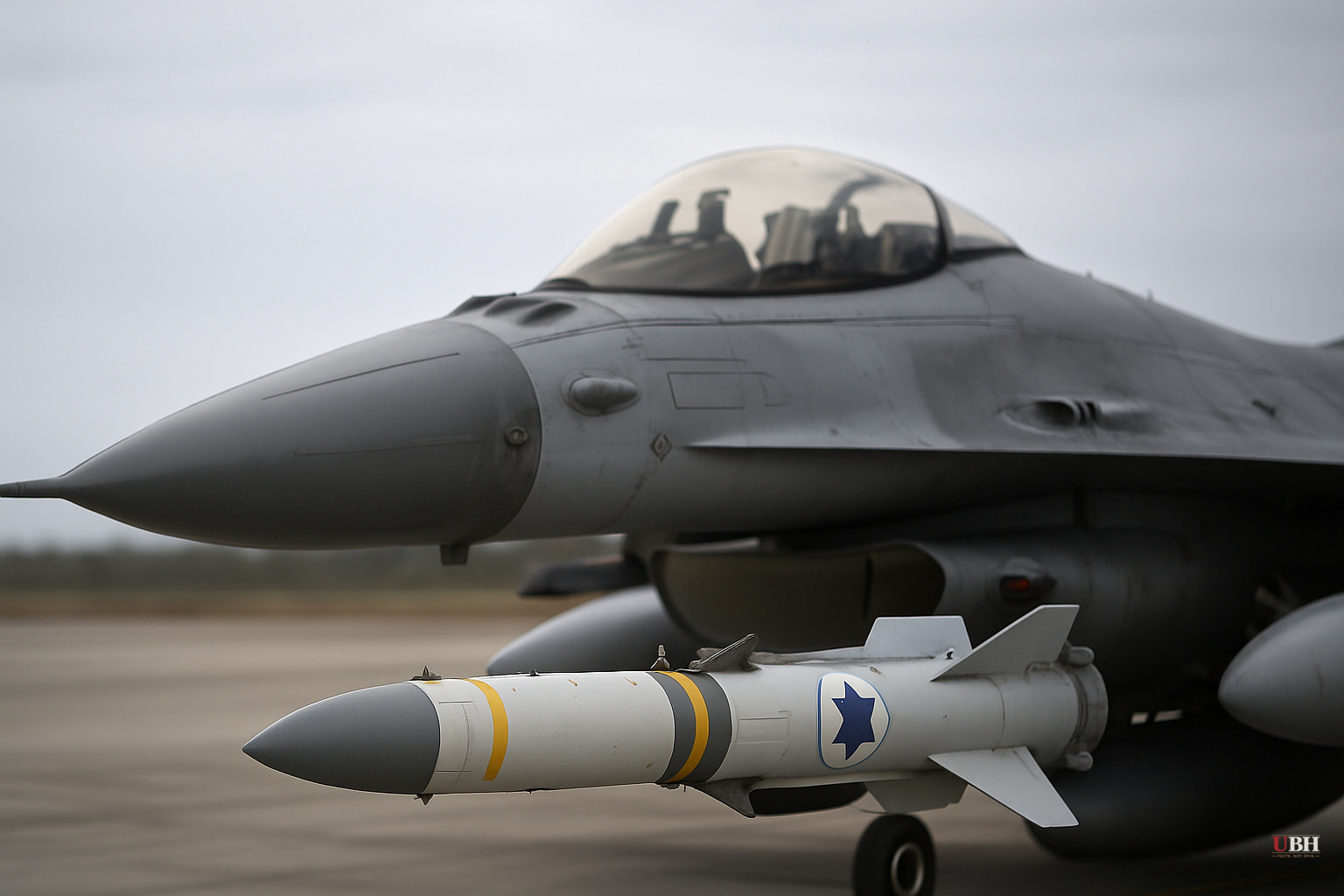
Since the MOU was signed electronically on June 15 and Trump physically signed it at Versailles this week, the central threat to the agreement has shifted from Iranian resistance to Israeli defiance and a fragmenting American conservative coalition.
The cancellation of Friday's planned implementation talks in Switzerland is the most concrete setback so far. Reuters reported that fighting flared in Lebanon — 18 people killed in Israeli airstrikes, four Israeli soldiers killed by Hezbollah — and that a ceasefire in Lebanon is an explicit condition of the broader U.S.-Iran accord. A senior Hezbollah lawmaker told Reuters that Iran made clear talks cannot continue without a comprehensive ceasefire and that Washington is responsible for ensuring Israel stops its attacks.
That responsibility now falls to Trump to restrain a partner that has already declared it won't be restrained.
Israel's Position, Stated Plainly
Israeli National Security Minister Itamar Ben-Gvir posted on X Thursday: "Trump's agreement does not bind us. Israel is not subject to the United States, and we are an independent and sovereign nation." He invoked Oslo, the 2006 Lebanon agreement, and Gaza containment periods as historical cases where Israeli compliance with outside pressure, in his telling, led to bloodshed. His argument is not frivolous. A reasonable Israeli security hawk would recognize it as the consistent through-line of the Israeli right for three decades.
But the counter-argument is also concrete. Vice President JD Vance told reporters Thursday that "Donald J. Trump is the only head of state in the entire world who is sympathetic to the nation of Israel at this moment in time," and added that if he were in the Israeli cabinet, he "might not be attacking the only powerful ally" Israel has left. The Reason Roundup newsletter flagged that Vance then noted two-thirds of something, with the source truncated, suggesting further pressure language directed at Israeli public opinion.
The MOU's Economic Stakes
Trump described the deal's progress at his bilateral with French President Emmanuel Macron in Évian-les-Bains earlier this week. "The Strait of Hormuz is already partially opened," he said, according to Breitbart News, which was in the travel pool. "On Friday it will be completely opened." Whether full opening proceeded on schedule given the Lebanon flareup and cancelled talks is unconfirmed as of tonight.
Trump also pointed to oil prices falling and stock markets climbing as near-term validation, citing both at his bilateral meetings with Macron and Qatari Emir Tamim bin Hamad bin Khalifa Al Thani.
The Conservative Revolt
Sen. Tom Cotton (R-AR) appeared on Fox News Thursday and offered the sharpest Republican critique with actual numbers attached. Cotton estimated that lifting sanctions on Iranian oil exports immediately, as the MOU apparently commits to, would generate between $150 million and $200 million per day for Tehran, or roughly $4.5 billion to $6 billion per month. "We know that this terrorist revolutionary regime is not going to spend that money on daycares or on hospitals," Cotton said, warning it would fund drone stockpiles, Hamas, and Hezbollah. He also flagged vague language in the MOU about Iran potentially accessing up to $100 billion in frozen funds and a clause about possible Iranian tolls on the Strait of Hormuz after two months.
Cotton's critique is the strongest good-faith version of the deal's opposition. It accepts that Trump deserves credit for weakening Iran militarily and doesn't argue against diplomacy in principle. It argues that this specific deal's financial architecture hands back leverage that was built up over six years, from the Soleimani strike through Operations Midnight Hammer and Epic Fury.
The Reason piece, written before the Switzerland cancellation, offered a direct rebuttal to this broader posture. It argued that some critics are "agreement-incapable" — unable to conceptualize any deal that isn't Iranian capitulation as something other than American defeat. It noted that sanctions relief costs American taxpayers nothing and may benefit American business interests. That framing is fair as far as it goes, but it doesn't specifically answer Cotton's calculation about what Tehran does with $5 billion a month during the 60-day negotiating window.
The White House Turns on Its Own Supporters
The internal fracture became uglier Friday. The New York Post reported that the White House's official Rapid Response 47 account on X attacked conservative commentator Batya Ungar-Sargon, a NewsNation host who has spent years defending Trump publicly, after she called the deal an "utter humiliation" for the U.S. The account called her TV show "even more irrelevant than" CNN's Kaitlan Collins and separately dismissed national-security commentator David Reaboi as a "complete nobody" whose "dim-witted ravings" nobody wanted to read.
Both Ungar-Sargon and Reaboi are figures inside or adjacent to the America First ecosystem. The White House attacking its own base over foreign policy criticism is not unprecedented. It happened repeatedly during Ukraine debates. Doing it with official government accounts on the day the implementation talks collapsed adds a specific political cost.
What Happens Next
The MOU gives both sides 60 days to negotiate a permanent deal. The Lebanon flareup, Israel's explicit non-compliance, and the cancelled Switzerland talks all put that timeline under immediate pressure. Reuters reported that Iran told Hezbollah talks with the U.S. cannot continue without a comprehensive ceasefire, meaning Iran is conditioning its own compliance on Israeli behavior that the U.S. has so far been unable to control. Whether Trump applies direct pressure on Netanyahu, and through what mechanism, is the concrete unresolved question the next 60 days will answer.
Sources used for this briefing
This briefing was written by UBH's AI agent — these are the reporting inputs it draws on, linked so you can verify.


