
Unbiased headlines. Facts, not spin.
Unbiased Headlines is an independently owned news organization. We bring you the facts, not opinions, written fresh from 110+ named sources. Sources linked so you can verify it yourself.
 finance
Major Story (8/10)
Event date: October 27, 2026 ·
US Corporate Bond Sales Hit Record $1.76 Trillion as AI Borrowing Costs Climb
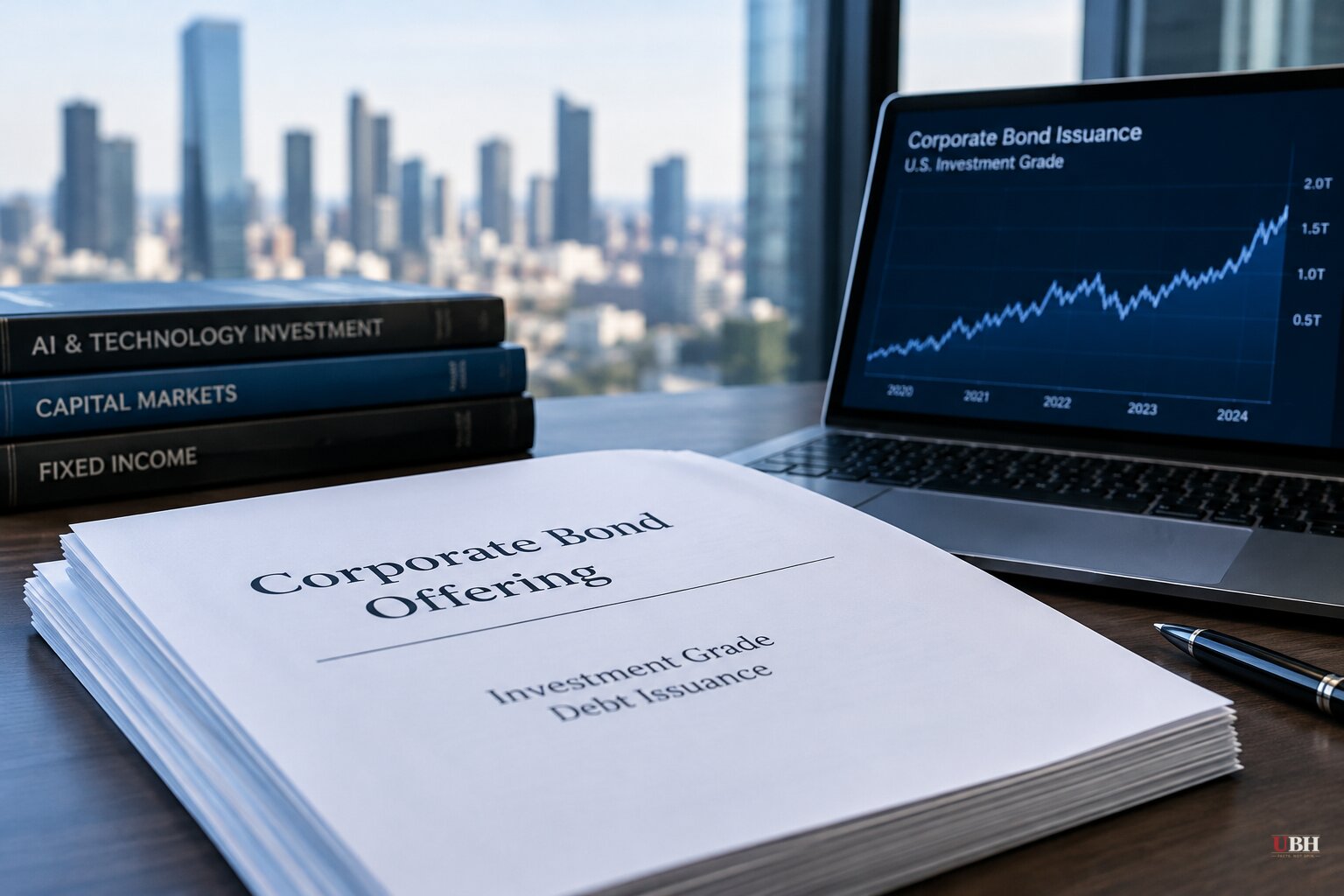
US investment-grade bond sales were on track to reach $1.76 trillion once deals priced Monday, Oct. 26, by Bloomberg's count. That tops the roughly $1.75 trillion raised during the 2020 pandemic boom. AI spending is behind the jump.
A week earlier, issuers led by megacap tech had sold about $1.7 trillion, roughly 29% ahead of the same point in 2025.
The market is absorbing the supply, for now
The iShares investment-grade corporate bond ETF (LQD) closed at $104.02 on Oct. 26, up 0.15%, despite the flood of new paper. Falling Treasury yields explain the calm. The 10-year yield was 5% on Oct. 26, down from 5.31% on Oct. 5.
Stocks are also still near record highs. Loren Moran, a fixed-income portfolio manager at Wellington Management, put it this way: "The winners are still winning, but the losers keep getting pummeled."
The losers are showing up in the pricing.
The riskiest AI deals are costing more
SpaceX has signed a binding commitment for a roughly $40 billion equipment financing led by Apollo Global Management. An Apollo-managed entity would buy NVIDIA GPUs and lease them to SpaceX for about five years. The money comes from privately placed Rule 144A bonds, sold only to large institutions.
The deal has not priced or closed. The most expensive piece could carry a rate of up to 8.75%. On Oct. 22, expected rates on riskier pieces were about 8.3% and 7.75%. SpaceX's most expensive bonds from June pay 6.65%.
Bank of America, Citi, Morgan Stanley and Blackstone have lined up $63 billion for a vehicle that would buy Broadcom gear and lease it to Anthropic starting in 2027. Two unnamed sources said the three banks are arranging about $43.5 billion of first-lien debt. Broadcom is offering lenders residual value support. Moody's warned that risk rises if several deals like this land close together.
CoreWeave is the stress gauge
On Oct. 16, five-year credit default swaps on CoreWeave rose above 1,100 basis points. That level implies about a 64% chance of default within five years. Oracle's swaps sat near 300 basis points. Swaps on Amazon, Alphabet and Meta hit record highs.
CoreWeave's bonds maturing in July 2032 recently traded at about a 15.3% yield, according to MarketAxess data. They traded as low as 9.5% after issuance in June.
"CoreWeave is quickly becoming the AI trade's canary in the coal mine," said Kathleen Brooks, research director at XTB.
Andrzej Skiba, head of fixed income at RBC Global Asset Management, said credit investors are saying "anything but tech." His warning: "You can't promise capex at a breakneck speed when the funding market is about, or close to, shut."
John Briggs, head of US rates strategy at Natixis North America, said: "If investors are seeing their AI-linked bonds losing value, they will be less interested in buying new bonds."
Hyperscaler bonds have underperformed the broader market even after a recent pause in supply, according to Morningstar's MarketWatch report.
An odd day on Oct. 22
On Oct. 22, the market-cap-weighted S&P 500 fell 1.2% while the equal-weighted version gained 0.5%. James Reilly, senior markets economist at Capital Economics, said a gap that wide had happened only twice since 1995: April 14, 1999, and March 30, 2000.
The 10-year Treasury yield fell below 5% that same day, its largest one-day drop since March 10, 2023, the day Silicon Valley Bank collapsed.
Bond yields had been climbing for reasons beyond AI. CNN reported that inflation rebounded after the Iran war disrupted oil and fuel supplies. U.S. debt has reached $40 trillion, and the deficit hit $2 trillion over the past fiscal year. The Federal Reserve raised rates on Sept. 16 for the first time in three years.
Wall Street did not expect another hike at this week's meeting. CME FedWatch put the odds of a December hike at 73%, with more increases anticipated in 2027.
What the IMF says is at stake
The IMF released its World Economic Outlook in Bangkok on Oct. 13, forecasting global growth of 3.1% in 2026 and 3.4% in 2027. In one downside scenario, a steep drop in AI investment sparks a sharp fall in asset prices. That would cut global GDP by 1.1% by 2028, including a 1.8% drop in U.S. output.
The fund said hyperscalers are "borrowing more and more, while investors have been leveraging to invest in AI stocks." It reviewed 14 circular financing deals among AI firms since 2023. They involve about $300 billion in equity investment and $650 billion in debt, in exchange for $1.4 trillion in future revenue commitments.
"We now have an economy that is standing on one leg, the AI leg," IMF Managing Director Kristalina Georgieva said. "What if it wobbles?"
Jason Wu, an assistant director in the IMF's global markets division, said that if monetization questions arise, "the equity investments will deplete in value, the debt may be difficult to service, and the revenue commitments in the future may not materialize."
Chief economist Silvana Tenreyro said AI goods trade grew 29% from 2023 to 2025, against 8.3% for global trade overall. Without it, trade growth would have been 4.6%.
The next test is concrete. The SpaceX financing still has to price, and the final coupon on its riskiest piece will show whether institutional buyers will accept AI hardware debt at under 8.75%. The Anthropic-linked vehicle is also still being arranged, with lease payments set to begin in 2027.
Sources used for this briefing
6 links from 6 independent newsrooms (syndicated copies of the same report count once)
These are the sources it draws on, linked so you can verify.


