
Unbiased headlines. Facts, not spin.
Unbiased Headlines is an independently owned news organization. We bring you the facts, not opinions, written fresh from 110+ named sources. Sources linked so you can verify it yourself.
 defense
Major Story (8/10)
US and Japan Agree to Build AMRAAM Missile Assembly Plant in Japan, Tokyo's Defense Minister Says
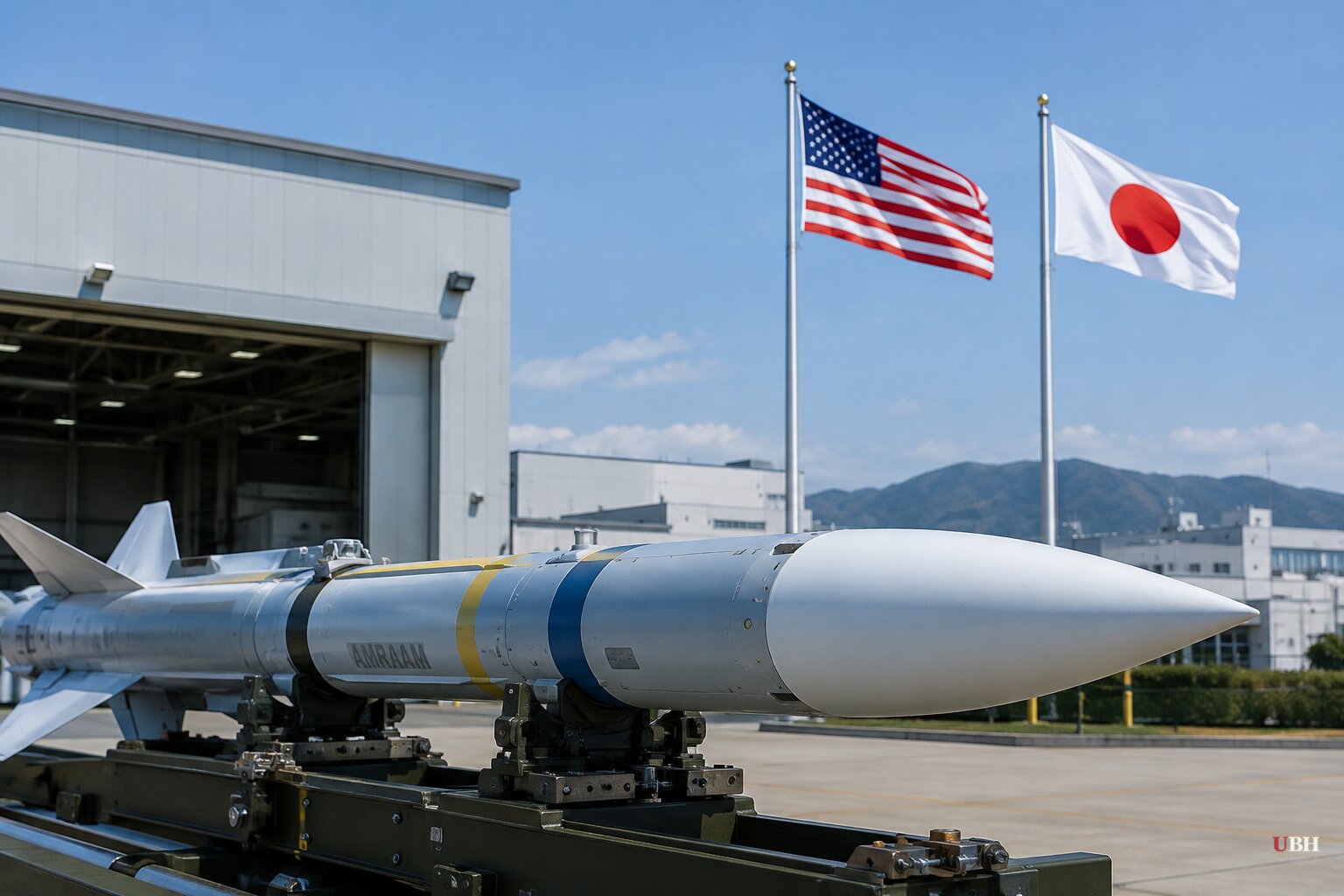
The United States and Japan have agreed to build a Japanese facility for the joint production of advanced medium-range air-to-air missiles, Japanese Defense Minister Shinjiro Koizumi said.
Koizumi made the announcement at a news conference Wednesday night, Oct. 28, in Cebu, Philippines. He had met U.S. Defense Secretary Pete Hegseth on the sidelines of the annual ASEAN Defence Ministers' Meeting and the wider ADMM-Plus gathering.
What was agreed
The project is called "Operation Supercharge." Under it, the two sides agreed to build a final assembly and inspection plant in Japan for the Advanced Medium-Range Air-to-Air Missile, known as AMRAAM.
Koizumi said the missile is essential for the F-35 fighter. The U.S.-made jet is flown by both the American and Japanese militaries.
The AMRAAM is a beyond-visual-range weapon. Keeping it in steady supply is the difference between an F-35 that can fight and one that can't.
Koizumi described the meeting with Hegseth as brief. He said the two "shared a sense of crisis … regarding the increasingly severe regional situation" and agreed to "strengthen the deterrence and response capabilities of the Japan-U.S. alliance with greater speed and intensity than ever before."
He added that they reaffirmed "a free and open international order based on the rule of law, which rejects any attempts to unilaterally alter the status quo through the use of force, coercion or other means."
A new Chinese formation off Kyushu
On Thursday, Oct. 29, Koizumi raised what he called an example of the region's "challenging security environment." Three Chinese destroyers and a coast guard ship crossed the Osumi Strait, south of Kyushu, together this week and headed east into the Pacific.
It was the first time his ministry had spotted that fleet configuration, Koizumi said. His ministry will keep watching Chinese activity "with high level of interest."
Japan has been accelerating its military buildup in its southwestern islands to deter China.
Hegseth, for his part, renewed the Trump administration's assurances of commitment to deterring aggression in the region. He did so in a separate Wednesday meeting with ASEAN defense ministers, led by Philippine Defense Secretary Gilberto Teodoro Jr. Like Koizumi, Hegseth did not name China in describing his security concerns.
The four-way meeting that day also included Australian Defense Minister Richard Marles, Teodoro, Koizumi and Hegseth.
The industrial-base question at home
Putting a munitions line in an ally's territory is one answer to a production problem. Whether it is the right one is a live argument among conservatives who want a stronger industrial base.
Commentator Erick Erickson, writing in The Epoch Times on Oct. 15, argued the real fix starts with how the Pentagon buys weapons. He wrote that the U.S. won World War II by designing weapons around what factories like General Motors, Ford and John Deere could already build. Today, he argued, the Pentagon designs systems so complex that only a handful of specialized shops can make them.
Erickson pointed to some progress. GM signed a deal with Lockheed Martin on Aug. 6 to make housing components for Patriot missiles and delivered the first batch 22 days later. Lockheed said those parts traditionally take months or years to produce. The Raytheon and Lockheed Martin joint venture that builds the Javelin has nearly doubled its output over two years, he wrote.
He called that "good news, but not good enough." His comparison: Ukraine will produce roughly 5 million drones this year, while the U.S. will produce fewer than 100,000.
Erickson also blamed a bipartisan procurement system, including the current administration, for protecting a contractor oligopoly because the plants and jobs sit in lawmakers' districts. He wrote that tariffs have made it worse, with domestic steel and aluminum producers raising prices behind the protection from cheaper imports.
That is one commentator's view, not an official finding. But it frames what the Japan deal is and is not. Adding an assembly plant in Japan adds capacity for a weapon the F-35 fleet needs. It does not by itself answer his charge that American production is slow, costly and concentrated.
What comes next
The deal rests so far on Koizumi's public announcement of what he and Hegseth agreed. The AMRAAM plant is the concrete piece. Koizumi's Thursday remarks about the Osumi Strait transit show why Tokyo wants it moving quickly. His ministry says it will keep tracking the Chinese ships as they operate in the Pacific.
Sources used for this briefing
7 links from 7 independent newsrooms (syndicated copies of the same report count once)
These are the sources it draws on, linked so you can verify.


