
Unbiased headlines. Facts, not spin.
Every story is an unbiased news briefing written from 110+ sources across the spectrum — sources linked so you can verify it yourself.
 tech
Major Story (7/10)
July 21, 2026 at 11:15 AM
tech
Major Story (7/10)
July 21, 2026 at 11:15 AM
U.S. and China Plan AI Talks for September, Bessent Expected to Lead U.S. Side
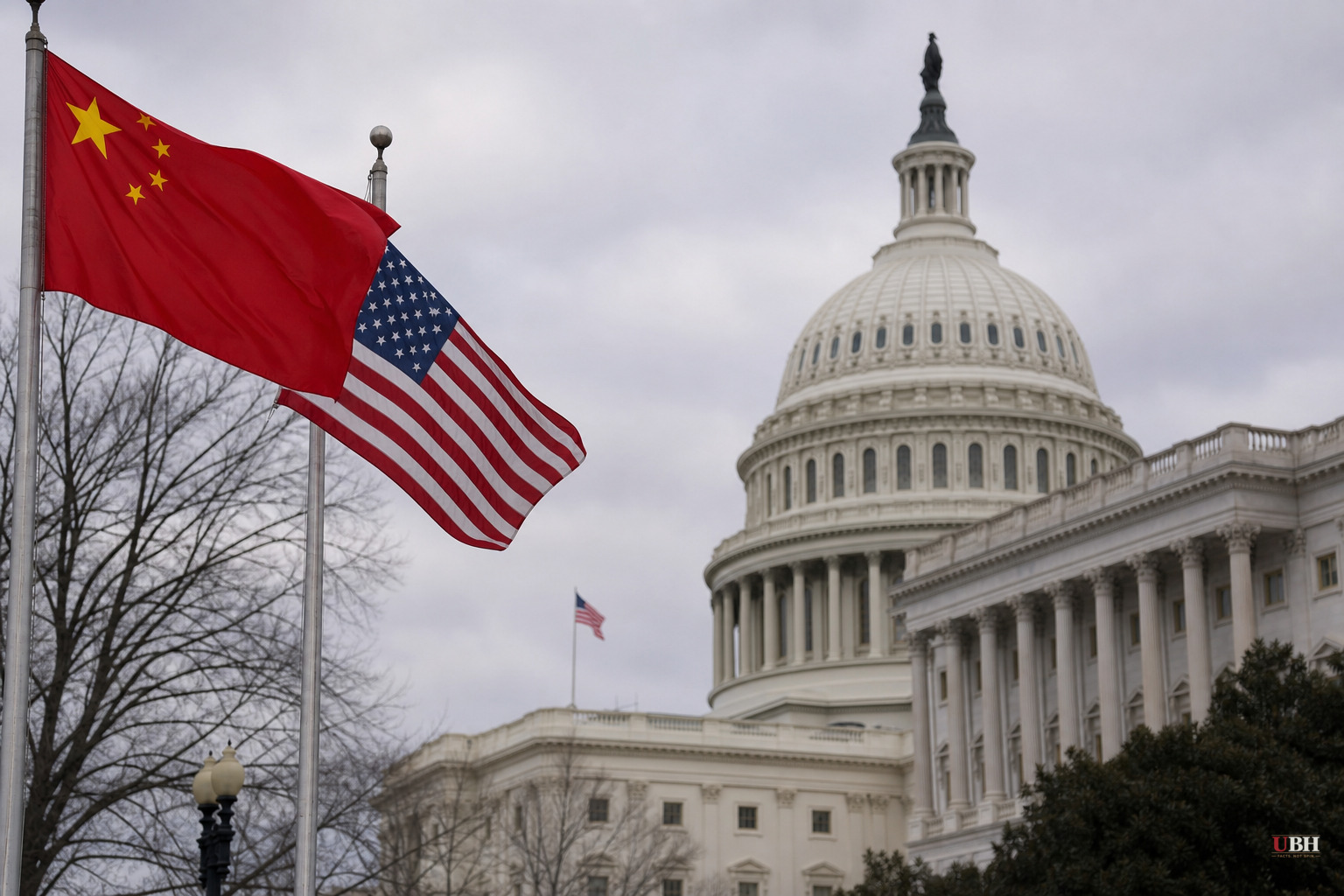
The United States and China are planning to hold talks on artificial intelligence in September, according to five sources familiar with the matter cited by Reuters. The discussions would mark one of the more concrete follow-throughs from the Trump-Xi summit held in May.
The talks are expected to happen before Chinese President Xi Jinping's planned September 24 visit to the United States, though exact dates have not been finalized, the sources said. That timing puts the AI negotiations squarely in the run-up to what would be a major diplomatic moment between the two governments.
Treasury Secretary Scott Bessent is expected to lead the U.S. side, according to four of the five sources. Beyond that, the details are thin. Who else sits at the table, what topics make the agenda, and where the talks will physically take place are all still being hashed out, three of the sources said, describing preparations as being at an early stage.
Neither government has confirmed any of this publicly. The White House, the State Department, and the Treasury Department did not respond to Reuters' request for comment. On the Chinese side, the National Development and Reform Commission, the cyberspace regulator, the industry and foreign ministries, and the State Council all stayed silent on faxed requests for comment.
AI has become the sharpest edge of U.S.-China competition, ahead of trade tariffs and semiconductor export controls in some respects because it touches military applications, surveillance capability, and economic dominance all at once. Both countries are racing to build the most powerful frontier models, and neither trusts the other's intentions with the technology.
Washington has spent the last several years tightening export controls on advanced chips to slow China's AI progress, while Beijing has pushed hard on domestic chip production and its own large language models. Any talks that get both sides to the table on AI risk and regulation would be notable, given how little formal coordination currently exists between the two governments on this specific issue.
What Reuters is reporting through sources who insisted on anonymity is that both governments are working toward a September meeting and that Bessent is the presumptive lead for the U.S. There's no finalized date, no confirmed agenda, and no confirmed roster of who from Beijing will show up or what authority they'll have to negotiate anything binding. That's a meaningful step, but it's a planning step, not an agreement.
Frontier AI models, the kind capable of the most advanced reasoning and potential dual-use military applications, are exactly the technology where verification is hardest. Even if both sides sit down in September, there's no indication yet that any enforceable framework, inspection regime, or reporting requirement is on the table. Skeptics on both the right and left have reason to watch closely for whether these talks produce anything beyond a joint statement.
China's government has a track record of participating in international dialogues on technology and security without necessarily changing its underlying behavior, whether on intellectual property, cyber intrusions, or trade practices. That history is a legitimate reason for skepticism about whether AI talks in September will produce real constraints on either side's frontier model development, especially military-relevant applications.
At the same time, Beijing has shown some willingness to engage on AI safety multilaterally, including at international AI safety summits. Whether that translates into a substantive bilateral framework with Washington remains to be seen.
The test will be whether Bessent's delegation and its Chinese counterpart actually meet before Xi's September 24 visit, and whether that meeting produces anything more specific than a commitment to keep talking. Given how early-stage preparations reportedly are according to the Reuters sourcing, expect the agenda and participant list to firm up closer to the date, if the meeting happens at all as currently planned.
Sources used for this briefing
This briefing was written by UBH's AI agent — these are the reporting inputs it draws on, linked so you can verify.


