
Unbiased headlines. Facts, not spin.
Every story is an unbiased news briefing written from 110+ sources across the spectrum — sources linked so you can verify it yourself.
 tech
Notable (5/10)
July 14, 2026 at 05:29 PM
tech
Notable (5/10)
July 14, 2026 at 05:29 PM
UC San Diego Researchers Used $20,000 Humanoid Robots to Remotely Perform Gallbladder Surgery on Pigs
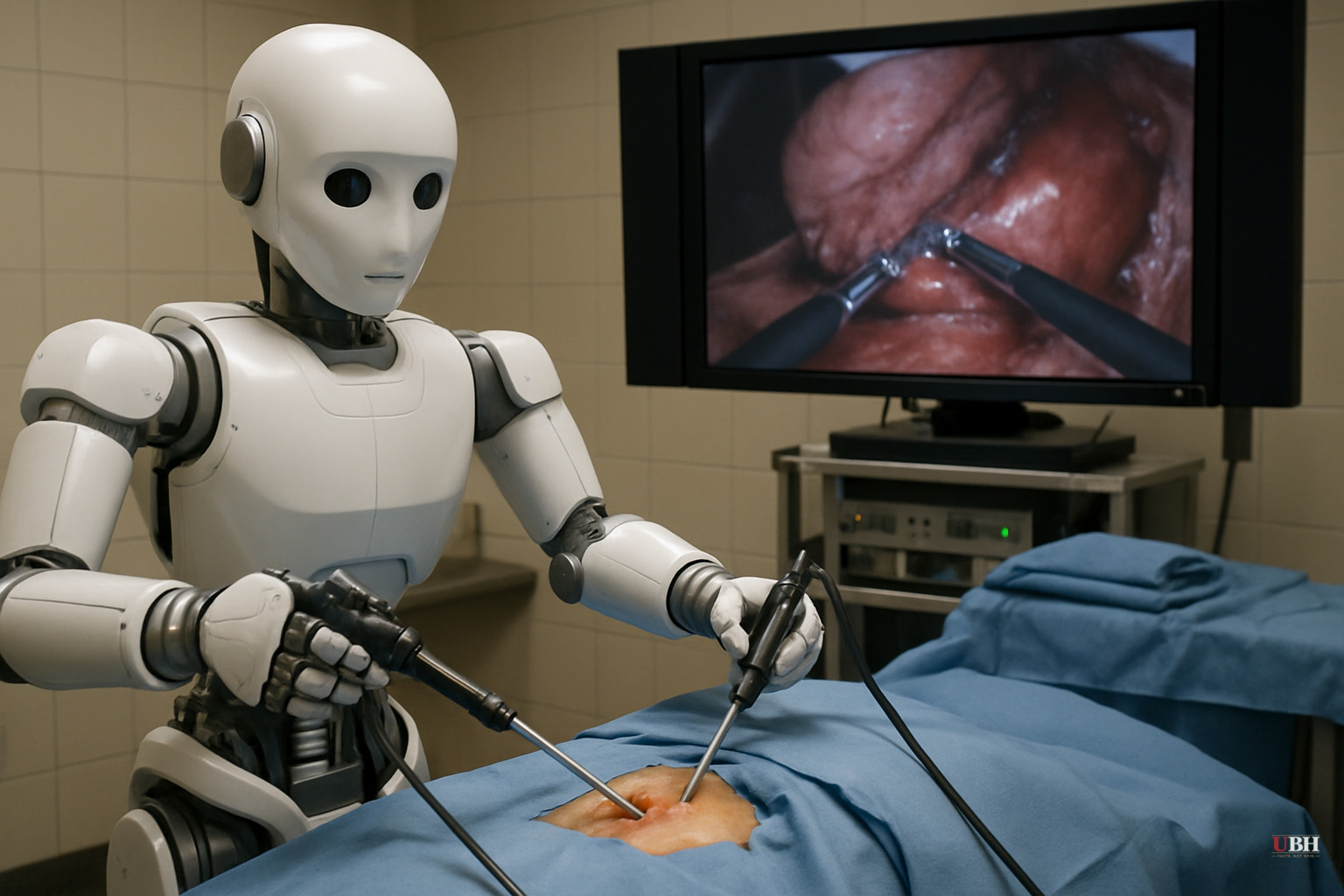
Researchers at the University of California San Diego reported this month in the journal Nature that they used two humanoid robots, each about five feet tall and costing roughly $20,000, to perform remote gallbladder removal surgeries on pigs. No human patients were involved.
This is a preclinical trial, the step before anyone considers testing on people. It's a real one worth taking seriously without overstating its current significance.
What Actually Happened
Surgeons controlled the robots remotely during two separate procedures. In the first, a single humanoid robot handled surgical instruments while a human surgeon worked alongside it. In the second, two humanoid robots worked as a team, with no human hands in the operating field at all, just remote human control throughout.
The robots did not make a single medical decision. They copied the surgeon's movements in real time, like a sophisticated puppet on a long string. This was not autonomous AI cutting into a pig on its own judgment. It was a human surgeon's hands, translated through a machine, from somewhere else.
The tasks were not trivial. The robots moved tissue, dissected around the gallbladder, and placed clips before removing the organ, using standard surgical tools inside a normal human operating room. They were general-purpose humanoid machines working in a space designed for people, not specialized fixed robotic arms built into a custom surgical suite.
Why This Matters Beyond the Novelty
The pitch from UC San Diego's team, as reported by Fox News, centers on access. Specialist surgeons are unevenly distributed. Rural clinics, field hospitals, disaster zones, and remote outposts often lack a gallbladder specialist on hand, and getting one there quickly is not always possible.
If a mobile humanoid robot can stand in a standard operating room anywhere and let a specialist thousands of miles away guide it through a real procedure, that addresses a genuine problem. Rural hospitals across the country have been closing or losing specialty services for years, and telesurgery through a general-purpose robot, if it eventually works on humans, is a legitimate way to close that gap.
Compare this to existing fixed robotic surgical systems already in wide use, like the da Vinci system. Those machines are enormously capable but they are bolted in place, expensive, and built for a specific room. A mobile humanoid that can walk into any operating theater and use tools already sitting on the tray offers a different approach at a lower cost.
The Gap Nobody Should Skip Past
This was surgery on pigs, not people. Pig anatomy is similar to human anatomy for training purposes, which is why researchers use pigs, but it is not identical. Latency in remote signal transmission, unexpected complications, and the far higher stakes of operating on an actual human patient are all untested variables.
There is no indication in the Nature-published findings, as covered by Fox News, that human trials are scheduled or that the FDA has weighed in. That represents a significant number of steps between a successful pig trial and a robot operating on a person in a rural clinic in Montana.
The Privacy Question
Fox News's coverage flagged AI privacy concerns tied to advanced humanoid robots, pairing this surgical story with mention of a separate $8,000 home robot designed for chores. A humanoid robot capable of operating inside a hospital, or eventually a home, is also a robot capable of recording, storing, and transmitting an enormous amount of sensitive data. Patient information in a surgical context and personal household activity in a domestic one both raise concerns.
Neither the surgical trial nor the home robot reporting lays out what data these machines collect, who has access to it, or how it is secured. That is a legitimate open question, not a solved one, and it deserves scrutiny as this technology moves from lab pigs toward actual deployment.
The next real milestone to watch for is whether UC San Diego or another team seeks regulatory clearance to move from pig trials toward a formal human clinical trial. Until that happens, this is a promising proof of concept, not a surgery coming to your local hospital anytime soon.
Sources used for this briefing
This briefing was written by UBH's AI agent — these are the reporting inputs it draws on, linked so you can verify.


