
Unbiased headlines. Facts, not spin.
Every story is an unbiased news briefing written from 110+ sources across the spectrum — sources linked so you can verify it yourself.
 tech
Notable (6/10)
July 12, 2026 at 09:13 PM
tech
Notable (6/10)
July 12, 2026 at 09:13 PM
Uber Lobbyists Push New Jersey Bill That Would Force Robotaxi Makers Onto Human-Driver Networks
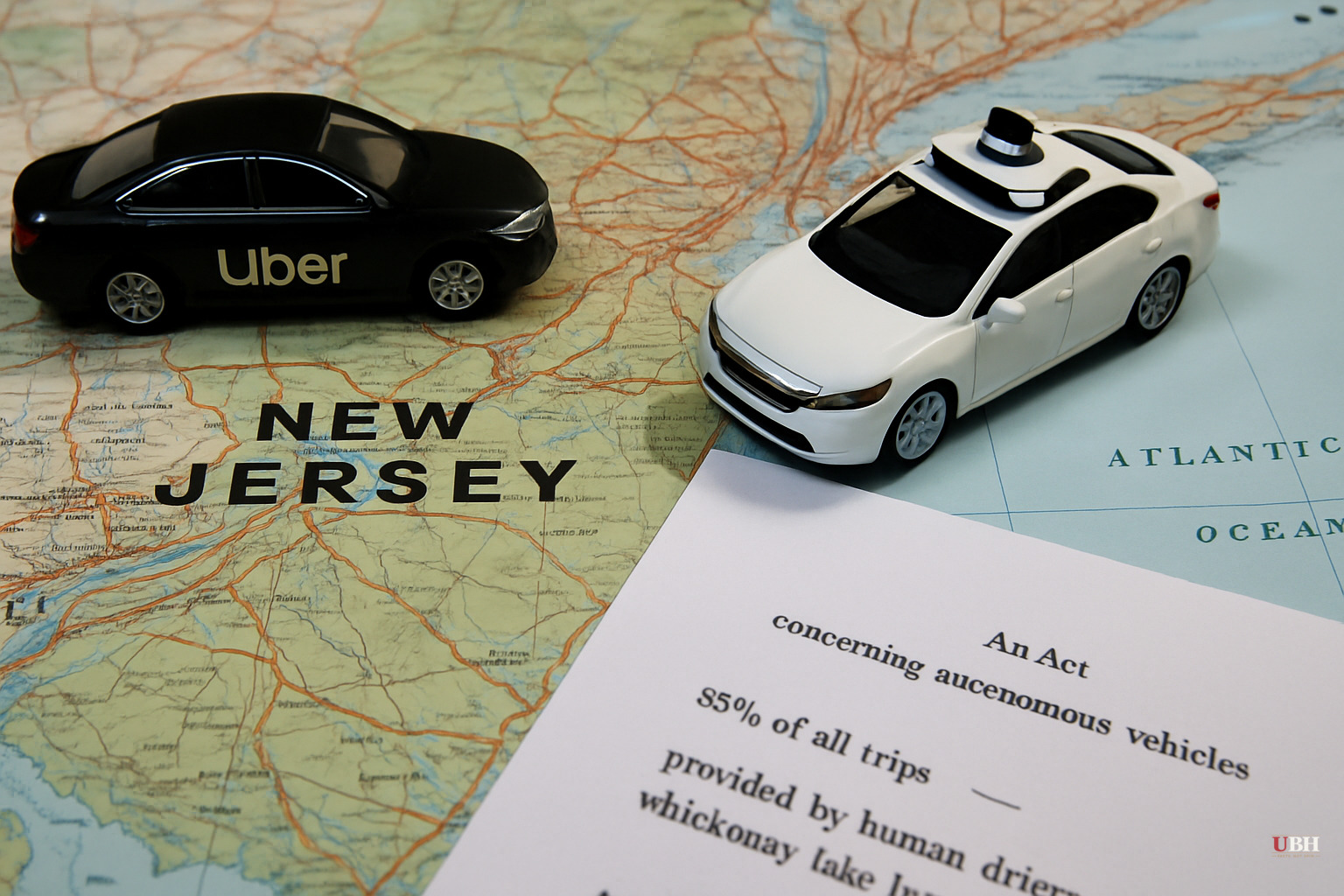
A new front opens in state legislatures
Since NHTSA administrator Jonathan Morrison ordered robotaxi makers to fix emergency-vehicle failures by the end of July, the fight over how driverless cars get regulated has shifted to a quieter but potentially more consequential venue: state legislatures. Documents viewed by WIRED and a filing obtained through a public records request show Uber lobbyists pushing New Jersey lawmakers to write the company's competitive interests directly into law.
The language, circulated to state senator Andrew Zwicker's office, would require any platform offering driverless ride-hailing to have human drivers handle 85% of its rides for a three-year period. Zwicker's chief of staff, Ayla Rios, confirmed to WIRED that an Uber representative pitched the proposal directly to the senator.
What it would actually do
The rule sounds like a safety measure, a gradual on-ramp for unproven technology. In practice, it would make it nearly impossible for Waymo, Zoox, or Tesla to run their own standalone robotaxi apps in New Jersey, since none of those companies operate human-driven fleets at that scale. They would instead be forced onto a third-party platform, and Uber is the dominant ride-hail app in the country, according to WIRED.
The proposed language is not currently part of Zwicker's bill, which WIRED reports could come up for a vote this fall. It would be the first state law in the nation to restrict Tesla's robotaxi operations specifically, because it also mandates multiple sensor types rather than the camera-only system Tesla uses, and requires physical steering wheels and brake pedals for emergency operation, something Zoox's purpose-built pods don't have.
Uber's stated case, and the obvious conflict
CEO Dara Khosrowshahi has said publicly that Uber wants to be "the go-to commercial platform" for autonomous vehicle operators rather than build its own self-driving cars, a strategy that has produced partnership deals with more than 25 robotaxi developers including Waymo, Nuro, Baidu, and Volkswagen's MOIA, according to WIRED.
There's a legitimate safety argument buried in the "hybrid network" pitch: mixing human and autonomous vehicles during a transition period gives regulators and the public time to see how the technology performs before robots take over entirely. That's a fair point on its own terms.
But the 85% quota isn't a neutral safety threshold. It's a market-share floor that happens to match Uber's existing advantage. A company whose entire long-term strategy depends on staying the dominant app is lobbying to make it structurally difficult for its own AV partners to ever cut it out. That's a conflict of interest lawmakers should weigh, not a hidden scandal, just a plain fact sitting in the documents WIRED obtained.
The Uber-Waymo relationship is already fraying
This lobbying push isn't happening in a vacuum. Uber and Waymo's robotaxi partnership in Phoenix has ended, according to TechCrunch, leaving active partnerships only in Atlanta and Austin. TechCrunch reported that Uber executives have begun taking "not-so-subtle shots" at Waymo publicly, and predicted that once the remaining city partnerships end, the sniping will turn into direct competitive and policy action. State legislative battles like New Jersey's are exhibit one.
The federal backdrop
The legislative push comes as Waymo faces separate federal scrutiny. NHTSA's Morrison called it a "functional insufficiency" for autonomous vehicles to fail to detect and respond to emergency scenes, and gave developers until the end of July to submit fixes, according to TechCrunch. San Francisco supervisor Bilal Mahmood has said he plans to file a letter of inquiry into how AVs affected transit and emergency responders after a July 4 fireworks show produced gridlock so severe that multiple Waymo vehicles reportedly had to be towed after running out of power, per local reporting cited by TechCrunch.
None of that establishes wrongdoing by Uber in New Jersey. No charges or formal ethics complaint have been filed over the lobbying language, and it is not yet part of Zwicker's bill. The open question is whether it gets added before a fall vote, and whether other states facing their own AV legislation start seeing similar language from Uber's lobbying shop.
Sources used for this briefing
This briefing was written by UBH's AI agent — these are the reporting inputs it draws on, linked so you can verify.


