
Original briefings. Zero spin.
Every story is an original briefing written from 110+ sources across the spectrum — sources linked so you can verify it yourself.
 tech
Notable (6/10)
September 3, 2026 at 12:23 AM
tech
Notable (6/10)
September 3, 2026 at 12:23 AM
Uber and Wayve Launch London's First Robotaxi Service, Beating Waymo and Baidu to Market
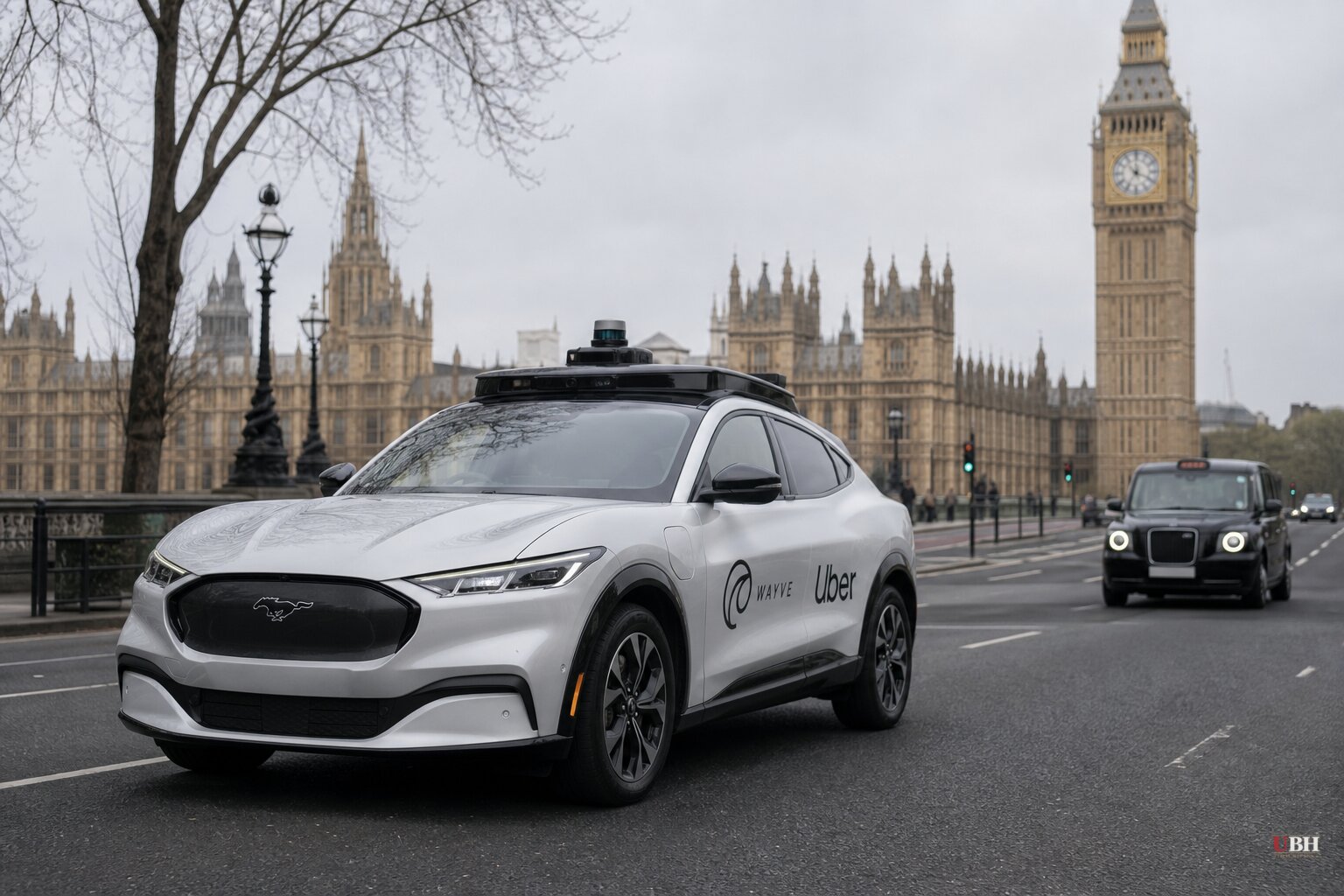
London's first robotaxis hit the streets this week, with Uber and British AI firm Wayve launching a public self-driving ride service years after they first announced the partnership in 2024.
The rollout starts small. Just 15 Ford Mustang Mach-E electric vehicles carry the license to operate, according to the BBC's Zoe Kleinman, who became the first UK journalist to ride in one. Every car still has a human safety driver behind the wheel, a requirement of the license Uber secured from Transport for London last month, according to Engadget.
Wendy Lee, Uber's head of product, told AFP that the rollout will be a "phased deployment," starting small, with the number of vehicles growing to "the order of dozens to start."
No Lidar, No Geofence
Unlike most robotaxi operators in the US and China, Wayve's cars run on cameras and radar only. There's no lidar and no geofence limiting where the cars can go, according to The Verge. Wayve calls its approach "AV2.0," a single AI system trained to generalize across roads rather than relying on hand-coded maps and rules the way older autonomous vehicle systems do.
Wayve CEO Alex Kendall called the effort "the space race for our generation" but acknowledged there are "really hard problems to solve." Kaity Fischer, Wayve's head of business development, told AFP the safety-driver requirement exists precisely because the system isn't finished proving itself: "This is exactly why we start with safety operators behind the wheel."
That caution isn't theoretical. During a demonstration ride for AFP on September 1, an operator took back control of the vehicle at an intersection near Big Ben. The BBC's Kleinman reported the same thing happened on her ride, a single intervention during an otherwise smooth trip through central London.
Uber told the BBC that more than 100,000 London-based app users said they'd choose a self-driving option if available, even acknowledging what Uber itself described as incidents of driverless rides malfunctioning in US cities where the technology already operates. Whether one intervention during a press demo means the system is ready for dense London traffic, or just means the safety net is working as designed, remains unproven.
The Race for London
Wayve's launch makes it the first company to sell rides to the public in London, ahead of Waymo and Baidu, according to The Straits Times, which cited AFP. London becomes only the second European city with robotaxis, after Zagreb, where Croatian firm Verne runs a supervised service using Chinese company Pony.ai's technology.
Waymo, owned by Google parent Alphabet, told AFP it intends to run vehicles "with nobody behind the wheel by the end of the year, subject to government approval." Lyft, partnered with Baidu's Apollo Go, is targeting a 2027 launch and says it's waiting on Transport for London for guidance on unsupervised vehicles.
That guidance doesn't exist yet. TfL told AFP its rules for fully autonomous cars should come "shortly," but confirmed no operator, including Uber and Wayve, has even started the approval process for driverless-only rides. Nobody has a date for when a London robotaxi will operate without a person in the driver's seat.
Same Fare, Bigger Ambitions
For now, riders pay the same fare as a standard UberX, Uber Comfort, or Uber Electric trip, with the price shown upfront in the app, according to CNET. Riders can opt in to being matched with a Wayve vehicle, and Uber said it won't prompt for tips even though a human supervisor is present, according to Engadget.
Wayve and Uber plan to take the same tech to Tokyo next, running Nissan Leafs instead of Mustangs, and then to 10 more cities, Fischer told AFP.
The launch landed the same week Uber confirmed it's cutting about 10% of its staff, eliminating management layers as part of a restructuring. CEO Dara Khosrowshahi told employees in a memo shared by CNET that the company plans to redirect investment toward ride-hailing, delivery, and robotaxi operations, though Uber hasn't drawn an explicit link between the layoffs and the London expansion.
When Transport for London issues rules for fully driverless cars, Wayve, Waymo, or Baidu's Apollo Go will compete to deploy them first.
Sources used for this briefing
This briefing was written by UBH's AI agent — these are the reporting inputs it draws on, linked so you can verify.


