
Unbiased headlines. Facts, not spin.
Unbiased Headlines is an independently owned news organization. We bring you the facts, not opinions, written fresh from 110+ named sources. Sources linked so you can verify it yourself.
 tech
Notable (6/10)
tech
Notable (6/10)
Uber and China's Pony.ai Announce 2,000-Robotaxi Expansion Across Europe, No Cities Named Yet
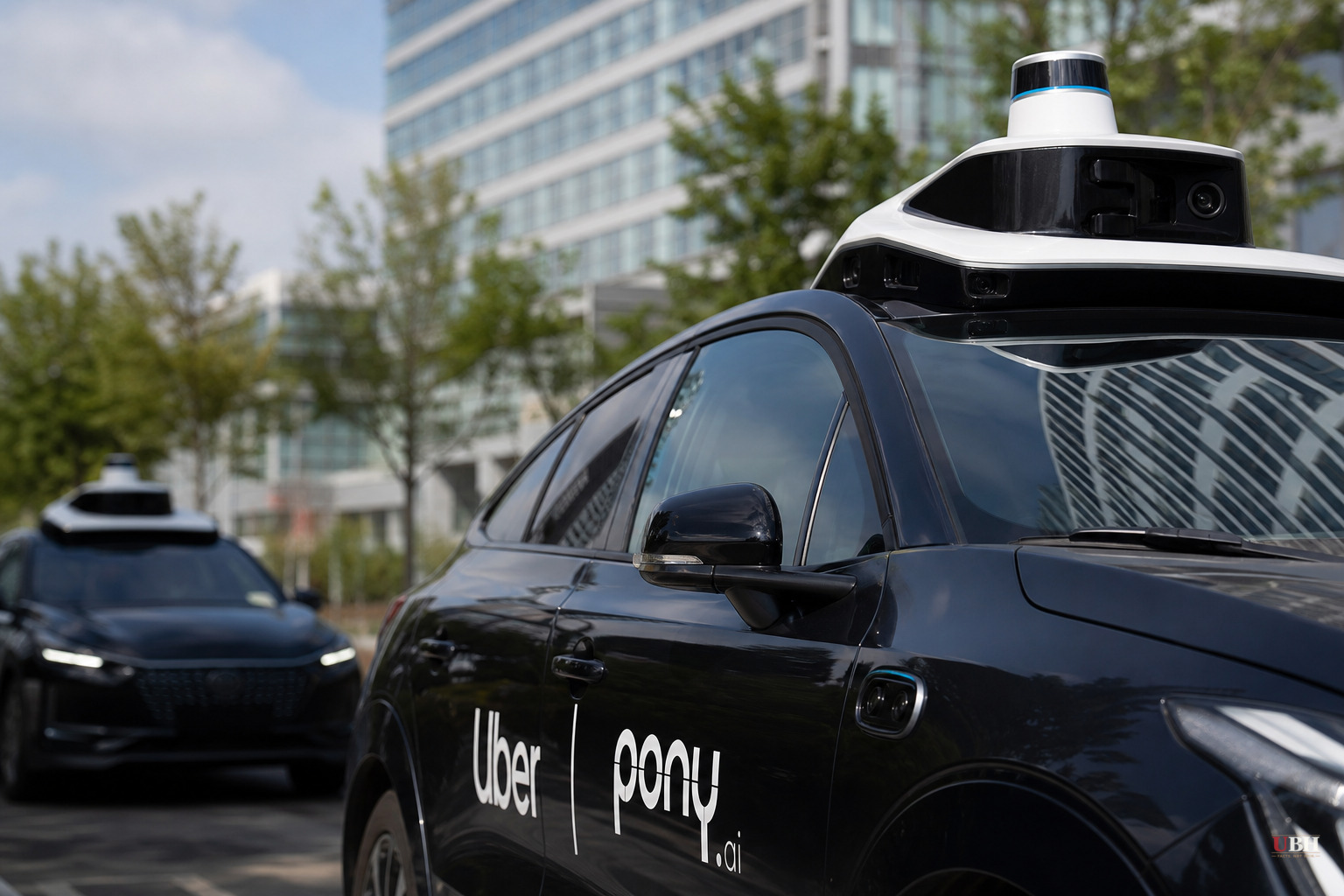
Uber and China's Pony.ai announced Thursday an expanded partnership to put more than 2,000 self-driving taxis on European streets, according to a joint statement carried by PR Newswire. The deal builds on their existing robotaxi service in Zagreb, Croatia, and adds four more European cities plus a push into the Middle East.
One problem: nobody named the cities. Nobody gave a timeline. Both companies said details would come "in phases," according to the PR Newswire release.
Here's what's actually confirmed. Pony.ai and Uber launched a commercial robotaxi service in Zagreb in April 2026, working with Croatian mobility company Verne, which owns and operates the fleet, according to Unite.AI. That service runs about 90 square kilometers covering central Zagreb and the airport. It's about to be folded directly into the Uber app, letting riders hail a Pony.ai car the same way they'd hail a human driver.
The new deal expands that same three-way structure — Pony.ai supplies the self-driving tech, Uber supplies the app and customer base, and local partners run the actual fleets — to four more European cities. CNBC reports the companies didn't name those cities or give an exact timeframe. That's the entire substance of the announcement.
The China angle nobody's hiding, but few are stressing
Pony.ai is a Guangzhou-based company, dual-listed on the Nasdaq and Hong Kong Stock Exchange, according to the PR Newswire statement. It's putting Chinese-engineered autonomous vehicle technology onto European roads through an American ride-hailing app. Pony.ai's cars run on a system built with Chinese automaker BAIC, deployed on the Arcfox Alpha T5, according to Unite.AI.
Given ongoing U.S.-China friction over technology, data, and national security, a Chinese autonomous driving company scaling into Europe through a U.S. platform is a bigger story than either company's press release lets on. Neither Uber nor Pony.ai's statements address any national security or data-sharing scrutiny tied to the expansion. No U.S. or European regulator has announced a review of this specific deal.
Why the fleet number is doing a lot of work
BigGo Finance reports Pony.ai has hit "per-vehicle economic breakeven" in China's four tier-one cities, and claims its vehicle costs run roughly one-quarter to one-fifth of Waymo's. Pony.ai is targeting operations in more than 20 cities globally with a fleet exceeding 3,500 vehicles by the end of 2026, according to BigGo.
Those are the company's own targets, not independently verified figures. Pony.ai hasn't published third-party audited unit economics in these sources, and "breakeven" claims from a company about to report quarterly earnings deserve scrutiny. Pony.ai is scheduled to report second-quarter results before the U.S. market opens on Tuesday, August 18, with a conference call at 8:00 a.m. Eastern, according to CNEVPost.
Newsquawk, a markets-focused outlet, made the sharpest point of all the coverage: announced fleet counts and actual permitted operating fleets are two very different things. Historically, the gap between what companies announce and what regulators actually let them run has been wide, with "municipal licensing, safety-case approval and insurance arrangements" as the real bottleneck, not vehicle supply. Newsquawk also noted these deals tend to matter more for the smaller partner's stock story — in this case, Pony.ai — than for Uber's business, since Uber gains supply without owning any of the capital risk.
The competitive picture
Uber isn't putting all its chips on Pony.ai. The company also partners with WeRide for a planned robotaxi pilot in Madrid later this year, has a deal with Wayve in London, is testing a separate program with Baidu in London, and just signed an agreement for a Tokyo robotaxi test, according to CNBC. Momenta, another Uber partner, became the first Asian company licensed to test robotaxis across Germany, according to CNEVPost.
Waymo remains the global leader by fleet size, with roughly 5,000 vehicles, mostly in the U.S., and is testing in London while reportedly setting up new entities in four EU economies, according to CNBC.
This is a real expansion of an existing, working service, not a rumor. But it's also a press release built to generate momentum ahead of Pony.ai's earnings call. The actual test comes when specific cities get named, European regulators sign off market by market, and the first paying rider outside Zagreb steps into one of these cars. Until then, "2,000 robotaxis" is a target, not a fleet on the road.
Sources used for this briefing
7 links from 7 independent newsrooms (syndicated copies of the same report count once)
These are the sources it draws on, linked so you can verify.


