
Unbiased headlines. Facts, not spin.
Every story is an unbiased news briefing written from 110+ sources across the spectrum — sources linked so you can verify it yourself.
 tech
Notable (6/10)
July 19, 2026 at 11:54 PM
tech
Notable (6/10)
July 19, 2026 at 11:54 PM
Two Studies Identify the Physical Cause of Solid-State Battery Short Circuits
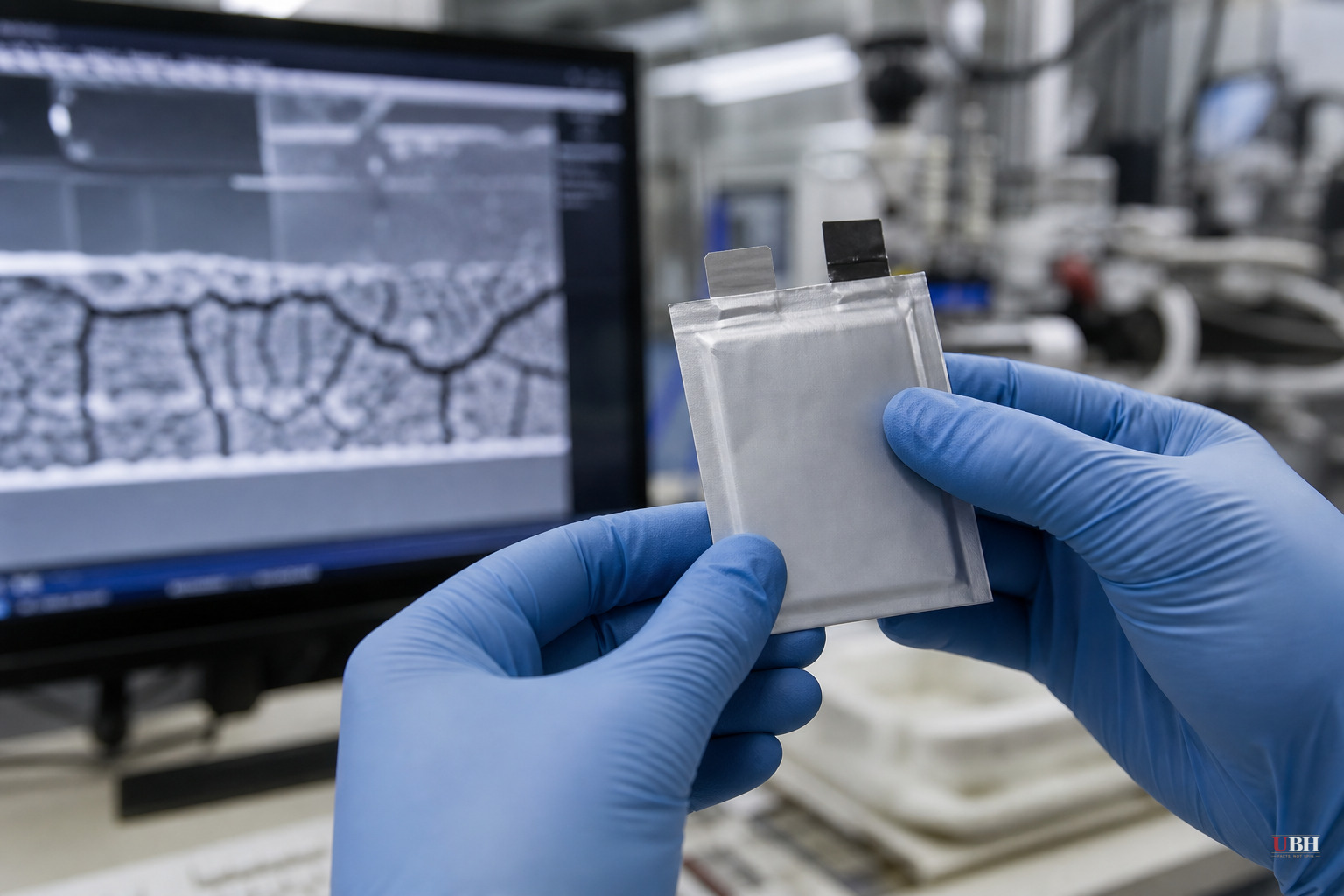
The mystery wasn't whether solid-state batteries fail. It was why.
Engineers have watched solid-state batteries short-circuit for years. Microscopic lithium structures, called dendrites, form inside the cell during charging and eventually punch through the solid electrolyte that's supposed to keep the battery's positive and negative sides separated. Nobody could fully explain how a solid material engineered specifically to block that intrusion kept failing anyway.
Now two research teams say they've closed that gap, according to OilPrice.com.
A team at Germany's Max Planck Institute for Sustainable Materials published findings in Nature showing that lithium deposits generate massive internal pressure as the battery charges. That pressure eventually cracks the solid electrolyte from the inside out.
Separately, researchers from MIT and the Technical University of Munich, working with collaborating institutions, reported in Nature Nanotechnology that tiny electrical imbalances inside the electrolyte create the conditions that let those unwanted lithium structures start growing in the first place.
Put together, the two papers answer different halves of the same question: what starts the dendrite growth, and what lets it break through. OilPrice.com frames this as turning a longstanding unknown into "a defined engineering problem," which is a fair characterization if the findings hold up under further testing and replication. Peer-reviewed publication in Nature and Nature Nanotechnology is a serious signal, but a lab finding is not the same thing as a solved manufacturing problem. Translating "we know why it cracks" into "we can mass-produce a battery that doesn't crack" is still a massive engineering lift.
Why automakers didn't walk away
Solid-state batteries promise a genuine leap over today's lithium-ion cells. Longer range. Faster charging. Better safety. Higher energy density packed into the same physical space, according to OilPrice.com.
That's not a small upgrade. That's the difference between an EV that charges in ten minutes and one that takes forty-five. It's also relevant well beyond passenger cars, touching aviation, defense hardware, and grid-scale storage.
So instead of giving up, manufacturers treated the failures as a puzzle to solve rather than a dead end. Honda has already built a demonstration production line specifically to work out the manufacturing techniques mass production would require. Toyota is still targeting commercial deployment before the end of the decade. Mercedes-Benz, BMW, Stellantis, Hyundai, Samsung SDI, CATL and QuantumScape are all named as active players in the space, according to OilPrice.com.
That's a lot of corporate money chasing a technology that, until these two papers, nobody could fully explain the failure mode of. It's a legitimate question whether that level of investment was ever justified without the underlying science. The answer from the industry has effectively been: the prize is too big to walk away from, so keep throwing resources at the engineering side while the science catches up.
Identifying the mechanism versus fixing it
Identifying the mechanism behind a failure is not the same as eliminating it. Cracking under internal pressure and electrical-imbalance-triggered growth are now understood processes, but understanding a crack's origin doesn't automatically hand you a fix.
Skeptics of the "solid-state is right around the corner" narrative have a fair point. This industry has a long history of "breakthrough" announcements that didn't translate into showroom vehicles on the promised timeline. Toyota alone has pushed back solid-state targets multiple times over the past decade. A peer-reviewed mechanism paper is genuinely useful science, but it is a data point, not a product announcement.
The Forbes source material referenced in coverage of this topic did not contain usable reporting specific to the battery science itself, focusing instead on unrelated business and billionaire news.
What comes next
The open question is how fast battery makers can turn this diagnostic knowledge into design changes, whether in electrolyte composition, cell architecture, or manufacturing controls, that actually prevent the pressure buildup and electrical imbalances identified in the two studies.
Toyota's stated timeline for commercial solid-state deployment remains "later this decade," per OilPrice.com, without a more specific date attached. Honda's demonstration line is still in the development phase, not mass production. Whether either company, or any of the other automakers and battery firms named, can show a working fix within the next few years is the test that will determine whether this month's papers actually mattered.
Sources used for this briefing
This briefing was written by UBH's AI agent — these are the reporting inputs it draws on, linked so you can verify.


