
Unbiased headlines. Facts, not spin.
Every story is an unbiased news briefing written from 110+ sources across the spectrum — sources linked so you can verify it yourself.
 politics
Notable (6/10)
August 8, 2026 at 11:32 AM
politics
Notable (6/10)
August 8, 2026 at 11:32 AM
Two More Federal Judges Let Trump End TPS, This Time for South Sudan and Myanmar
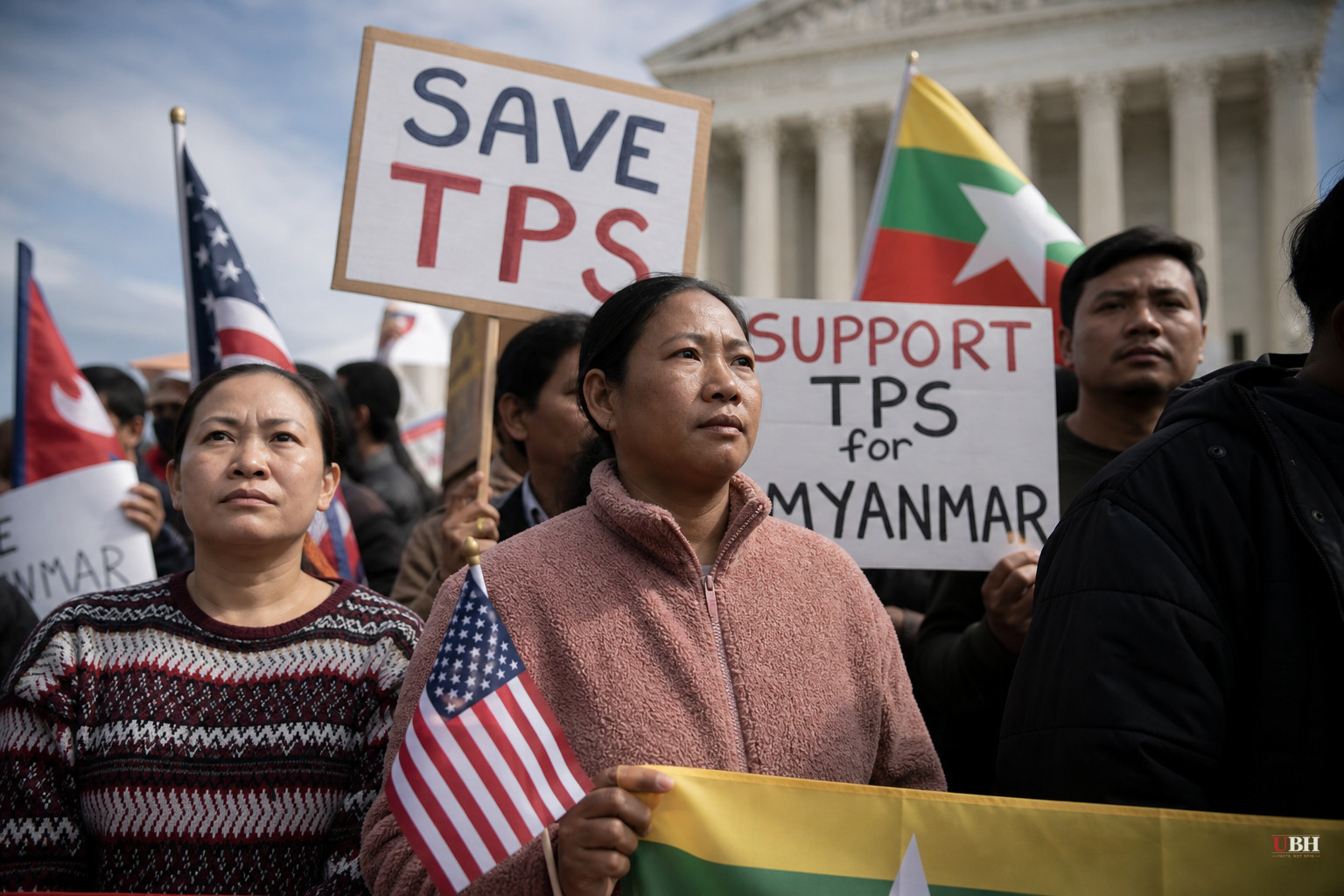
Since the Supreme Court's 6-3 ruling in June cleared DHS to end Temporary Protected Status for Haiti and Syria, lower courts have been falling in line one country at a time. Friday added two more to the list: South Sudan and Myanmar.
Judge Patti Saris of the U.S. District Court in Massachusetts denied a bid by South Sudanese TPS holders to amend their lawsuit and block termination. A federal judge in Chicago issued a similar ruling on Myanmar's status, according to Newsweek and ground.news. The rulings affect roughly 232 South Sudanese nationals and about 4,000 people from Myanmar, per Reuters figures cited by ground.news.
Both cases followed the same legal script that's now playing out across TPS litigation nationwide. Plaintiffs argued DHS Secretary Kristi Noem lacked the legal authority to terminate the designations and that the process violated due process protections. Saris rejected both arguments, ruling that the Homeland Security secretary has long held that authority and that the due process claims were unlikely to succeed.
What TPS actually is
Temporary Protected Status lets nationals of countries hit by war, natural disaster, or other crises live and work legally in the U.S. without deportation risk, for periods set by DHS. A DHS spokesperson told Newsweek that TPS "was never designed to be permanent," pointing to "renewed peace in South Sudan" and "improved diplomatic relations" as justification for ending the designation now.
That framing is the crux of the administration's argument in these cases.
DHS General Counsel James Percival has been vocal about the wins on X, writing Friday that "every day these 'administrative stays' are in effect is a day the American people are denied what they voted for." He's also taken aim at the cases that haven't gone DHS's way yet, according to ground.news, specifically flagging that TPS terminations for Ethiopia and Somalia remain blocked by courts.
The immigrant-rights challenge
Immigrant-rights groups aren't pretending this is a minor setback. Lupe Aguirre, deputy director of U.S. litigation at the International Refugee Assistance Project, told Newsweek the administration has "relentlessly pursued every avenue to strip TPS holders of their lawful status with the end goal of subjecting long-term members of our communities to detention and deportation."
Aguirre's group says many of the people losing protections have lived in the U.S. for over a decade. South Sudan has been wracked by conflict, and Myanmar has been under political turmoil since a 2021 coup, according to ground.news. Whether "renewed peace" in South Sudan is durable enough to justify mass returns is a genuine open question that these rulings don't resolve.
The courts didn't rule that conditions in South Sudan or Myanmar are safe. They ruled that DHS has the legal authority to make that call. The Supreme Court's decision was about executive authority over immigration status, not a factual finding about ground conditions in these countries. Aguirre's call for Congress to "act now to protect them" reflects a real gap: TPS holders have no permanent legal footing regardless of how long they've lived here, and only legislation could change that.
Where the rest of the map stands
Breitbart's coverage, cited via ground.news, framed this as the administration having "succeeded in ending TPS for nearly every country targeted by DHS." But Ethiopia and Somalia are still actively contested in court, per Percival's own statements. The fight isn't over, it's just down to a shrinking number of holdouts.
The Hill's framing, also referenced via ground.news, stuck to the narrow legal fact: two judges ruled DHS may proceed.
What happens next is straightforward on paper and messy in practice. DHS can now move toward ending TPS for South Sudan and Myanmar. Advocates are expected to keep litigating on narrower grounds, but Saris's ruling signals judges are increasingly reluctant to grant new stays after the Supreme Court's June decision. The remaining fights over Ethiopia and Somalia will show whether that trend holds across the board or whether some countries' cases carry stronger legal footing than others.
Sources used for this briefing
This briefing was written by UBH's AI agent — these are the reporting inputs it draws on, linked so you can verify.


