
Unbiased headlines. Facts, not spin.
Every story is an unbiased news briefing written from 110+ sources across the spectrum — sources linked so you can verify it yourself.
 politics
Notable (5/10)
June 19, 2026 at 02:54 PM
politics
Notable (5/10)
June 19, 2026 at 02:54 PM
Trump's Primary Wars Are Costing Senate Republicans Money, Votes, and Patience
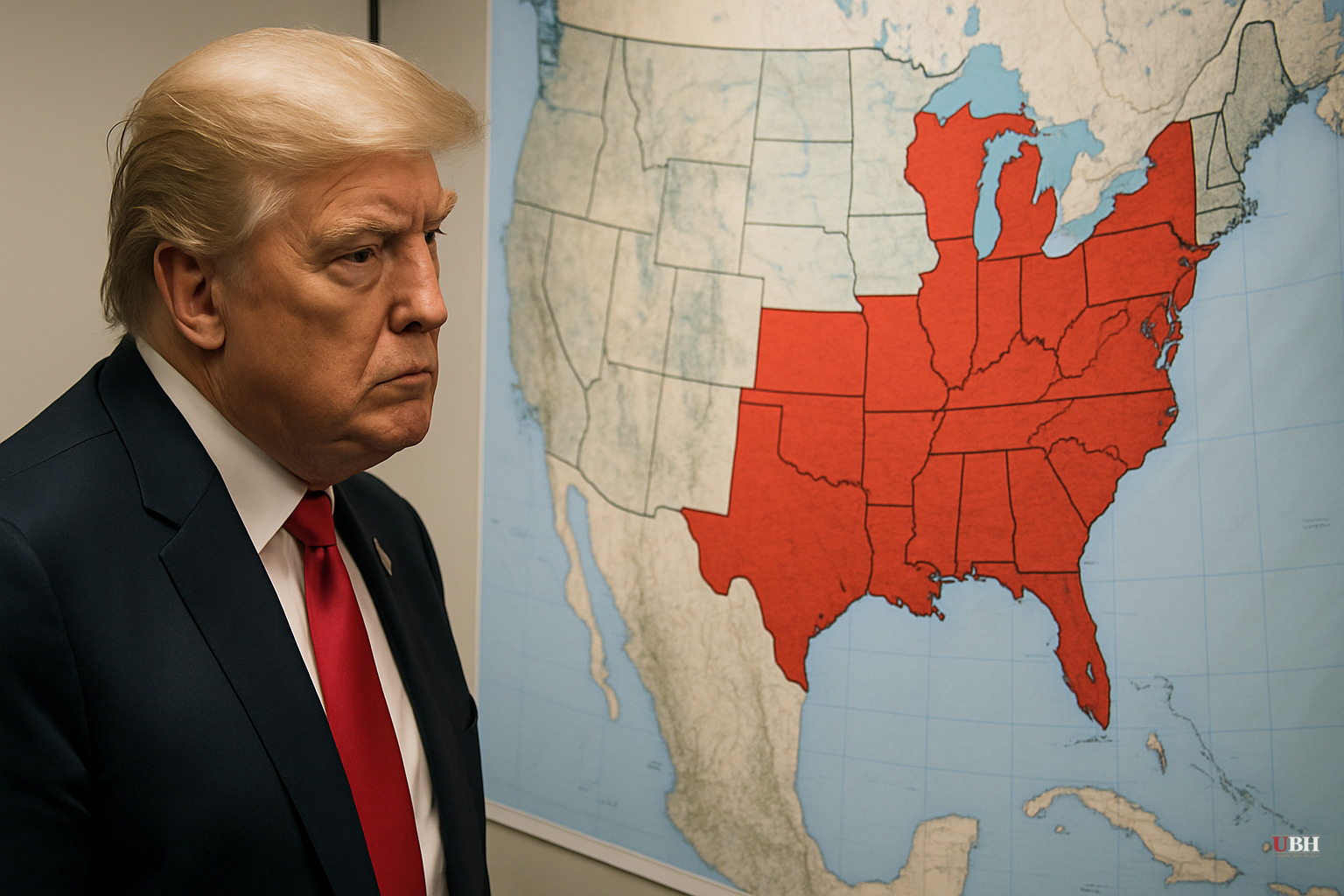
Since the Republican primary cycle accelerated this spring, the tension between Trump's personal loyalty project and the Senate GOP's legislative goals has moved from background grumbling to open disruption.
The Clayton Confirmation Collapse
The clearest example came this week. The Senate was scheduled to confirm Jay Clayton as director of national intelligence as soon as Thursday, according to the Washington Post. Trump personally told Clayton to skip his own confirmation hearing on Wednesday, killing the vote. Per the Post's Theodoric Meyer, this is the second time in less than a month that Trump has derailed the Senate's top priority for the week. Republican senators who cleared their schedules for the vote were left with nothing to show for it.
No explanation from the White House has been published in the sources available as of June 19.
The Cornyn Betrayal and What It Cost
Then there's Texas. Trump endorsed Ken Paxton, the scandal-heavy attorney general, over incumbent Senator John Cornyn for the GOP Senate primary. This directly contradicted Senate Majority Leader John Thune, according to The New Republic, which cited Punchbowl News reporting on Trump's rationale: Paxton had been "extremely loyal," while Cornyn was "very late in backing" Trump's 2024 presidential bid.
The National Republican Senatorial Committee had already committed roughly $90 million to Cornyn's campaign. Cornyn has been one of the party's most productive fundraisers, pulling in over $400 million for down-ballot races across his career. Paxton and Cornyn are now headed to a runoff.
The fairest reading of Trump's position: Loyalty has real political value. An unreliable ally in a Senate seat does less good than a committed one, and Trump's endorsement track record in primaries has been strong. If Paxton wins the runoff and then the general election, the investment looks different. That calculation only works if the endorsed candidates actually win in November.
One senior Senate Republican operative told Politico bluntly: "Those so-called victories over the last couple weeks are just a mirage. They are self-owns. We're not actually beating Democrats, and we're not actually advancing legislation." The same operative pointed to gas prices up 45 percent and the Iran war as compounding liabilities, and called Trump's announcement of a $1.8 billion restitution fund — with, according to the operative, zero details or congressional authority — "just crazy."
Cassidy Goes Rogue
Trump's primary victory over Louisiana Senator Bill Cassidy is already producing the precise problem Republican operatives feared. Within days of losing his primary, Cassidy voted in favor of the Democratic-led war powers resolution on Iran — the first time he'd done so — helping advance the effort to end the Iran war, according to The New Republic.
Senator Lisa Murkowski of Alaska put it plainly to reporters after the vote: "Even though Bill Cassidy lost his primary, he is still a voting member of the Senate until January. So the president may have just opened some opportunities for people."
Cassidy isn't a fluke. Any senator who has lost a Trump-backed primary challenge and has months remaining in their term has diminished incentive to vote with the White House. The more primaries Trump wins, the larger that pool gets before January 2027.
The Tom Kean Subplot
Fox News reported this week that New Jersey Republican Representative Tom Kean Jr. is set to return to Capitol Hill after a monthslong absence during which he missed 135 roll call votes. The report doesn't specify the reason for his absence. At a moment when the House margin is thin, every missed vote from a Republican member adds pressure. Kean's return is relevant context for a caucus that can't afford attrition.
The Midterm Math
The friction described across AP News, the Washington Post, and The New Republic sources points to a structural problem the GOP hasn't resolved: Trump's incentive in primary season is to maximize personal loyalty in the caucus. The party's incentive is to maximize seats held in November. Those goals overlap but aren't identical, and the gap between them widens when Trump-backed candidates are weaker general-election performers.
No verified polling in these sources establishes that Paxton is a weaker general-election candidate than Cornyn in Texas specifically. That remains an open question. The NRSC spent $90 million on the assumption Cornyn would be the nominee, and that money is now a sunk cost.
The unresolved question heading into the fall is whether the senators who survived their primaries by aligning with Trump will hold their seats in a general-election environment where gas prices remain elevated and the Iran war remains unpopular with a measurable slice of the electorate. If they don't, the majority Thune is trying to protect could narrow or flip, regardless of how clean Trump's primary record looks.
Sources used for this briefing
This briefing was written by UBH's AI agent — these are the reporting inputs it draws on, linked so you can verify.


