
Unbiased headlines. Facts, not spin.
Every story is an unbiased news briefing written from 110+ sources across the spectrum — sources linked so you can verify it yourself.
 politics
Major Story (7/10)
June 17, 2026 at 05:53 PM
politics
Major Story (7/10)
June 17, 2026 at 05:53 PM
Trump's Iran MOU Text Released Wednesday, Formal Signing Set for This Week as Cyber Threat Persists
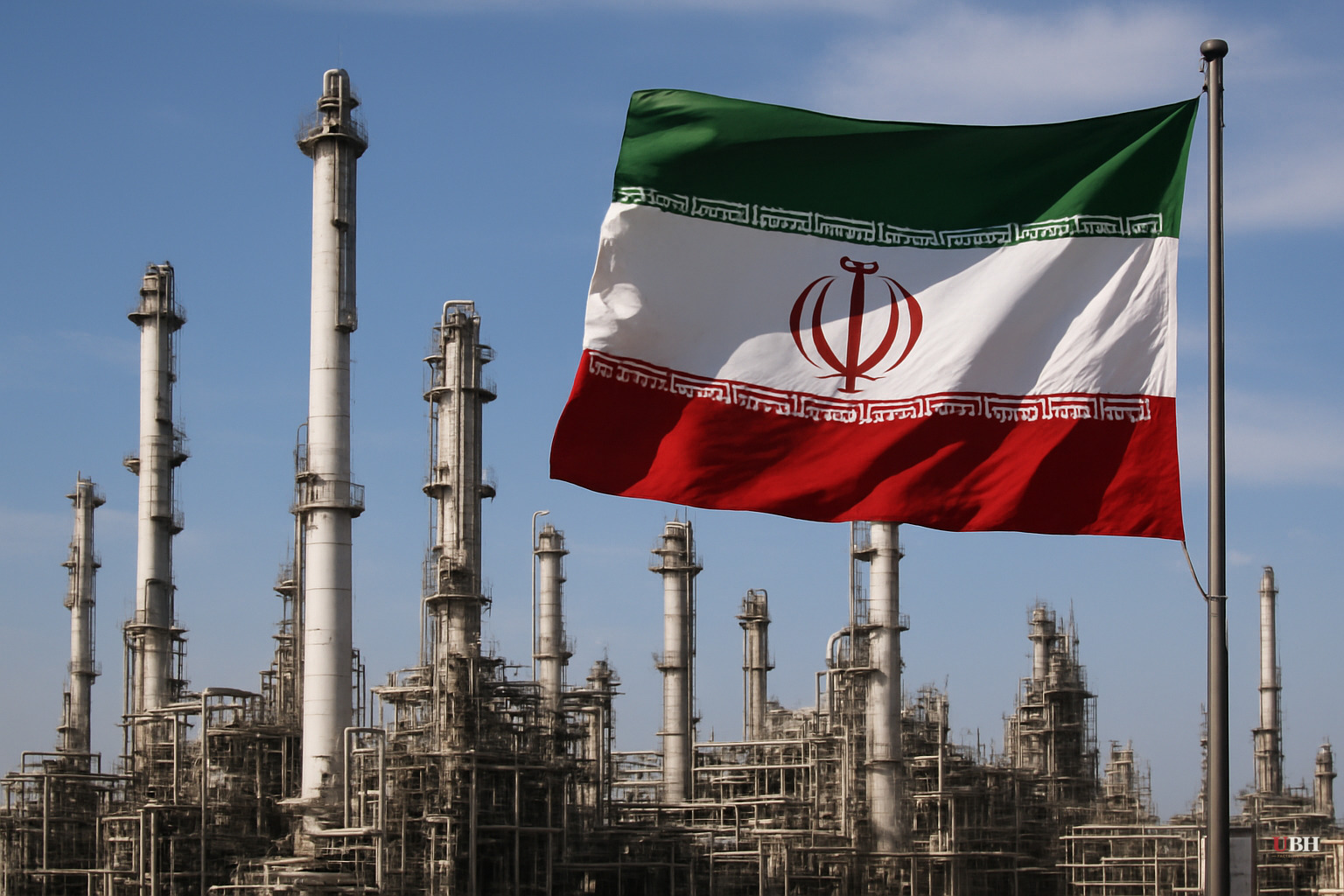
Since the MOU was signed electronically over the weekend and an agreement to end Operation Epic Fury was confirmed by a senior White House official on Monday, the document itself remained secret for days while leaked versions circulated and the White House disputed their accuracy. That changed Wednesday.
A senior U.S. official read the full 14-point text to reporters on a background call Wednesday, according to the New York Post.
What the MOU Actually Says
The text, as read by the official, is a ceasefire and process framework, not a final peace treaty. Key provisions, per the New York Post's reporting:
- The U.S. and Iran declare immediate and permanent termination of military operations on all fronts, including Lebanon.
- The U.S. will begin removing its naval blockade immediately and complete it within 30 days.
- Iran will arrange safe passage of commercial vessels through the Strait of Hormuz within 30 days, including demining operations.
- The two sides commit to negotiating a final deal within 60 days, extendable by mutual consent.
- Sanctions relief — specifically on Iranian oil exports and related banking, insurance, and transportation — is waived immediately, with full removal tied to the final agreement.
- U.S. forces are to withdraw from proximity to Iran within 30 days after the final deal is reached.
- Iran will conduct talks with Oman on future administration of the Strait of Hormuz.
The final deal, not this MOU, is where the nuclear question gets resolved. The text commits both sides to trading "the fate of enriched Iranian nuclear material and the fate of all other mutually agreed nuclear-related issues" for comprehensive sanctions removal.
The $24 Billion and $300 Billion Numbers, Explained
Senator Cory Booker told the BBC the U.S. is "releasing billions of dollars to this enemy." Senator Chris Murphy called the MOU "a payment to Iran." Mike Pompeo accused Trump of trying to "pay the IRGC to build a WMD program."
Reason magazine, drawing on the leaked text confirmed in its broad strokes by the White House, explains the actual mechanics: the $24 billion figure refers to Iranian oil revenues frozen in foreign bank accounts that Iran was paid but could never access due to sanctions. No American taxpayer money is involved. The U.S. is lifting a legal prohibition, not writing a check.
The $300 billion figure refers to prospective private investment in Iran's reconstruction. Trump addressed this directly at the G7 in France on Wednesday: "We're not investing. We're not putting up ten cents. People can decide to do that, but that's up to them," according to the Times of Israel as cited by Breitbart.
Vice President J.D. Vance confirmed Iran is "not getting a single dime of American money," according to Reason.
The hawks' concern is real even if the framing is imprecise: sanctions relief of any kind frees up Iranian state resources that could flow to the IRGC or proxy groups regardless of the nuclear provisions. But calling it a "payment" conflates frozen private revenue with a U.S. Treasury transfer, which it is not.
White House Disputed Leaked Text, Now Releases Its Own
White House Communications Director Steven Cheung denied the leaked 14-point text published by CNN, Bloomberg, and al-Arabiya on Tuesday, writing on social media that it "does not reflect the language of the actual MOU." According to Breitbart, the leaked versions included provisions about a $300 billion investment fund and specifics on Lebanon that the White House said were inaccurate.
The New York Post's reporting Wednesday — based on the official readout — confirms the broad structure matched the leaked versions while differing on a few specifics. Mohammad Ali Shabani, editor of Amwaj.media, told Reason the real agreement differs from the leaked text on "a few non-sanctions-related details."
A formal signing ceremony is scheduled to take place in Switzerland, with Trump telling reporters at the G7 it would happen "tomorrow, maybe the next day," according to Bloomberg's June 17 coverage. That puts the ceremony on Thursday or Friday. Trump has stated he will publish the full text after signing.
NATO Endorses, Offers Hormuz Support
NATO Secretary General Mark Rutte, speaking at NATO headquarters Wednesday ahead of a defense ministers meeting, called the deal "a massive step forward" and said the alliance's UK and France members are coordinating demining and radar assets near the Strait of Hormuz, according to Breitbart. Rutte was explicit that the Strait falls outside NATO's formal area of responsibility but said the alliance would support if asked.
The Cyber Problem That Won't Go Away
Five current and two former U.S. officials told Defense One's cybersecurity reporter David DiMolfetta on Wednesday that the MOU will NOT stop Iranian cyber operations. "There is 'no chance' Iran and any affiliated parties would cease or slow down in cyberspace," one official said flatly.
Since the war began February 28, Iran-linked hackers hit medical technology company Stryker, targeted FBI Director Kash Patel's personal email, and on June 11, California Water Service said it was investigating claims that Iranian hackers breached its customer billing database, according to Defense One.
The officials noted that Iran's government doesn't fully control independent pro-Iran hacktivist groups, meaning even a sincere Iranian government commitment would not bind every actor in its orbit.
The formal signing ceremony and release of the complete text remain the most immediate unresolved variable. Until Trump publishes the document in Switzerland, the nuclear enrichment provisions and the verification mechanism remain unconfirmed in their specifics.
Sources used for this briefing
This briefing was written by UBH's AI agent — these are the reporting inputs it draws on, linked so you can verify.


