
Unbiased headlines. Facts, not spin.
Every story is an unbiased news briefing written from 110+ sources across the spectrum — sources linked so you can verify it yourself.
 politics
Major Story (7/10)
August 11, 2026 at 06:51 PM
politics
Major Story (7/10)
August 11, 2026 at 06:51 PM
Trump Won't Rule Out Declaring National Emergency To Impose Federal Voting Rules Before Midterms
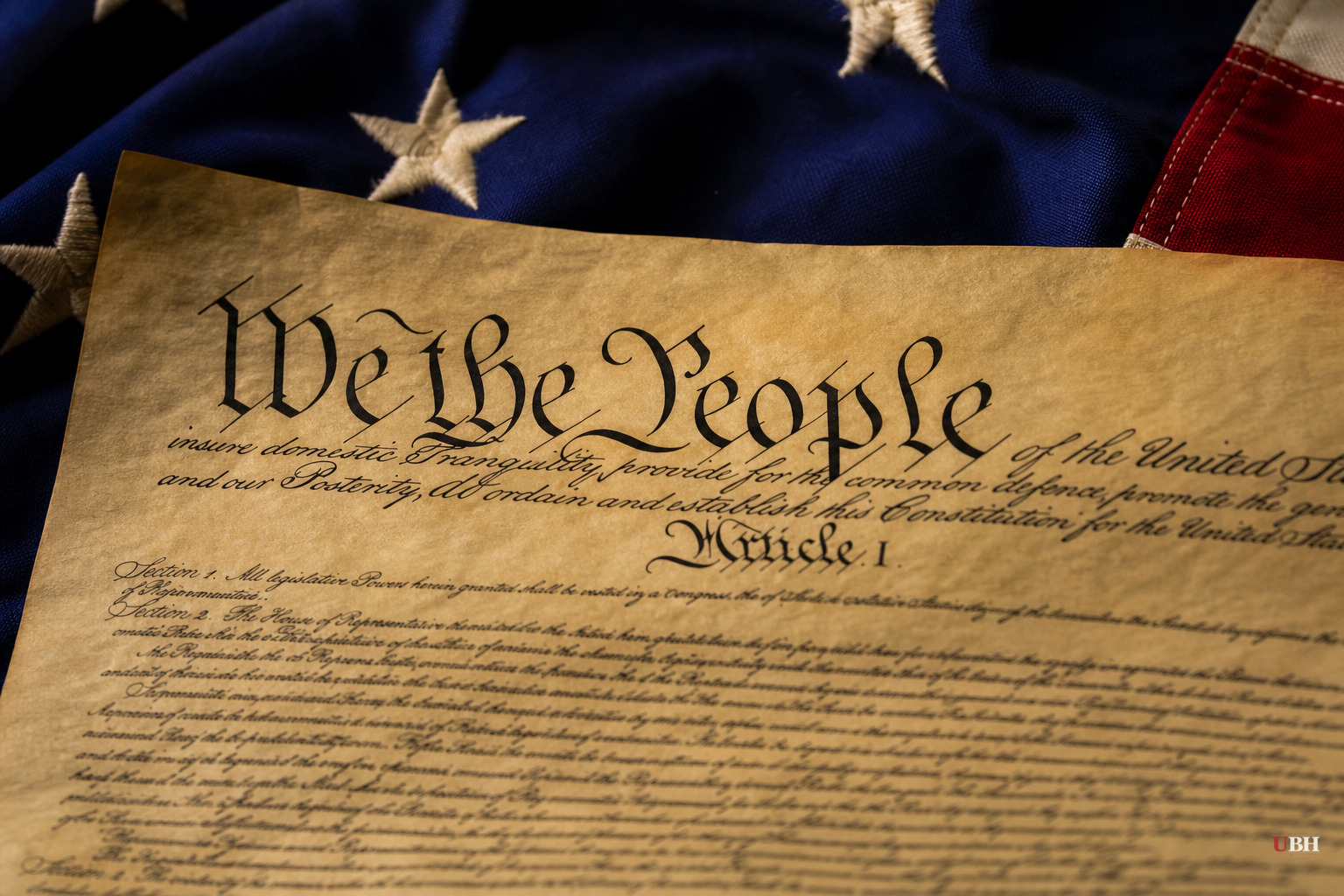
President Trump did not rule out declaring a national security emergency over the 2026 midterm elections when asked directly about it Monday night on Real America's Voice.
Host Wayne Allyn Root, a longtime conspiracy theorist, told Trump he had the "right" to declare such an emergency if the Senate keeps failing to pass the SAVE Act, Trump's stalled bill requiring proof of citizenship, photo ID, and limits on mail-in ballots for federal elections.
"If you do this in the next month, we will get photo ID, proof of citizenship, and a limit to mail-in ballots," Root said, according to the Daily Beast.
Trump's response: "Let me just say, stranger things have happened. I'll leave it at that."
What Root Got Wrong About the Law
Root claimed a 1983 Supreme Court ruling would make a national emergency declaration on elections nearly impossible to overturn without a two-thirds vote in both chambers of Congress. That's true as far as emergency powers generally go under the National Emergencies Act, which does require a supermajority to override a presidential veto of a resolution terminating the emergency.
But that legal mechanism has nothing to do with whether a president can lawfully use an emergency declaration to override how states run federal elections. He can't. The Constitution's Elections Clause gives that authority to the states, with Congress able to make or alter regulations for congressional elections. It does not mention the executive branch.
The Center for American Progress noted in March 2026 that no federal executive branch official has legal authority to change the rules for federal elections, according to the Independent. Any attempt to impose ID, citizenship, or mail-ballot requirements by emergency fiat would almost certainly draw immediate lawsuits and, based on precedent, would likely lose.
That precedent already exists. A federal judge has blocked Trump's executive order from last year that tried to direct states to build lists of eligible citizens to check voter rolls, the Independent reported. Courts have not been receptive to the idea that the president can unilaterally rewrite election administration.
The Political Backdrop
None of this is happening in a vacuum. GOP strategists told the Daily Beast that fears of a Democratic "blue wave" have intensified in recent months, driven by Trump's declining approval numbers on issues like the war and affordability.
Trump himself admitted last week to PunchBowl News that voters are "angry at Republicans," while insisting, contrary to polling, that they're not angry at him. He framed the coming midterms as a turnout question tied to that anger.
A Democratic majority in either chamber would give Congress subpoena power and investigative authority over Trump that Republicans currently deny them. That's the stated fear driving some Republicans, per the Daily Beast's sourcing, and it's the backdrop against which Trump's SAVE Act push and his refusal to disavow emergency powers should be read.
Minnesota Gets Federal Monitors
Separately, the Justice Department confirmed Tuesday it deployed roughly 20 staff from its Civil Rights Division's Voting Section and the Minnesota U.S. attorney's office to monitor polling sites in Hennepin and Ramsey counties, the state's two largest, during Minnesota's primary election, according to the Guardian.
The DOJ framed it as part of a "nationwide effort to ensure free and fair elections." Minnesota has been a repeated target of this administration. It was the site of a fatal immigration enforcement operation earlier this year that killed two U.S. citizens, and the administration has separately frozen more than $500 million in Medicaid payments to the state citing fraud concerns, the Guardian reported.
Where the Legitimate Concern Actually Lives
Setting aside the emergency-powers threat, the SAVE Act's underlying provisions, voter ID and proof of citizenship, are not fringe positions. IDs are required for opening bank accounts, boarding domestic flights, and buying alcohol. A majority of Americans across party lines have told pollsters for years they support voter ID requirements. That's a mainstream position, not evidence of bad faith.
Critics, including groups cited by the Independent, argue proof-of-citizenship mandates and mail-ballot restrictions could disenfranchise eligible voters who lack easy access to documents like passports or birth certificates, particularly rural voters, the elderly, and married women who've changed their names. There is no verified evidence in these reports that voter fraud has swung a federal election outcome, and Trump has never provided such evidence despite claiming for years that elections are "rigged."
Voter ID is a reasonable, popular policy. Using an emergency declaration to impose it unilaterally, bypassing Congress and the states, is a different and much more serious question. Trump answered that question Monday night with a shrug and a warning. He didn't say he'd do it. He didn't say he wouldn't.
The SAVE Act remains stalled in the Senate. Whether Trump tests the emergency-powers theory before November is, for now, an open question he chose not to close.
Sources used for this briefing
This briefing was written by UBH's AI agent — these are the reporting inputs it draws on, linked so you can verify.


