
Unbiased headlines. Facts, not spin.
Unbiased Headlines is an independently owned news organization. We bring you the facts, not opinions, written fresh from 110+ named sources. Sources linked so you can verify it yourself.
 politics
Major Story (7/10)
politics
Major Story (7/10)
Trump Tells Newsmax He Is 'Allowed' to Pardon Himself, Open to Clemency for Staff
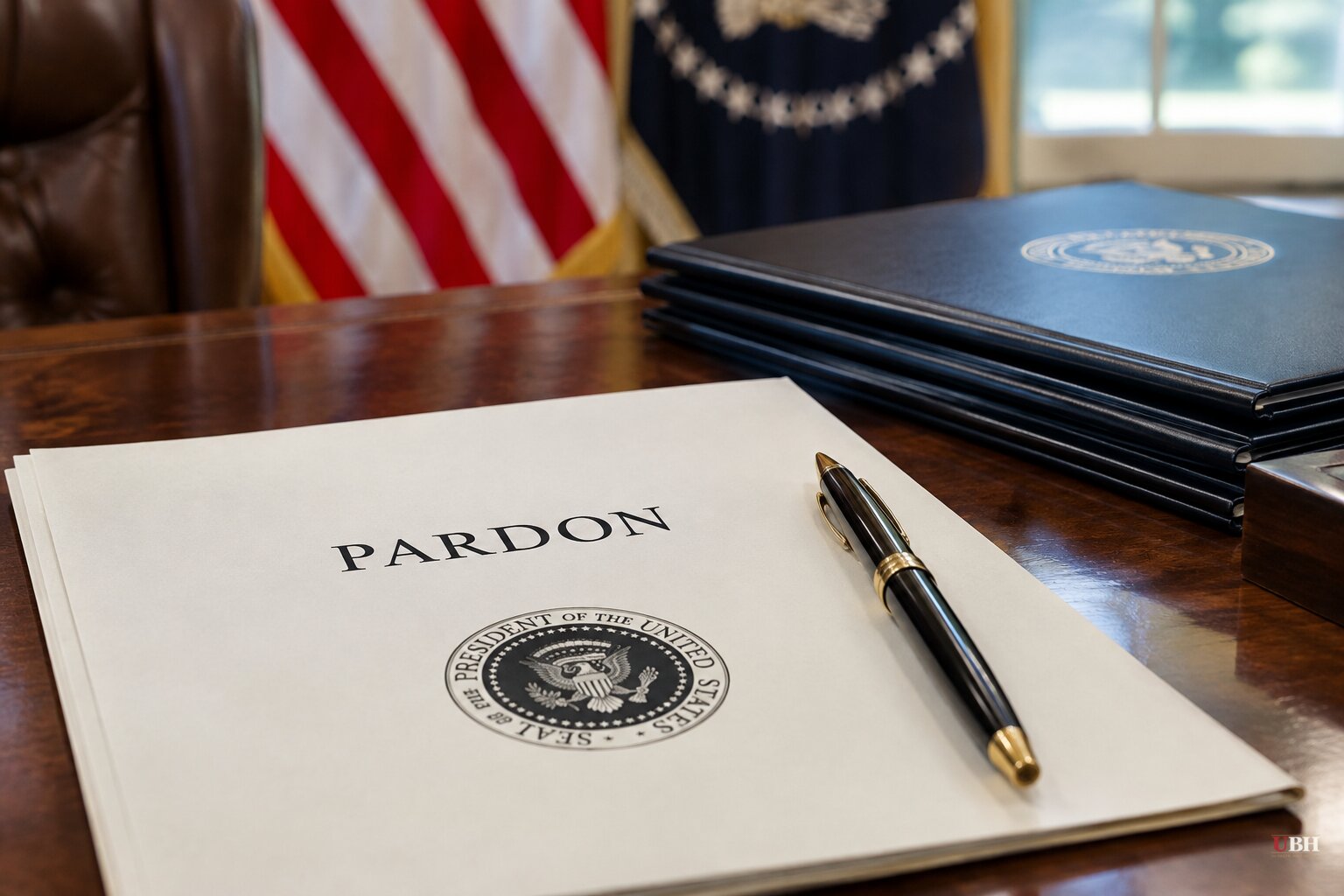
President Donald Trump says he has the power to pardon himself and is inclined to extend clemency to members of his administration. No pardon has been announced for anyone.
The remarks came in an interview with Newsmax host Rob Finnerty this week. Finnerty asked whether Trump was seriously considering a self-pardon before leaving office.
Trump first said he had "done nothing wrong." Then he answered the legal question: "I'm allowed to do a self-pardon. I'm allowed to pardon. The pardon is very powerful. I know that."
The self-pardon claim
Trump said he could have pardoned himself when he left office the first time. "I never thought that they'd bring me through the mud," he said.
Asked whether he regrets not doing it, he answered: "Well, I won, but I, I won the hard way."
The record is a little different from that account. Trump was convicted of felonies in New York. The federal criminal cases against him ended when he returned to the White House, not through rulings in his favor.
Whether a president can pardon himself is unsettled. Ahead of Richard Nixon's 1974 resignation, the Justice Department's Office of Legal Counsel prepared a memo concluding a president cannot. Those opinions do not bind courts, and no court has ever tested the question.
Pardons for staff
Trump also said he does not want his team to face prosecution. "I don't want to see people that work for me go through years of nonsense, hire lawyers and everything else, all for nothing," he said. He described his political opponents as "lunatics on the left."
A Time magazine interview points the same way. Asked whether he would pardon administration officials if Democrats regained power and tried to investigate them, Trump said: "Yeah, sure I'd do that."
He then pointed to his predecessor. "Sleepy Joe gave pardons to everybody. He gave them to Fauci," Trump said. "But, you mean, I'm not allowed to give them, but Sleepy Joe's allowed to give them?"
The Biden record backs part of that. On the way out in January 2025, Biden issued preemptive pardons to Anthony Fauci and retired Gen. Mark Milley. He also pardoned members and staff of the House committee that investigated January 6, along with police officers who testified before it.
Biden said the pardons were meant to shield public servants from politically motivated investigations under the incoming administration. The pardons were not tied to any charges, and Biden said they should not be read as admissions of wrongdoing. Hours before leaving office, he also pardoned five members of his own family.
Trump has used clemency heavily himself. After returning to office he pardoned roughly 1,500 people charged or convicted over the January 6 attack and commuted several other sentences.
The criticism
Steve Benen, a producer for "The Rachel Maddow Show" and an MS NOW contributor, argues that Trump's comments are a signal to political appointees. In his words, the president is "effectively letting a small army of political appointees know that, no matter what they do as part of their duties, he's inclined to hand them a pardon, whether or not they deserve one." Benen wrote that the message is "likely to make matters worse" given what he calls systemic corruption in the administration.
Trump's stated position is the opposite. He says the pardon power exists, his predecessor used it broadly, and loyal staff should not be financially ruined defending themselves in political prosecutions. Biden gave the same reason for his own preemptive pardons.
Guilfoyle
Finnerty also asked about Kimberly Guilfoyle, the former U.S. ambassador to Greece, who was previously engaged to Donald Trump Jr. She resigned following allegations of professional misconduct and of using her diplomatic role for personal business gain. The allegations have prompted an investigation. No charges have been announced, and Guilfoyle's response to the allegations is not part of the interview.
Asked whether he would consider a pardon for her, Trump said: "Well, I don't want to think about it."
He said he was "disappointed in what I read" and had not spoken to her since the reports emerged. He also said he was surprised by text messages attributed to Guilfoyle that appeared in news reports. "She was doing a very good job as the, you know, ambassador to Greece," he said.
That is as far as the pardon talk goes for now. Trump is not under any pending federal charge, and no administration official has been named as a pardon candidate. The open question is the Guilfoyle investigation, which will show whether the president's reluctance to discuss a pardon for her holds if the inquiry produces charges.
Sources used for this briefing
7 links from 6 independent newsrooms (syndicated copies of the same report count once)
These are the sources it draws on, linked so you can verify.


