
Unbiased headlines. Facts, not spin.
Unbiased Headlines is an independently owned news organization. We bring you the facts, not opinions, written fresh from 110+ named sources. Sources linked so you can verify it yourself.
 politics
Major Story (7/10)
Event date: October 9, 2026 ·
politics
Major Story (7/10)
Event date: October 9, 2026 ·
Hezbollah Claims Seized Explosives and Demands Their Return; Rubio Tells Lebanon's Aoun to Refuse
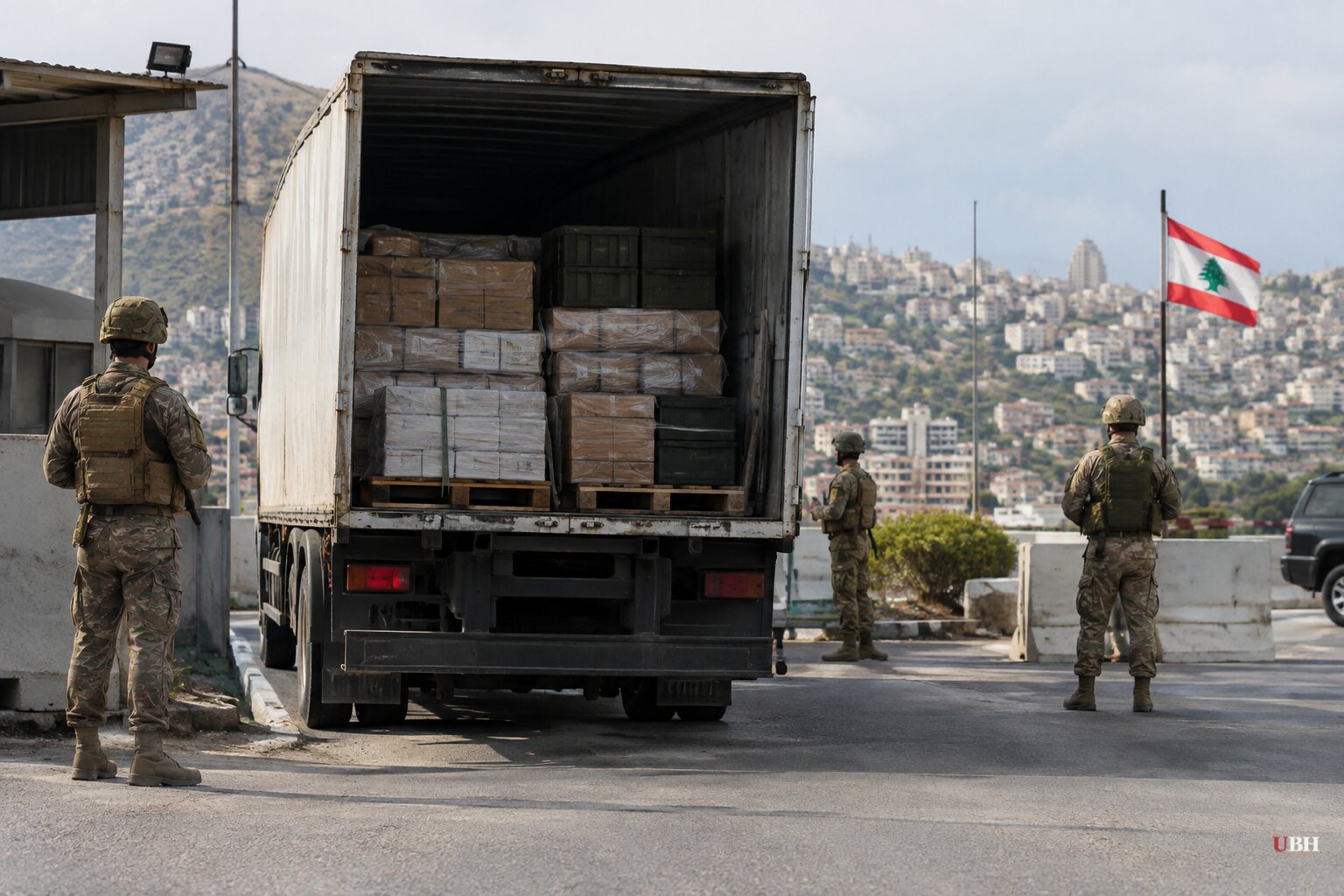
Hezbollah has publicly claimed ownership of a truckload of explosives that Lebanese security forces seized last week, and it wants the cargo back.
Lebanese Hezbollah lawmaker Hassan Fadlallah said Thursday, Oct. 15, that "the vehicle and its cargo belong to the resistance." He demanded the immediate release of the two men arrested at the checkpoint, plus the return of the vehicle and its contents.
The government has pledged to disarm the group. Now the group is publicly daring it to hand the weapons back.
What was seized
Security forces stopped the vehicle at a checkpoint on the highway linking Beirut with the eastern Bekaa Valley, near the Syrian border. Two men were detained.
The weight of the load is reported inconsistently. A judicial source told AFP the shipment held 250 kilograms of TNT and 250 kilograms of C-4 plastic explosive, about half a ton. Other accounts put the total at roughly 780 kilograms. The Wall Street Journal reported that Hezbollah's request to Lebanese security authorities covers more than 1,000 pounds.
Reuters, citing a Hezbollah official and a Lebanese security source, reported that the explosives were meant for explosive drones aimed at Israeli troops.
Hezbollah's position
Fadlallah said the explosives were "intended exclusively for use against the Israeli occupation" in southern Lebanon. Israeli forces hold parts of Lebanese territory taken during this year's war.
He rejected suggestions that the material was meant for political assassinations inside Lebanon, calling the accusation "baseless." He also accused Prime Minister Nawaf Salam of running a campaign to deepen divisions among Lebanese.
Hezbollah has said it will not disarm while Israeli forces remain on Lebanese soil. Israel says its continuing operations in the south are meant to prevent attacks by the group.
Beirut and Washington respond
Salam condemned the shipment as a criminal operation and called for "no leniency" and for "truth and accountability." He pledged to identify everyone involved, including whoever ordered it, and to refer them to the judiciary. He cited public alarm over the discovery of C-4, which has been used in several notorious political assassinations in Lebanon.
The investigation began with the judicial police and has widened to include military intelligence and the Internal Security Forces' information branch.
Rubio spoke with Aoun by phone Thursday. A State Department official said Rubio urged Aoun to hold accountable those who ordered, financed and directed the shipment. The official said Rubio "underscored that returning explosives to (Hezbollah) should be out of the question."
Rubio also urged direct military-to-military communication between Lebanese and Israeli forces "for deconfliction," the official said.
Aoun told Rubio, according to the presidency, that the army and security services are fully carrying out decisions to prevent armed displays, confiscate weapons and combat smuggling. He said judicial authorities would pursue those responsible.
Aoun also asked Washington to press Israel to stop attacks on towns and villages in southern Lebanon and to comply with agreements governing its military presence.
The disarmament deal
The confrontation sits on top of a war that began Feb. 28 with US-Israeli strikes on Iran. On March 2, the Lebanese government banned Hezbollah's military activities after the group fired rockets at Israel in support of Tehran. Iran then struck Israel and Gulf states hosting US bases. The fighting has killed thousands and displaced millions across the region.
Under a deal reached in US-brokered Israel-Lebanon talks, Beirut promised to disarm Hezbollah. In return, Israeli troops would withdraw gradually. Hezbollah has refused to disarm, and Israel has kept striking southern Lebanon.
Analysts cited by AFP described Hezbollah's rare public admission as a calculated political move and a direct challenge to the disarmament effort.
There is a history behind the government's worry about C-4. Members of Hezbollah were convicted by an international tribunal over the 2005 bombing that killed former Prime Minister Rafic Hariri. Hezbollah has long denied that its arms are aimed at fellow Lebanese.
What comes next
Aoun and Salam have both promised prosecutions. Hezbollah has stated its demand openly, and no Lebanese official has said the cargo will be returned.
Whether the two detained men are charged, and whether anyone above them is named, is the open issue. That answer will show whether Lebanon's weapons ban applies to Hezbollah itself or only to smugglers who never mention the group by name.
Sources used for this briefing
6 links from 6 independent newsrooms (syndicated copies of the same report count once)
These are the sources it draws on, linked so you can verify.


