
Unbiased headlines. Facts, not spin.
Unbiased Headlines is an independently owned news organization. We bring you the facts, not opinions, written fresh from 110+ named sources. Sources linked so you can verify it yourself.
 politics
Major Story (8/10)
Event date: October 15, 2026 ·
politics
Major Story (8/10)
Event date: October 15, 2026 ·
After X's 13,000-Account Suspension, DOJ Won't Say Whether It Is Investigating and a Federal Briefing for States Hits a Snag
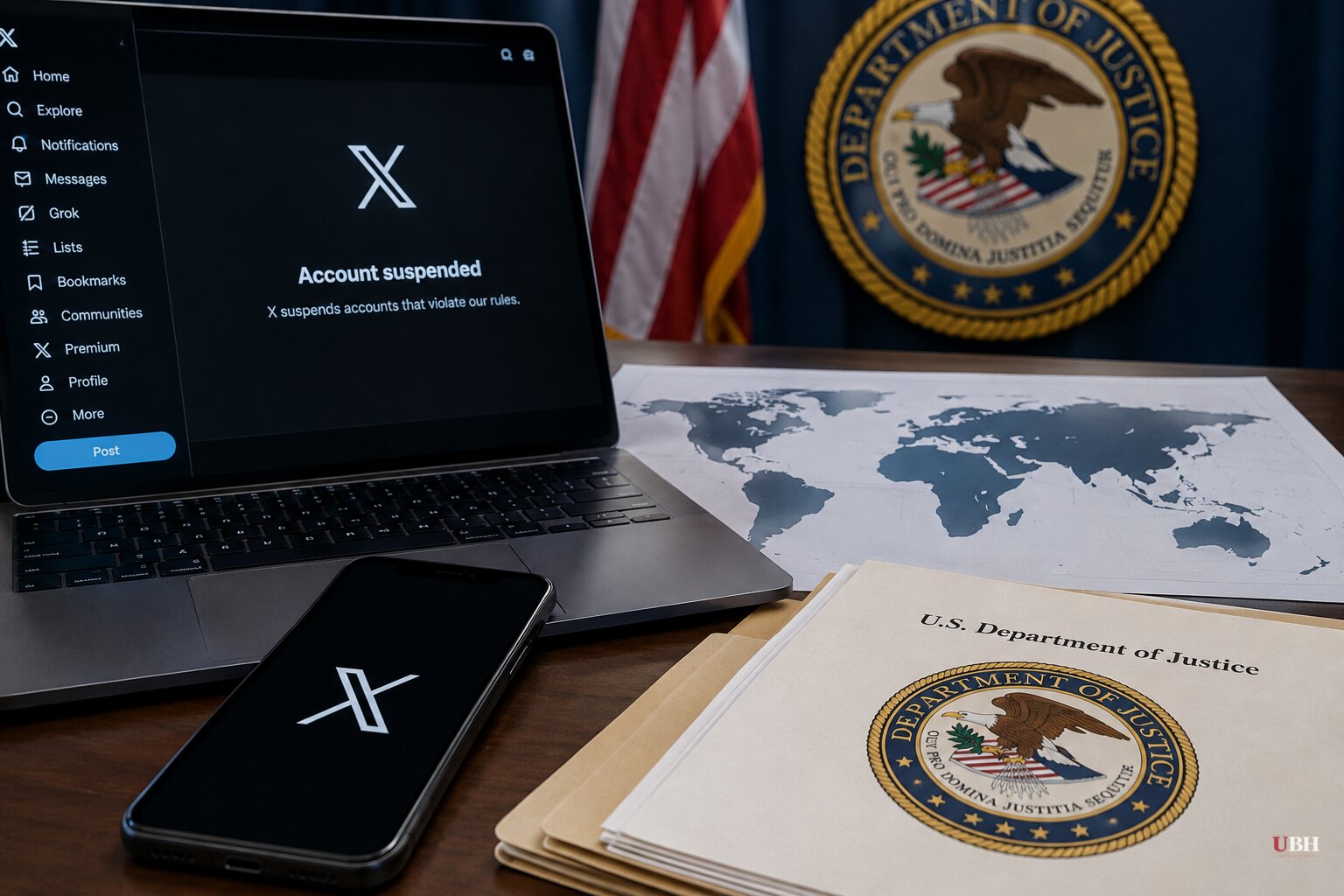
The Justice Department will not say whether it is investigating the foreign influence networks X says it shut down on Oct. 14, and a federal attempt to brief state election officials on midterm threats stalled the next day.
A Justice Department spokesperson, responding to an inquiry from The Epoch Times on Oct. 15, said the department would not confirm or deny an investigation. "The department remains committed to keeping America's elections in the hands of Americans and without foreign influence, and will use every available tool to deter, disrupt, and hold accountable those who violate federal law," the spokesperson said.
X has not said how many of the 13,000-plus accounts belong to each country, which candidates were targeted, or which foreign government agencies it ties to the networks. The company said the fake accounts amplified "content about U.S. politics, targeting candidates and public figures across the political spectrum."
The Justice Department did announce charges against 16 people on Oct. 12 in cases involving illegal voting and fraudulent voter registration. Those cases have no connection to the networks X disclosed.
A briefing that never connected
U.S. intelligence officials tried to give some state election officials a classified virtual briefing on midterm threats on Thursday, Oct. 15, according to people familiar with the matter who spoke to The New York Times. The effort failed because the officials could not establish a secure connection, those people said.
Briefings like that were routine in earlier cycles, according to the Times account. Thursday's would have been the first of its kind in more than two years.
There is no public word yet on whether it has been rescheduled.
What the threat looks like
Alethea, a company that tracks digital threats and foreign propaganda, said in a new study that the Russian-run Doppelgänger operation has stepped up its posting. The operation is run by Russia's Social Design Agency, which the U.S. government and the European Union have sanctioned. According to Alethea, the posts push the idea that bipartisan support for Israel is collapsing and try to turn Israel into a wedge issue.
People familiar with U.S. intelligence and outside researchers told Briefs that Russia is currently the leading player in online activity tied to the midterms, with China and Iran also active. They said influence efforts aimed at U.S. voters are already under way. They also said there is no evidence of attempts to breach voting systems or alter vote counts.
Analysts also worry that adversaries could try to train AI chatbots so AI-assisted searches elevate misleading sources. Researchers found chatbots cited a propaganda group as credible nearly 500 times in 3,000 queries.
Washington's defenses
The second Trump administration shut down or downsized the FBI's Foreign Influence Task Force and the Foreign Malign Influence Center inside the Office of the Director of National Intelligence. The administration argued those efforts curtailed free speech.
That is a legitimate civil-liberties argument. Government pressure on platforms to police political speech has a documented record of abuse concerns. But the cost is that federal agencies no longer have dedicated units whose job is to track and expose foreign operations. Jessica Brandt, a Council on Foreign Relations fellow who once ran the Foreign Malign Influence Center, has been among those warning about the gap.
The Pentagon has moved in the other direction. Defense Secretary Pete Hegseth signed a memo, announced about five weeks before the election, directing U.S. Cyber Command and combat support agencies to "identify, disrupt, and neutralize foreign interference in US democratic processes" and to work with the Department of Homeland Security on threats to election infrastructure.
CNN noted the activities in the memo largely match what military and spy agencies did before 2025. Cyber Command hackers, for example, carried out a secret operation weeks before the 2024 election to disrupt Russian trolls.
Some former officials are not reassured. Andrew Schoka, who worked at Cyber Command in the 2020 cycle, told CNN: "What concerns me is that [Gen. Joshua Rudd] testified as recently as April that he wasn't sure if an Election Security Group existed at the command." Schoka said that group's work "takes months of planning and coordination."
Rudd, who heads Cyber Command and the NSA, said in a statement that the agencies "regularly counter actions by malicious foreign cyber actors including those with the intent to interfere with our democratic process." The Pentagon has not said what role the Election Security Group will play under the memo.
Politics around the warnings
President Trump gave a primetime address in July warning that U.S. election infrastructure was vulnerable and alleging China tried to influence the 2020 election. The Council on Foreign Relations said Trump offered no evidence of disrupted elections or miscounted ballots, and that the Chinese actions he cited involved the legal acquisition of voter rolls.
The council also said Trump did not raise Chinese election meddling publicly when Xi Jinping visited Washington last month.
Voters choose a new Congress on Nov. 3. Whether the Justice Department opens or already has an investigation into the X networks is unanswered, and so is whether the state briefing gets a second try before ballots are counted.
Sources used for this briefing
5 links from 4 independent newsrooms (syndicated copies of the same report count once)
These are the sources it draws on, linked so you can verify.


