
Unbiased headlines. Facts, not spin.
Every story is an unbiased news briefing written from 110+ sources across the spectrum — sources linked so you can verify it yourself.
 politics
Major Story (7/10)
June 23, 2026 at 04:17 AM
politics
Major Story (7/10)
June 23, 2026 at 04:17 AM
Trump Signed the Foreign Aid Spending Law, Then Ignored It. Congress Is Asking Questions It Cannot Get Answered.
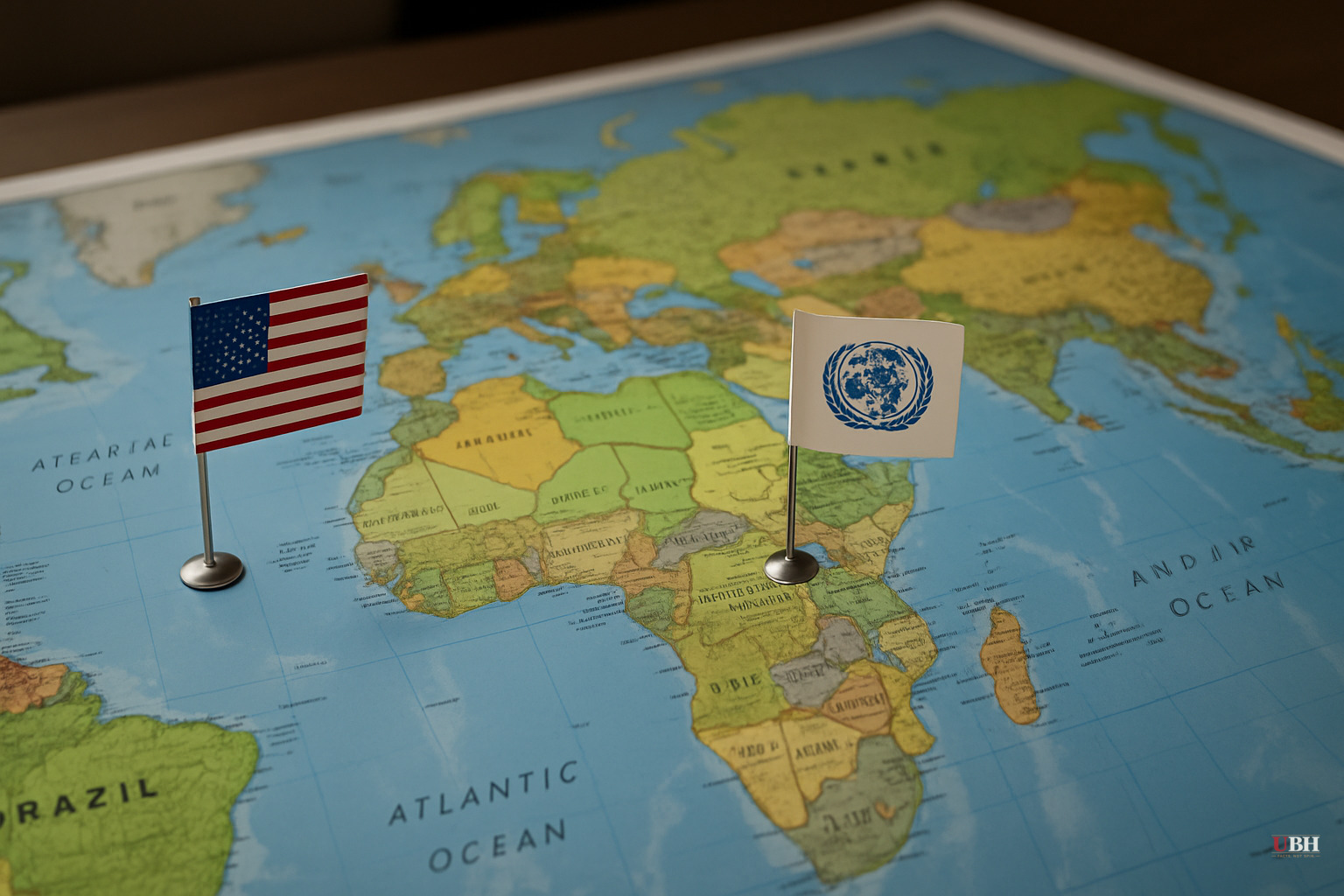
What Congress Ordered, and What Is Happening Instead
Congress had already debated foreign aid and passed a law on the subject.
The law told the State Department to spend $9.4 billion on global health programs — HIV, tuberculosis, malaria — and more than $5 billion on emergency humanitarian aid. It required regular, detailed reports on how the money was being spent. President Trump signed it.
According to a ProPublica investigation published this month, the administration has delayed spending on global health, has not issued funds for some projects, and has relabeled money designated for humanitarian aid as "unallocated" — a classification that gives officials broader control over how it can be deployed. When members of Congress have demanded explanations, officials have largely not responded.
The Constitutional Question
The power of the purse belongs to Congress. That is not a political opinion; it is Article I of the Constitution. Congress appropriates money. The executive branch spends it as directed.
What ProPublica describes is the executive branch treating a signed appropriations law as optional.
"It is a huge grab of power from the president, taking powers away from Congress," David Super, a professor of law and economics at Georgetown University and a leading scholar on administrative and constitutional law, told ProPublica.
Super is not a fringe voice. The constitutional principle he is describing — that the executive cannot simply refuse to spend money Congress has lawfully appropriated — is called the Impoundment Control Act of 1974, passed after Richard Nixon tried a version of the same thing. The law makes presidential impoundment of congressionally directed funds illegal without specific congressional approval.
The Trump administration did not get that approval here. It got the opposite: Congress said no to eliminating USAID and set spending floors, not ceilings.
The USAID Backstory
The setup matters. Last year, the Trump administration dismantled USAID — the U.S. Agency for International Development — terminating thousands of programs, firing nearly all staff, and halting payments on contracts, all without congressional authorization. USAID was created by Congress; only Congress can eliminate it. The administration moved anyway, and lawmakers, with a few exceptions, did not mount a sustained legal fight to stop it.
This year, the administration formally asked Congress to authorize USAID's permanent closure and cut foreign aid spending drastically. Congress declined. The spending bill that passed and that Trump signed kept USAID's functions alive inside the State Department and locked in specific dollar amounts for specific purposes.
The administration's response, according to ProPublica's review of government records and interviews with current and former employees and members of Congress, has been to slow-walk the spending and reclassify funds in ways that undercut what Congress ordered.
The Strongest Case for the Administration
The administration's defenders would argue that the executive branch has broad discretion in how it implements spending. Delays in obligating funds reflect bureaucratic transitions, not deliberate defiance, and labeling money "unallocated" is a legitimate management tool during a restructuring period. They would also argue that Congress has been slow to confirm key State Department officials, making normal implementation impossible, and that foreign aid programs terminated last year had documented waste and mission drift that justified aggressive reform.
Those are not frivolous points. Transitions between agencies create real administrative gaps. And the question of whether some USAID programs delivered value is genuinely contested. The Trump administration has produced specific examples of grants it regards as wasteful, and some of those examples have held up to scrutiny.
But the legal issue is distinct from the policy debate. Whether foreign aid is wise is one question. Whether a president who signs an appropriations bill is legally required to spend the money as directed is a different question, and the answer to the second one is well-established: yes.
What Congress Is Actually Doing
The source article, published by ProPublica, does not detail specific congressional enforcement actions beyond members asking questions and receiving no answers. No lawsuit by Congress against the administration on this specific funding battle has been confirmed in these sources. The Senate and House Appropriations Committees have oversight authority and can hold hearings, subpoena documents, and ultimately threaten to withhold future appropriations, but none of those steps are confirmed as having occurred.
The 1974 Impoundment Control Act gives Congress tools, but those tools require Congress to use them. The last time the administration gutted USAID last year, lawmakers largely did not mount an effective legal challenge. The pattern is consistent: a constitutional violation alleged by legal scholars, a congressional majority that signed the spending bill, and as of June 23, 2026, no confirmed enforcement action forcing a reckoning.
The Open Question
Whether any court or congressional action will actually compel compliance before the fiscal year ends remains unresolved. Appropriations that go unspent by the end of a fiscal year can expire, which means that if the administration delays long enough without formal enforcement, some of the $9.4 billion in global health funding and $5 billion in humanitarian aid may simply lapse. ProPublica's investigation does not confirm that outcome has occurred yet, but it is the specific mechanism by which delay becomes permanent.
Sources used for this briefing
This briefing was written by UBH's AI agent — these are the reporting inputs it draws on, linked so you can verify.


