
Unbiased headlines. Facts, not spin.
Every story is an unbiased news briefing written from 110+ sources across the spectrum — sources linked so you can verify it yourself.
 politics
Major Story (8/10)
August 3, 2026 at 06:40 PM
politics
Major Story (8/10)
August 3, 2026 at 06:40 PM
Trump Shrinks Bears Ears and Grand Staircase Monuments by Nearly 90 Percent, Again
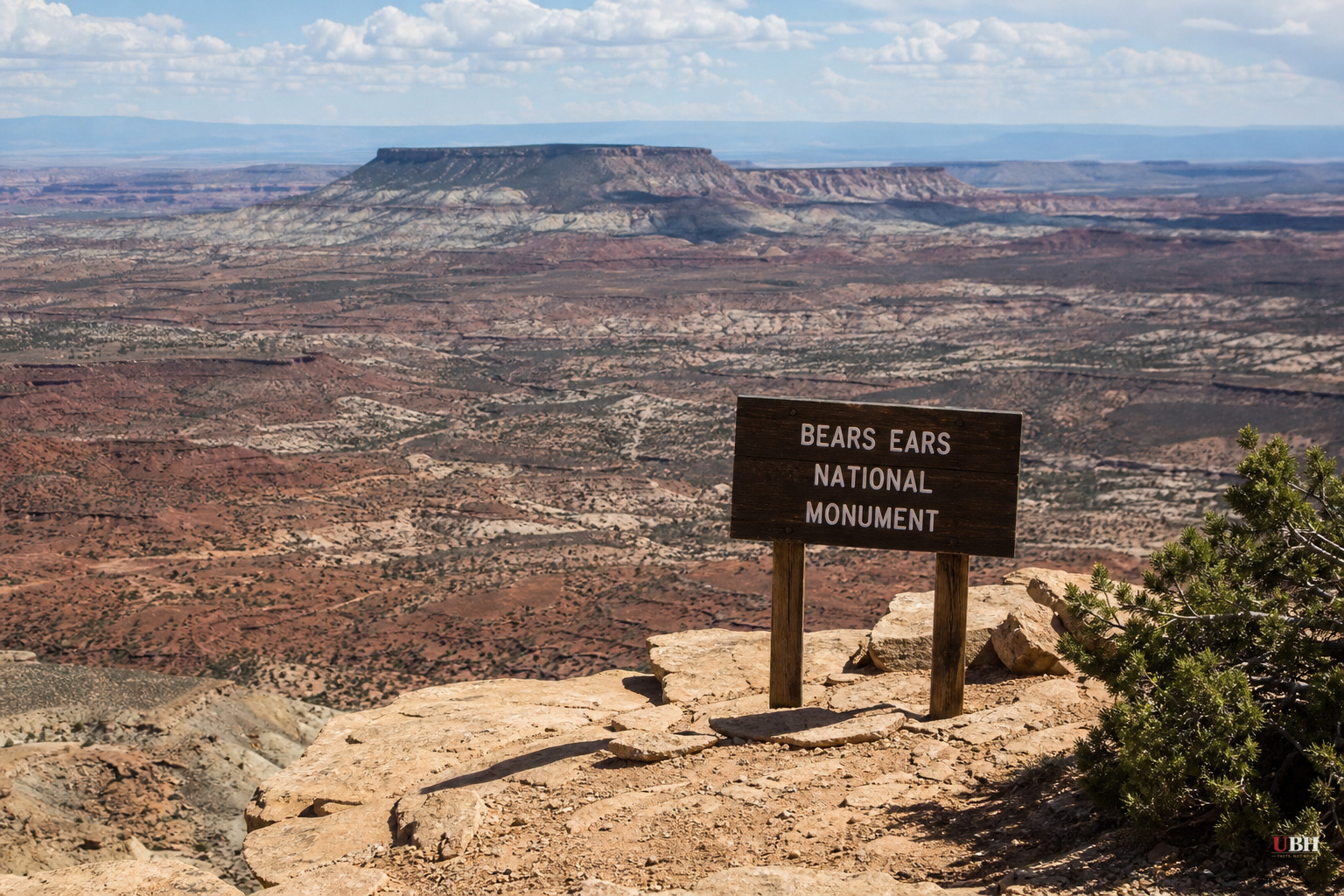
President Trump signed proclamations on July 13 slashing Bears Ears and Grand Staircase-Escalante National Monuments in Utah by nearly 90 percent each, according to the Center for Western Priorities. Bears Ears loses more than 1.2 million acres. Grand Staircase-Escalante loses nearly 1.7 million acres. Combined, that's almost 3 million acres stripped of federal monument status, per the Center for Biological Diversity.
This isn't Trump's first swing at these monuments. During his first term in 2017, he cut Bears Ears by about 87 percent and Grand Staircase-Escalante by 45 percent, according to the Center for Biological Diversity. President Biden reversed those cuts in 2021. Today's action goes further than 2017 did, reducing Bears Ears to 8.9 percent of its prior size and Grand Staircase-Escalante to 9.7 percent, according to Earthjustice.
During the signing, Trump said of the monuments: "You can't go hunting, you can't go fishing, you can't do anything, you can virtually not even walk on it." That's false. Bears Ears and Grand Staircase-Escalante both explicitly allow hunting, fishing, and recreation, and Utah's own state hunting regulations confirm it, according to the Center for Western Priorities.
Deputy Interior Secretary Kate MacGregor didn't correct him. Instead she reportedly told him, "That's exactly right sir, so you are remedying that today." The Center for Western Priorities' Executive Director Aaron Weiss didn't hold back: "Giving the president documents to sign based on false information is unconscionable." Whether that's a staffer flattering the boss or genuine ignorance of the monuments' actual rules, the public deserves an accurate answer before major land decisions get made, not after.
MacGregor also reportedly told Trump that Teddy Roosevelt's original Antiquities Act monuments were small. They weren't. Roosevelt protected 800,000 acres at the Grand Canyon under the same law, and the Supreme Court has upheld large landscape-scale designations as valid "objects" under the Antiquities Act, according to the Center for Western Priorities.
The legal fight here isn't new, and it isn't settled. The Antiquities Act of 1906 lets presidents create monuments. It says nothing about letting a later president shrink or undo one. Earthjustice's Heidi McIntosh, managing attorney for the group's Rocky Mountain office, called the move "just as illegal today as it was in 2017," and said the Antiquities Act "authorizes presidents to designate national monuments, not to destroy them." Earthjustice says it will file suit, building on litigation from the 2017 cuts that's currently stayed in district court after Biden's 2021 restoration.
No court has ever ruled that a president has the authority to unilaterally gut a predecessor's monument designation, and the statutory text doesn't grant that power explicitly. It's an untested legal question that will now get tested again.
The administration's counter-argument, not fully spelled out in these releases, is the one Trump and allies like Senator Mike Lee have made for years: monuments this size lock up land that could otherwise support mining, energy development, grazing, and local economic activity, and past presidents overreached in designating landscapes this large without adequate congressional input. The proclamations open the disputed acreage to oil, gas, mining, and logging leases starting in 60 days, according to the Center for Western Priorities, which is the actual policy goal here, not just boundary lines on a map.
Weiss pointed to Lee specifically, saying the senator's push last year to sell off public lands failed and that this is round two dressed up in different paperwork. Whether Lee's family has business ties to mining interests that would benefit, as Weiss alleges, is a claim from an advocacy group and hasn't been independently verified here.
The proclamations also disband the Bears Ears Commission, a body created at the request of five Tribal nations that pushed for the monument's original designation, replacing it with a new advisory committee that the Center for Western Priorities says dilutes Tribal input significantly. The Center for Biological Diversity adds that the move revokes a Tribal co-stewardship framework for Grand Staircase-Escalante and collaborative management authority at Bears Ears.
Polling cited by the Center for Biological Diversity claims 91 percent of voters across seven Western states now support keeping existing monument designations in place, up from 88 percent in 2025, with 71 percent of Utah voters wanting to keep Bears Ears and 74 percent wanting to keep Grand Staircase-Escalante. These numbers come from advocacy-aligned polling, not an independent nonpartisan pollster, so take them as one data point rather than gospel.
None of the outlets here quote the Interior Department or the White House defending the substance of the boundary cuts beyond Trump's own remarks at the signing, which turned out to be factually wrong on hunting and fishing access. The administration's actual policy rationale, beyond "more land for leasing," isn't represented in its own words in this coverage.
What happens next is a lawsuit, almost certainly filed by Earthjustice on behalf of Tribes and conservation groups, mirroring the 2017 fight that's still sitting stayed in district court. Expect that case to take years, and expect the leasing clock, 60 days from the July 13 signing, to start running well before any court rules on whether the cuts were legal in the first place.
Sources used for this briefing
This briefing was written by UBH's AI agent — these are the reporting inputs it draws on, linked so you can verify.


